Chronicle Editor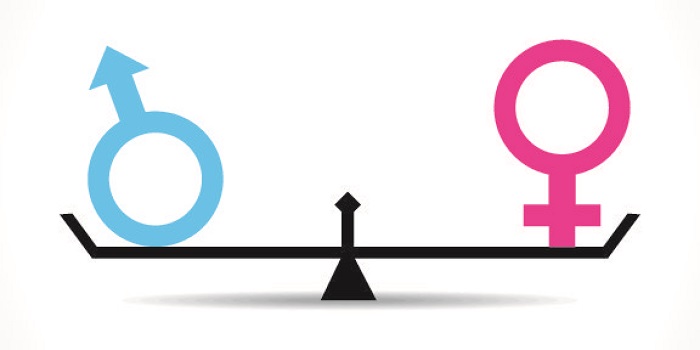
Nduduzo Tshuma, Political Editor
THE provision of the women’s quota that came to life after the adoption of the Constitution in 2013 comes to an end in 2023 amid efforts by Government to extend the clause to cover an additional ten years stretching to 2033.
Section 124 (1) (b) of the Constitution in particular provided that for the two terms of Parliament starting in 2013, “an additional sixty women shall be elected under a party-list system of proportional representation based on votes cast for political party candidates”.
According to Veritas the women’s quota was, “. . . intended to be a special provision to redress gender imbalance in the National Assembly. In the longer term it was hoped that the imbalance would be rectified by political parties selecting more women to stand as constituency candidates”. There has been debate, however, on the women’s quota as a vehicle on promoting women’s political participation and gender parity.
According to the African portal article titled, “Rethinking women’s political participation in Zimbabwe’s elections,” the quota for the 60 seats increased the number of women in Parliament from 16 percent to 34 percent. The major criticism, however, against the quota system has been that it “does not have clear provisions on how to include young women, does not extend to Local Government, and expires in 2023”. The article however, raised hope that the quota system would be expanded before the holding of the 2023 elections.
According to the Inter Parliamentary Union report on women in politics for 2020, Rwanda leads in terms of women representation in parliament with 61,3 percent while South Africa is number two in Africa with 46,3 percent and Zimbabwe is at 31,9 percent. Article 17 (1) of the Constitution stipulates that the State must ensure that women should participate in all spheres of society on the basis of equality to men.
The country is also party to international protocols like the Convention on the Elimination of all Forms of Discrimination Against Women (CEDAW) and the Beijing Declaration and Platform for Action (BDPA). As a member of the United Nations, Zimbabwe is guided by Sustainable Development Goals (SDGs) adopted to run up to 2030 and in particular SDG 5, which seeks to achieve gender equality and empower all women and girls.
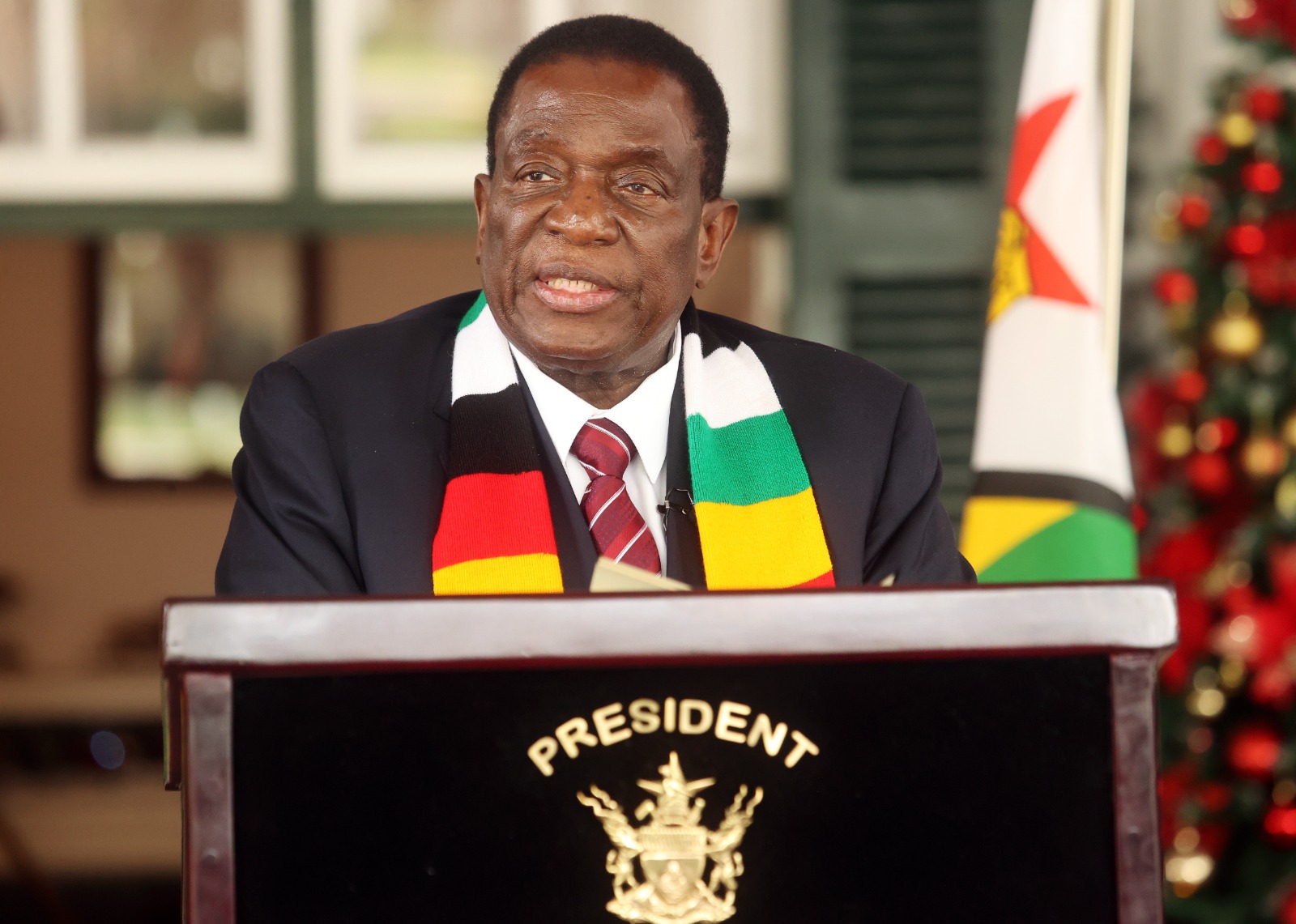
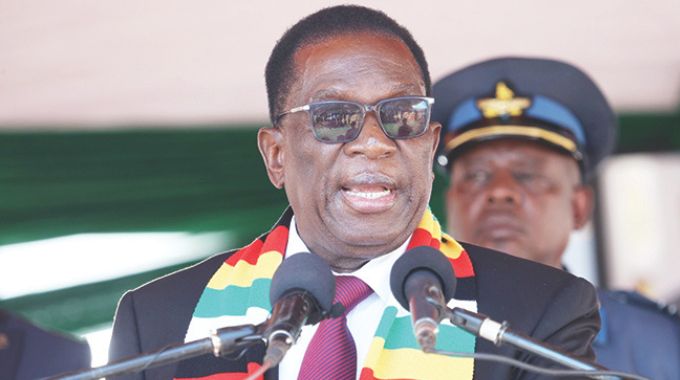
Addressing a Women’s League national assembly meeting in Harare in 2019, President Mnangagwa said Government would amend the Constitution to extend the provision which reserves 60 seats for women following the pending expiry of the subsistence of the 10-year legal framework in 2023.
The Cabinet approved the principles of amending the clause to extend the women’s quota for an additional ten years. This means that the attorney general’s office then drafts the clause before it is sent back to Cabinet for approval and gazetting before tabling before Parliament.
The amendment also seeks to make provisions for 10 youths to be elected into the National Assembly on the party list system and parties will have to alternately name male and female candidates meaning that an additional five women would be added to Parliament.
At the inaugural Zimbabwe Local Government Association of Zimbabwe (Zilga) women councillors’ indaba held under the banner of the Women in Local Government Forum (WILGF) in Victoria Falls in December last year President Mnangagwa acceded to proposals for a 30 percent women quota in councils in line with the constitutional provisions on gender balance.
In her presentation at the indaba, WILGF president for the Midlands chapter, Councillor Idirashe Dongo said there was need for a sustainable way forward to attain equality in terms of decision making at Local Government level.
The women’s quota has been criticised for excluding women who do not belong to political parties as it only accommodates those who would have been included in the respective party lists.
While hailed for improving women’s political participation, it has been argued that a more permanent legal framework needs to be developed to ensure women’s participation in all levers of political power.
The women’s quota has also been blamed as the reason why political parties have reduced the fielding of women candidates in the open election as seen in the 2018 elections. According to statistics from the African Portal, out of the 47 political parties that fielded candidates in the National Assembly, only 27 fielded at least one-woman candidate.
The portal further stated that approximately 15 percent (243) of 1 652 candidates contesting in the National Assembly are female and 146 women out of 290 candidates are contesting for Senate. For local authority positions, 40 political parties fielded candidates, 12 of which fielded men only. 17 percent are women and 83 percent are men out of the total 6 796 candidates.
African Women Leaders Network National Chapter Steering Committee Member and Vice Chairperson of the national executive Women in Local Government Forum (WILGF), Alderman Resta Dzvinyangoma said in 2018 there was a decline in numbers of women in key areas of political decision-making except for the Cabinet which saw a rise from 12 percent to 31 percent.
She said women’s representation in Parliament dropped from 34 percent to 31 percent while the Senate recorded a drop from 48 percent to 44 percent and the National Assembly recorded a decline from 32 percent to 28 percent.
Ald Dzvinyangoma said in Local Government there was a drop from 16 percent to 14 percent translating to 261 female councilors out of 1958 councilors country wide. She said it was concerning to note the declines especially the drop of women in parliament from 34 percent to 31 percent.
“This shows that almost all women in parliament had gained their seats through the special measure of reserved seats,” she said. She said plans to extend the women’s quota by another 10 years still excluded women in Local Government.
“It is because of this background that women advocate and the Women in Local Government Forum championed the adoption of a position paper by the Government of Zimbabwe, towards having a quota system to facilitate the formation of critical mass of women in Local Government of at least 30 percent as a strategy to increase the number of women councilors in Local Government,” she said.
“The introduction of 30 percent reserved seats for women in Local Government will be an important milestone for gender parity in politics and a great achievement for Zimbabwe. It would mean that in the 2023 elections we will already have 30 percent of councilors that are women which can be considered a major achievement and in addition to that we will have women contesting through the first past the post system.”

Dzvinyangoma said there was a lot of work needed to be done towards normative change of patriarchal attitudes and norms in order for Zimbabwe to reach its regional and constitutional commitments to gender parity and political decision making as it is enshrined in Section 17 of the Constitution.
“We are pleased to announce that the AWLN Zimbabwe will be rolling out trainings for women political candidates in collaboration with UN Women, the African Union and the Embassy of Ireland in Pretoria to promote women’s increased participation in Zimbabwe’s upcoming elections,” she said.
African Women Leaders Network, National Youth Caucus Steering Committee Member, Mantate Mlotshwa said in October 2019, the Women’s Academy for Leadership and Political Excellency (WALPE) published a research titled “The Efficacy of the Women’s Parliamentary Proportional Representation Quota System”.

She said the research is of the view that an extension of the existing proportional representation quota system, needs to adapt a structure and format that validates and legitimises women’s participation in parliament recognising their abilities to lead.
“As a young woman I’ve observed that the presence of women in parliament is as a result of proportional representation made possible by the adoption of ‘the quota system.’ Without this structure or mechanism, there is insufficient guarantee that women would be adequately represented,” said Mlotshwa.
“Despite this notable effort, to ensure women are represented and included at the highest level, an unprecedented outcome of the quota system is the broader lack of appreciation for women skills and abilities to lead.
“A prevailing perception is that they fill in these positions merely as a result of the mechanism put forward by Government towards gender equality. This is far from the truth as women are quite capable leaders, with vast knowledge, skills and contributions to make towards the nation’s development.”
Expert on Political and Media Campaigns, as well as Postdoctoral Fellow at University of Cape Town and Director of Kheth Political Communications (KPC), an African and Africa-focused political public relations firm,

Ndou said Women’s quotas are not a foolproof solution for boosting women political participation that’s why they need to be complemented by other strategies and enabling conditions to ensure political parity in the long run.
Specifically, Dr Ndou said, strategies to address structural constraints such as political parties who do not promote gender parity and have consistently failed to adhere to their own quota systems.
“The lack of political accountability with regard to gender equality within political parties has ensured that women remain under-represented in national politics despite the existence of reserved seats.
“Other structural constraints that undermine the efficacy of the women’s quotas include lack of access to financial resources, cultural and attitudinal barriers (which are exacerbated by biased media portrayals) as well as violence against women, which Zimbabwe’s political parties have consistently condoned,” said Dr Ndou.
“These variables create barriers to women’s political participation that a pure legislated quota cannot overcome.
Women’s quotas should thus be viewed as a starting point and not an end in itself in boosting women political participation in the long run.” Citing the WLPE research, Dr Ndou said the document also found that the quota system created opportunities that benefited debut parliamentarians and some of the women elected through the proportional representation system in 2013 managed to get elected through direct election in 2018.
She said the same research flagged negatives to the women’s quota system in that political parties encourage their female politicians to run for the PR seats instead of constituency-based seats.
Dr Ndou said the research noted that proportional representation MPs are vilified, creating an environment that is even worse than that for regular women MPs and that women still encounter numerous challenges, such as violence within parties, negative stereotypes, and lack of campaign resources, which all keep women out of the political contest and force them to contest for the proportional representation seats.
She said the research also raised the issue that selection was not merit-based as factors such as seniority and loyalty to the party was the base for nominations to the proportional representation, “thus instead of being a way to further women’s political empowerment, the quota is used as a tool to further party interests.”
Dr Ndou said the Constitution already establishes, through Section 17, 56 and 80, an incontestable premise for ensuring gender parity in political participation.
She said there was need for more in terms of creating or amending existing laws to align with the Constitution, “but more importantly to establish enforcement mechanisms to ensure implementation and compliance by political parties, the electoral body, institutions such as the media and other relevant stakeholders.”
Zanu-PF proportional representation legislator, Cde Elizabeth Masuku said the women’s quota has helped in boosting confidence in women taking part in political activities.

“I agree with efforts to extend the women’s quota because it encourages women to take part in politics. What makes me especially happy is that President Mnangagwa recognises women by appointing them in key positions and that encourages women,” she said.
Cde Masuku said after getting into Parliament they then have the confidence to take part even in the first past the post elections that would see more women taking part in elections.


 Online Reporter