daniel chigunwe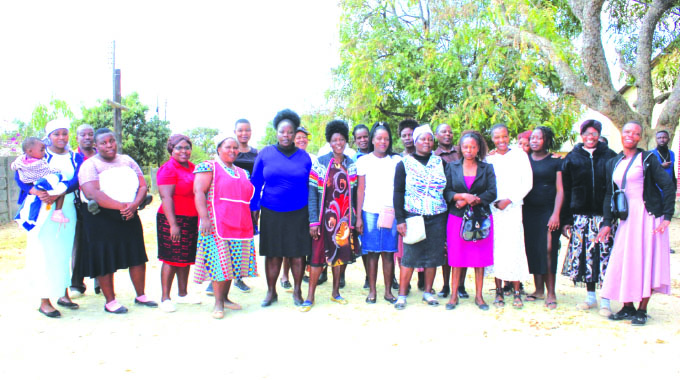
Sifelani Tsiko
Agric, Environment & Innovations Editor
Teukai Kapembeza, 50, of Chikangwe in Karoi is one of the many gender champions who have been engaged through the joint UN-EU Spotlight Initiative to eliminate violence against women and girls in the country.
Working to resolve domestic disputes and eliminating violence against women and girls in Karoi is not for the faint-hearted.
As a gender champion, she risks being injured and beaten up by people she will be trying to assist.
The violence and other hazards are real.
She carries the burden of handling gender based violence issues confidentially and with the professionalism it requires.
“I can be called to resolve GBV issues at any time. It can be during the day, during the night and the early hours of the morning. It is not a job for the faint hearted. You have to be committed and resilient to pull through as a gender champion,” Kapembeza said.
“You can be beaten up or harassed by violent men. You have to tread cautiously to resolve GBV issues. It’s not an easy job.”
Navigating a terrain full of gender-based violence and harmful practices, such as child marriages, continues to be a huge societal problem in Karoi and other parts of the country.
These issues affect women and girls of different socio-economic, cultural, and religious backgrounds and hinder their ability to have a voice, choice and control over their own lives.
But for all the work Kapembeza and all the other gender champions do, there is little appreciation of their critical role in creating violent free spaces for women and girls.
Gender champions or ambassadors were augmenting work being done by the mainstream health sector and the Ministry of Women Affairs, Gender and Community Development with the mandate to develop, coordinate and monitor policy on violence against women.
They raise awareness, give advice, monitor GBV cases in their communities, mobilising communities during outreach programmes and ensure victims are supported through various referral pathways.
“I have a family to feed. I do this work voluntarily with little or no benefit. The most painful part is that we are hardly being recognised,” said Kapembeza.
Said Aleck Chanakira of Chiedza in Karoi: “I am very grateful to Caritas and UN Women for involving us in this project under the Spotlight Initiative. Our involvement has reduced the workload for the police and the Ministry of Women Affairs, Gender and Community Development.
“The most worrying thing is that we get nothing. There is no incentive for us despite our vital function in the fight against gender based violence.”
Angela Gwabada, a gender champion from Chiedza said they lack mobile phones and airtime for communication purposes with victims of GBV.
“We need mobile phones and airtime to effectively discharge our duties. My husband often pays for air time and this does not go well with him. It’s a huge sacrifice. Gender champions need support. Without adequate support GBV cases will increase reversing the gains of the Spotlight Initiative.”
Gender champions are women and men who are dedicated to breaking gender barriers, challenging gender stereotypes and making gender equality possible in work places and communities.
Just like village health workers, gender champions often lack incentives, supporting resources and critical equipment to discharge their work.
“Gender champions have benefited from incentives such as promotional T-shirts and hats, bags and bicycles. We only get allowances when we attend a workshop or training. We need allowances to keep us motivated to continue with our work,” said Chasasa Gatsi, 52, of Chikangwe.
“A small allowance can enhance our work and keep us motivated.”
She said an allowance can help them to buy basic necessities for their survival.
“We do this work voluntarily and at times we are forced to use our own money to ensure we service our community on GBV issues,” she said.
Midia Kawara, 56, of Mhondoro village in the Ward 18 of Hurungwe district said the Spotlight Initiative had brought light to her community.
“Before this programme, domestic violence was rife. Women and girls were abused and their rights denied. But, now, things have changed. People are better informed about GBV issues. When women and girls are raped we now know how handle the cases,” she said.
“We now understand the referral pathways and how to follow – up on cases at the courts. But for all this, we too need some income generating projects to help us improve our livelihoods as gender champions.”
She said, for example, they could be supported with funds to start livestock rearing projects.
“We do this job for the love of our community. But we too, need to be recognised and funded with some money to start some income projects. Incentives can help us to remain focussed on our work,” she said.
Girlie Shoko, 54, of Mhondoro village in Hurungwe said the Spotlight Initiative implemented by Caritas had reduced GBV cases caused by abusive men who had earned tobacco and cotton crop cash.
“During the tobacco and cotton marketing season, there was pain here. Women would commit suicide when men took all the money and spent it on beer and women,” she said.
“Fights were common and women would be abused. With the Spotlight Initiative, GBV cases have gone down. Men and women now do joint budgeting. This ensures that there is peace and harmony in our community.”
She said even though the Spotlight Initiative was coming to an end, there was a need to ensure continuity.
“Child marriages and GBV cases were rampant here but this initiative helped us to reduce the cases. People are now aware of the effects of GBV on women and girls. This project must continue. It must not end,” Shoko said.
“If we stop this project completely, the floodgates of violence against women and girls will be re-opened. Mobilise resources to support gender champions and we will carry on with the work.”
Tidilas Chikara, 48, of Eden Farm in Hurungwe said deaths, divorces and arrests were common before the introduction of the Spotlight Initiative.
“There was no peace here due to tobacco money. People would fight over money, commit suicide out of frustration. This initiative has helped us to resolve domestic disputes on our own without the intervention of the police,” he said.
“We can now do counselling and resolve disputes. We used to spend a lot of time and money going to the police station and courts. Now we can resolve some of the disputes on our own. This project needs to continue because there are young couples who still need more help.”
Despite achievements scored in the fight against gender violence, more problems still abound.
Young girls are still being violated, with some elders forcing them to undergo virginity testing, while in some cases, the abuse of children by step parents was still problematic.
Councillor Bernard Chidhakwa of Ward 18 in Hurungwe said more bicycles were still needed to help gender champions to attend to GBV cases in his ward which had several villages.
“Gender champions need to be incentivised, they need more bicycles and more spares. This ward is big and more bicycles are needed. Our gender champions need allowances or funds to start income generating projects to improve their livelihoods,” he said.
“Gender champions have reduced the workload for chiefs and village heads. Their work is massive and they too, need support to help fend for their families.”
He hailed the Spotlight initiative for reducing suicides and GBV cases as more people were now better informed about the effects of gender violence on the local community.
“I am happy that cases of suicides have gone down, GBV cases are falling here in Hurungwe. We have an agro-based economy and more women are now involved in the marketing of tobacco. This initiative assisted a number of women to be registered as tobacco growers and this has helped to reduce the conflicts and violence that come as couples sell their tobacco,” Chidhakwa said.
“We need to train more gender champions to tackle GBV cases. Drug and substance abuse is now a problem among the youth and we need more support to address some of these problems.
“Village heads were left out in the programme and in the one that will come, we need to include them. They play a critical role in resolving disputes related to the sharing of property after divorce or death.”
Innocent Katsande, the UN Women communications specialist said there were mobilising resources for the second phase of the Spotlight Initiative.
“The project impact has been good but there are gaps that still need to be addressed,” he said. “Male engagement needs to be intensified and village heads must be included. Economic empowerment is a solution to GBV. We also have to address the compelling needs of gender champions. Am optimistic that we should be able to take up some of the issues raised in the next project phase next year in February.”


 Online Reporter