


 Chronicle Editor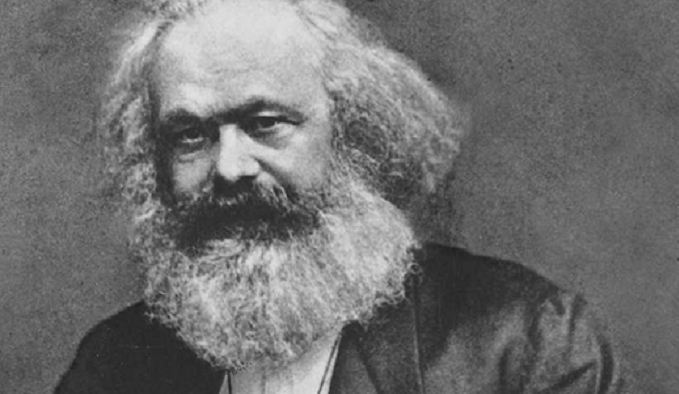
Richard Runyararo Mahomva
The Communist Manifesto (1848) by Karl Marx and Fredrick Engels prefigured the global call: “Workers of the World Unite”.
Today Marx’s theoretical framing of social and market power continues to be cited in articulating the paradigms of difference in various academic and policy-making fields.
His radical challenge of social and economic power relations from a European point of view depicts a Eurocentricity interrogating/rethinking itself.
The underlying premise of the Communist Manifesto is that “history of all hitherto existing society is the history of class struggles.”
The far-reaching insight of his reading of the socio-economic power inequalities at the time cannot be over-emphasised.
Today, this perspective continues to mirror the contestations of capital and those servicing demands of capital. In this thesis, the inequalities derived from history and politics, the miscarriages of revolutions, and the dissatisfactions of Enlightenment principles are discoursed from a single frame of analysis: class.
To this end, the Communist Manifesto exposes how class operates within capitalist societies.
As such, an unescapable and enduring “antagonism” exists between classes in a capitalist society and forms a basic two-class model for the division of society.
The class-ing of society produces workers and capitalists, rich and poor, and repeatedly reproduce these class relations through the market mechanism, driven by the law of value.
The apologists of the capitalist economy say that markets give us “consumer sovereignty”. The market system is in effect a giant economic democracy, where we vote with our money for what we want.
For their part producers have to give people what they want in the quantities they want. Otherwise, they go out of business.
The bourgeoisie own the means of production and use their wealth and ownership to accumulate more capital, while the proletariat only have their labour to sell and are thus forced to rent themselves under threat of starvation.
While the bourgeoisie seeks to increase profits by cutting wages and making people work harder, the proletariat wants to earn higher wages and can do so only through cutting into profits.
This is the source of the class conflict in a capitalist society and an irreconcilable conflict that will end only with the overthrow of capitalism. Capitalists start with money.
But in a market economy money is wealth and allows its owner to buy esoteric pieces of paper which represent titles of ownership to the means of production. We are different too.
As workers for a wage, we are free. We can collect our cards and quit working for one capitalist but we can’t give up working for them as a class.
Social security levels in all capitalist countries are carefully crafted so as not to provide us with a standard of living we regard as normal.
The capitalist class maintains its hold over us through their ownership of the means of production.
The factories and offices where we have to earn our daily bread are in their hands.
Previous ruling classes in history have also perpetuated their dominance through a collective monopoly of the means of production. In the feudal era, lords owned the land. Further back the slaveholders owned slaves, who did all the hard work.
The capitalist ordering of the world has seen Africa belonging to the peripheries of imperialist categorisations. It is from this premise that since slavery to this day, our economic sovereignty is determined and controlled by colonial Europe.
Therefore we represent the exploited in the value-chain of imperialism. In the global power structure which is a site for “class struggle’’, we are antagonists to the dictates of capital domination.
It is on the backdrop of this reality that post-colonial Africa found herself entrapped in Structural Adjustment Programmes. Through this route, sovereignties were compromised and poverty deepened across Africa.
In the first decade of independence, Zimbabwe adopted the Economic Structural Adjustment Programme (Esap).
It later emerged that Esap was imposed to marry colonial capital with our political autonomy.
Zimbabwe’s attainment of independence like that of other African countries dislodged colonial supremacy. In responding to the effects of decolonisation, the dependent economic linkage between the West and post-independent African countries was re-established.
Global capital was at the centre of this neo-colonial agenda, hence the centrality of International Financial Institutions who were interlocutors of this process.
The continuation of this mission has been facilitated by emerging Western-sponsored opposition political parties which draw their popularity from the economic stresses of the people.
The continued escalation of poverty in Africa has been used as a decoy by imperialist forces to fracture the popularity of liberation movements.
This has sustained the naive depiction of Zimbabwe’s underdevelopment as an exclusive and typical creation of the post-colonial state’s bad governance culture.
This set the ground for the imperialist downgrading of post-colonial African politics.
Today African politics and economics are engineered in a manner which continues to stratify us at the bottom of the pyramid of global economic power.
This globally designed marginality should be the reason for Africans to unite against those powers perpetuating our exploitation.
Every Zimbabwean is a nationalist and anti-colonial at heart. For any political party to survive, its manifestos and action plans must speak to that anti-colonial predisposition and create a comfortable standard of living for everyone (as espoused by the principles of the revolution).
Any departure from that is futile. We must find a common cause of liberation and deconstruct the oppressive normalcy of imperialist logic.
Therefore, the framing of economic policy-making must be grounded on a history of economic inequalities which modelled the structure of the pre-independent African state.
The post-independent state’s economic equality ideological premise must be the starting point of justifying our contesting global economic exploitations and inequalities.
In this spirit, we must reassert our position as the marginalised of the world to unite, reject all forms of returning to Esap and other IMF trappings. The Workers’ Day holiday was marked on Friday.
Richard Runyararo Mahomva is a Political-Scientist with an avid interest in political theory, liberation memory and architecture of governance in Africa. He is also a creative literature aficionado. Feedback: [email protected]


 Online Reporter