Chronicle Editor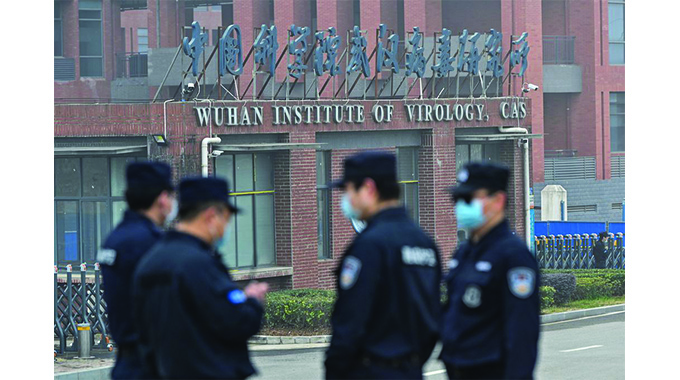
Geneva, Switzerland – The much-anticipated report from the international mission to Wuhan to investigate Covid-19’s origins is set to be published this week, following intense US and Chinese pressure over its contents.
The coronavirus pandemic has engulfed the planet, killing more than 2.6 million people and shredding the global economy since the first cases emerged in the Chinese city in December 2019.
In the 15 months since then, science has miraculously developed multiple vaccines to fight the disease – but the mystery at the very heart of the pandemic remains unsolved.
It was only in January 2021 that a team of international experts assembled by the World Health Organisation finally visited Wuhan to start a month-long investigation on the ground.
The WHO mission was aimed at finding clues as to how the virus originally jumped from animals into humans.
Now, another month on after leaving Wuhan, the team and its Chinese counterparts are set to issue their findings – which should help to identify the most likely pathways, while relegating other less probable hypotheses.
Hunt for clues
While global leaders want immediate answers, uncovering the exact origin of an epidemic takes time – and is sometimes never found.
Nonetheless, the mission members, drawn from a range of fields and disciplines, are upbeat.
“I’m convinced we’re going to find out fairly soon. Within the next few years, we’re going to have real significant data on where this came from and how it emerged,” British zoologist Peter Daszak, one of the team members, said last Wednesday.
On February 9, the team held a lengthy news conference in Wuhan before departing, giving a taster of what might appear in the report.
Experts believe that SARS-CoV-2, the new coronavirus that causes Covid-19, originally came from bats, and jumped into humans via an intermediate animal.
However, samples from tens of thousands of wild, domestic and farm animals in the region revealed no trace of the virus.
The scientists are also uncertain as to where and when the outbreak started, though the Wuhan cases remain the earliest known.
That said, the mission has produced a number of hypotheses. “There was conduit (back) from Wuhan to the provinces in south China where the closest relative viruses to SARS-CoV-2 are found in bats,” Daszak told an event hosted by Britain’s Chatham House think-tank last week.
“It provides a link and a pathway by which a virus could convincingly spill over from wildlife into either people or animals farmed in the region and then shipped into a market.
“That’s a really important clue.”
The team also did not rule out transmission through frozen meat – imported frozen food packages being Beijing’s favourite theory.-IOL.



 Online Reporter