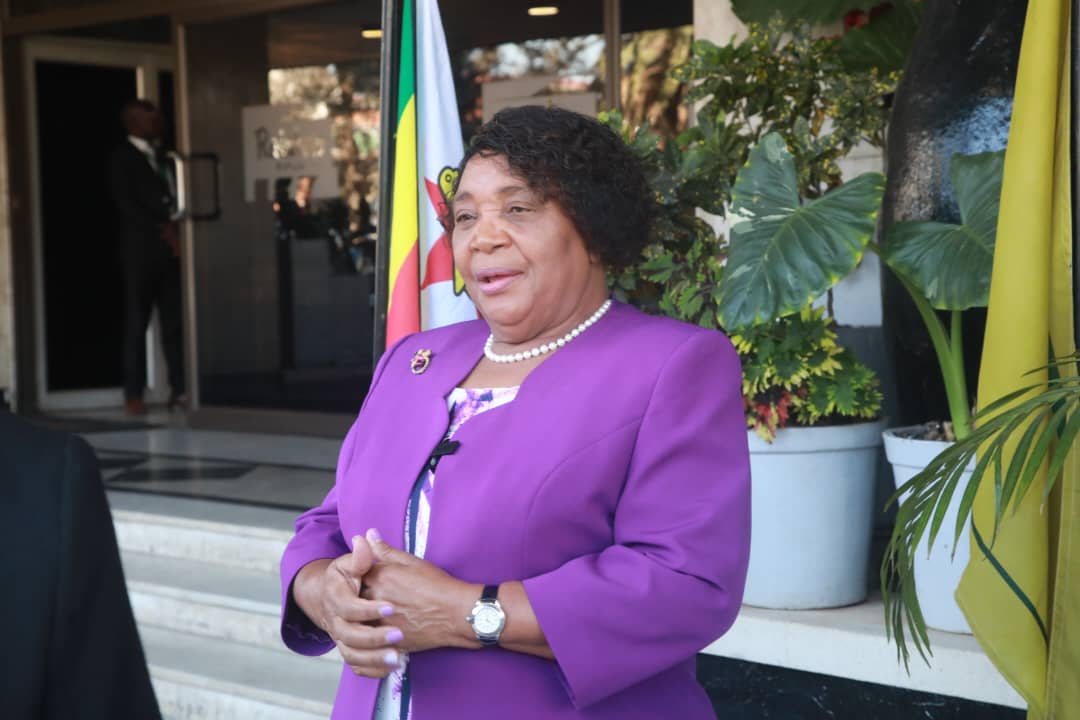
Keynote address by Chief Justice Gwaunza at the Magistrates National Conference held in Bulawayo on July 10, 2026
Distinguished Guests, Ladies and Gentlemen, it is a pleasure to deliver the keynote address at the Magistrates National Conference. This is an important gathering of the largest body of judicial officers in the Judiciary.
It has been more than three years since magistrates from across the country gathered in a forum of this nature. That gap should remind us not only of the demands of judicial service but also of the importance of occasions such as this. Magistrates serve in courts across every province of Zimbabwe, working with little opportunity to exchange ideas with colleagues confronting the same challenges elsewhere.
That is what makes this Conference so important. It brings together a magistracy that is otherwise dispersed across the country and provides a rare opportunity to reflect, learn from one another and strengthen our shared commitment to the administration of justice. It reinforces the common standards, professional relationships and the institutional identity upon which a vibrant and effective magistracy depends.
The Judicial Service Commission recognises the value of this engagement and remains committed to ensuring that this Conference is held with the regularity it merits.
This year’s Conference is convened under the theme:
COMPETENCY, WELL-BEING AND EFFECTIVE JUSTICE DELIVERY IN THE MAGISTRACY.
Our theme recognises a simple but important truth. Competence and well-being cannot be separated. A magistrate who lacks the necessary skills cannot deliver justice effectively. Equally, a magistrate who is overwhelmed or unwell cannot consistently perform at the standard the Constitution demands. Effective justice depends on both.
Everything we discuss during this Conference ultimately serves one purpose. That is ensuring every person who enters a magistrates court encounters a Judiciary that is competent, fair, efficient and worthy of public confidence.
THE MEANING OF COMPETENCE IN THE MAGISTRACY
Competence, as a constitutional value, is not a matter of choice for a judicial officer. Section 165 of the Constitution of Zimbabwe requires members of the Judiciary to take reasonable steps to maintain and enhance their professional knowledge, skills and personal qualities, and to keep abreast of developments in both domestic and international law. This obligation applies equally to judges and magistrates. Indeed, it is in the magistrates court that the overwhelming majority of Zimbabweans encounter the justice system for the first time.
For many citizens, the magistrate is the face of justice. The impression formed in that first encounter often becomes the public’s lasting impression of the Judiciary itself. Every magistrate therefore carries not only the responsibility of deciding cases according to law, but also of strengthening public confidence in the administration of justice through the manner in which judicial authority is exercised. Competence is therefore a daily professional obligation instead of a mere aspiration.
The programme for this Conference reflects that understanding. Regional Magistrates will engage with issues arising from their scrutiny and supervisory responsibilities, while other magistrates will focus on recurring challenges in criminal and civil adjudication, including the assessment of evidence and judgment writing. In this way, the training responds directly to the realities of judicial work at every level of the magistracy.
The office of magistrate has a long and distinguished history in this country. While the environment in which magistrates work has changed, the responsibilities of the office have remained constant. Every magistrate still takes an oath, in terms of section 9 of the Magistrates Court Act [Chapter 7:10], to serve faithfully, impartially and diligently. Those obligations remain as relevant today as they were when the office was first established. What has changed is the context in which that oath must be honoured. Today’s magistrate works in an environment shaped by electronic case management, performance management and heightened public expectations of efficiency, accountability and transparency. Competence, in the sense intended by this Conference, is the modern expression of that enduring judicial promise.
Competence is inseparable from discipline, integrity and personal responsibility. While instances of misconduct within the magistracy may not be many, even isolated cases of corruption, absenteeism, laziness, neglect of duty or persistent failure to meet deadlines have the capacity to erode public confidence in the courts. There is no room in the Judiciary for any form of misconduct. A magistrate who fails to attend to work diligently, delays judgments without lawful or reasonable cause, neglects court duties, solicits or accepts improper benefits, or conducts himself or herself in a manner inconsistent with the dignity of judicial office undermines the oath of office and the authority of the court.
This obligation is reinforced by the Judicial Service (Magistrate’s Code of Ethics) Regulations, 2019, SI 238 of 2019, which require magistrates to uphold the standards of independence, impartiality, integrity, propriety, competence and diligence expected of judicial office. These values must be reflected in punctuality, preparedness, courtesy, ethical conduct, proper management of court records, timely delivery of judgments and the avoidance of any conduct that may create a perception of impropriety. Well-being and institutional support must therefore never be misunderstood as tolerance for indiscipline. They are intended to strengthen magistrates so that they may serve faithfully, impartially and diligently, while remaining fully accountable to the ethical standards of the office.
Allow me to say a word about judgment writing, a competency that features prominently in this Conference. A judgment is the public expression of a magistrate’s reasoning. It enables both the parties and the public to understand how the court reached its decision. Clarity of thought, a careful statement of the relevant facts and the correct application of the law to those facts remain the hallmarks of a sound judgment. I therefore commend the sessions devoted to judgment writing and sentencing. They go to the very heart of the quality of justice experienced by those who come before our courts.
WELL-BEING AS A JUDICIAL VALUE
The second pillar of our theme is well being. It has not always been the practice of judicial institutions to speak openly of the wellness of judicial officers, yet the demands of the bench are considerable. Today, we recognise that judicial well-being is not a peripheral concern but an essential part of effective justice delivery. Magistrates carry demanding caseloads, work under considerable pressure and make decisions that profoundly affect the lives of others. Over time, that responsibility carries a personal cost.
It is therefore commendable that this Conference includes dedicated sessions on mental health and psychosocial support, delivered in partnership with the Regional Psychosocial Support Initiative. These sessions are not a departure from the serious business of judicial education. They are central to it.
Magistrates routinely deal with traumatic evidence, difficult disputes and decisions that have life-changing consequences. A judicial officer who is supported in managing those pressures is better able to exercise the patience, balance and clarity of thought that justice demands. By investing in the well-being of magistrates, the Commission is also investing in the quality of judicial decision-making, and ultimately the attainment of the JSC vision to deliver world class justice.
I encourage every magistrate attending these sessions to participate fully. View them not as an optional addition to the programme, but as an integral part of your professional development. The collegiality fostered by this Conference, through shared meals and the excursions planned for its final day, is itself a form of well-being and renewal. There is restorative value in magistrates recognising that the challenges they often face are shared by colleagues and that no magistrate serves alone.
EFFECTIVE JUSTICE DELIVERY
The third pillar of this Conference is effective justice delivery. Few developments better illustrate this objective than the continued rollout of the Integrated Electronic Case Management System.
I am pleased to report that implementation of the IECMS continues to gather momentum across the magistrates courts. Most recently, the provinces of Manicaland and Mashonaland East successfully launched the system on 1 June 2026, joining the growing number of stations now conducting judicial business electronically.
This progress reflects careful planning and sustained commitment. Even as we gather in Bulawayo, preparations are underway for the launch of Phase 4.4, targeting the implementation of the IECMS in the Midlands and Mashonaland West Province. The Secretary and his team have been engaged in stakeholder meetings across the Midlands Province, preparing the ground for the next phase of this rollout. Magistrates from Kwekwe to Mvuma have, in the days immediately preceding this Conference, had the opportunity to interact directly with the Secretariat on what the transition to the IECMS will require of their stations.
I encourage magistrates whose stations have already migrated to the IECMS to share their experiences with colleagues preparing for the transition. Such practical exchanges build confidence, promote consistency and make implementation considerably smoother.
To those magistrates whose stations are yet to migrate, I offer this assurance: the Commission remains committed to providing the training, guidance and institutional support necessary for a successful transition.
The move towards e-justice is no longer a future aspiration. It is the direction in which our Judiciary is moving, and it is a journey which we must all embrace and undertake together.
Technology, however, is only one aspect of effective justice delivery. Equally important is the manner in which we measure and improve our performance.
The adoption of the Integrated Results-Based Management (IRBM) framework has introduced a culture that places greater emphasis on measurable performance and institutional accountability. Through performance contracts, every judicial officer can clearly appreciate how individual performance contributes to the broader objectives of the Commission and ultimately, to the constitutional imperative of timely and quality justice.
This represents an important shift in the way we understand judicial performance. Diligence is no longer measured by commitment alone, but also by demonstrable results. That should not be viewed as an additional burden. Properly implemented, the framework provides clarity, promotes consistency and recognises the considerable work already undertaken by magistrates throughout the country.
This culture of accountability is entirely consistent with judicial independence. The two are not competing values. Judicial independence protects the integrity of judicial decision-making, while accountability strengthens public confidence in the institution that exercises judicial authority on behalf of the people.
I recognise that adapting to this framework requires support as well as accountability. The Commission remains committed to providing the training, mentorship and resources necessary to ensure that every magistrate is equipped to meet these expectations with the necessary confidence.
OUR PARTNERSHIP WITH THE NAMIBIAN MAGISTRACY
It gives me great pleasure to acknowledge the presence of our distinguished colleagues from the Namibian Magistracy, who will shortly share reflections on judicial service in Namibia. Your presence is a tangible expression of the close relationship that continues to grow between our two Judiciaries.
That relationship is founded on the Memorandum of Understanding signed in Windhoek in May 2024. Since then, our two Judiciaries have worked together in areas including judicial education, electronic case management, mediation and the sharing of institutional best practices. This Conference is another important milestone in that partnership.
The exchange of experiences between our judicial officers is one of the most effective forms of professional development. While our jurisdictions may differ in some respects, the challenges confronting modern Judiciaries are remarkably similar. We all strive to improve access to justice, strengthen public confidence, embrace appropriate technology and maintain the highest standards of judicial integrity.
I therefore encourage every magistrate to engage fully with the perspectives that will be shared by our Namibian colleagues. There is much that we can learn from one another, and I am confident that the relationship between our two Judiciaries will continue to deepen in the years ahead.
THE STRUCTURE OF THIS CONFERENCE
This Conference has been carefully designed to ensure that every magistrate leaves Bulawayo better equipped for judicial service. Alongside the plenary sessions, the specialised breakaway discussions will provide practical guidance tailored to the responsibilities of each level of the magistracy. They will address the issues that arise most frequently in the daily administration of justice, from scrutiny functions and sentencing to judgment writing, civil adjudication and matters involving children.
The programme also provides opportunities for engagement beyond the lecture room. The Annual General Meeting of magistrates and the engagement session with the Secretary will enable open discussion on matters affecting the magistracy and the administration of justice more broadly. Together, these engagements will ensure that the voice of the magistracy continues to inform the work of the Judicial Service Commission.
I encourage each of you to take full advantage of the days ahead. Ask questions. Share your experiences. Learn from one another. The greatest value of a Conference such as this lies not only in the knowledge imparted from the podium but also in the professional conversations that continue long after each session has ended.
I also welcome the thoughtful inclusion of time for reflection and renewal at the conclusion of this Conference. The opportunity to rest, engage with colleagues and return to your stations refreshed is entirely consistent with this Conference’s theme.
CONCLUSION
As I conclude, I wish to express my sincere appreciation to all those who have made this Magistrates National Conference possible.
I would like to thank UNICEF for jointly sponsoring this gathering. For many years, UNICEF has partnered with our Judiciary in advancing initiatives that strengthen access to justice, particularly for the most vulnerable members of our society. Its continued support and presence here as a co-facilitator, as it was at the last Magistrates National Conference, is a testament to an enduring partnership that the Commission values deeply.
I also acknowledge the Secretariat of the Judicial Service Commission, under the leadership of the Secretary, Dr W.T. Chikwana, for the dedication and professionalism that have gone into organising an event of this scale. My appreciation extends equally to the Judicial Training Institute of Zimbabwe for its continued stewardship of judicial education and for the meticulous planning that has made this gathering possible.
To our colleagues from Namibia, I once again extend our sincere gratitude for honouring us with your presence and for your willingness to share your experience with us. Your participation enriches this Conference and strengthens the enduring relationship between our two Judiciaries.
As a parting word, the true measure of this Conference will not be the quality of the presentations delivered over the coming days. It will be the extent to which what is learned here finds expression in courtrooms across Zimbabwe.
Therefore, when you return to your stations, I encourage you to carry with you more than new knowledge. Return with renewed confidence in your office, a deeper commitment to professional excellence and a renewed resolve to continue serving faithfully, impartially and diligently implicit in this. In strengthening the magistracy, you strengthen public confidence in the administration of justice itself.
I wish you every success in your deliberations in the next two days.
‘World-class justice starts with the magistrate’