Online Reporter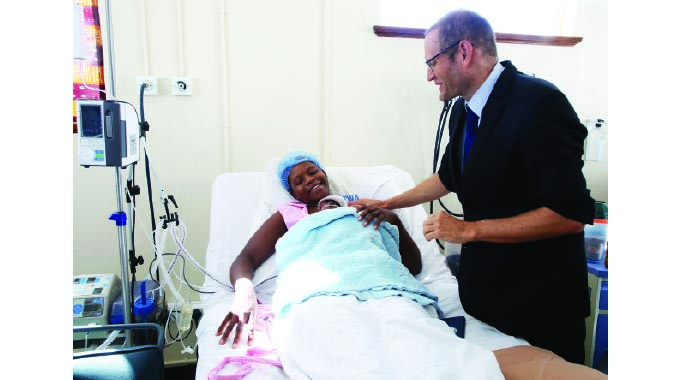
Belindah Chikandiwa
Herald Correspondent
ZIMBABWE recently joined the rest of the world in marking World Prematurity Day, which is dedicated to the smallest and most vulnerable citizens and medical teams fighting for their survival.
At the forefront of this battle is Dr Alex Stevenson, a neonatologist at NeoCare Baby Hospital and Mbuya Nehanda Hospital.
“We celebrate the successes we have had,” Dr. Stevenson explained, “but we also organise and plan for the future.”
He noted that “somewhere between 1 in 10 and 1 in 5 pregnancies” end with a preterm birth, a situation he describes as “very precarious” for babies born as early as 24 weeks.
“What we are happy about is that we are making a lot of progress here, all over Africa and all over the world, that these babies who may not have survived 10, 20 years ago, now are not just surviving, but surviving and thriving, we have our graduates who are here to celebrate this day with us, so we are very happy about what we have achieved,” he said.
Dr. Lethile Madzudzo, a neonatologist at NeoCare, affirmed their commitment to saving premature babies.
“To the families of preterm babies, I want to say: you are not alone. We’re with you every step of the way,” Dr. Madzudzo stated.
Ms Michelle Mahwite, the mother of a two-year-old born premature, knows this issue all too well.
“No one can ever prepare you to be a preterm mom,” she shared, recounting the day her son was delivered at 29 weeks, weighing just 1,1 kg.
Her journey was fraught with peril, with her child flatlining twice at birth. For Michelle, the path home was marked by tiny milestones.
“From having to drink 0,5 millilitres of milk, the next day he would be able to have 2 millilitres, those were the beautiful things I would look forward to every day.”
In an interview, another mother, Ms Chivimbiso Moyo, faced an even daintier ordeal. Her daughter was born at 25 weeks, weighing a mere 720 grammes.
“It was super scary because at any other hospital, the public hospitals, they start saving babies at 28 weeks,” she said.
“So our only option was NeoCare,” Miss Moyo stated that her child stayed in the NICU for 82 days, on oxygen for 70 of them.
“Being a premature mom, it’s not easy. It’s so traumatising. Like in my case, when it happened, everything else with the pregnancy seemed as if it was okay, but she came early because my waters ruptured. They were ruptured mistakenly, and then she was born at 25 weeks.
“The trauma really turned out into something beautiful and I ended up creating a program writing books for helping babies, to help moms and caregivers connect with their little ones… to empower whoever was taking care of her.”
This progress in survival is driven by collaboration. NeoCare is part of the African Neonatal Network, a coalition engaged in quality improvement across the continent.
“We are getting more and more international interest,” Dr. Stevenson noted, signalling a positive shift in the capacity of Zimbabwe’s healthcare system.
As the world turns purple in solidarity, the stories of these mothers, determined cries in neonatal units, are a powerful testament to a battle being slowly but surely won, giving each preterm baby a future filled with what Dr Madzudzo called “hope, promise, and possibility.”