Online Reporter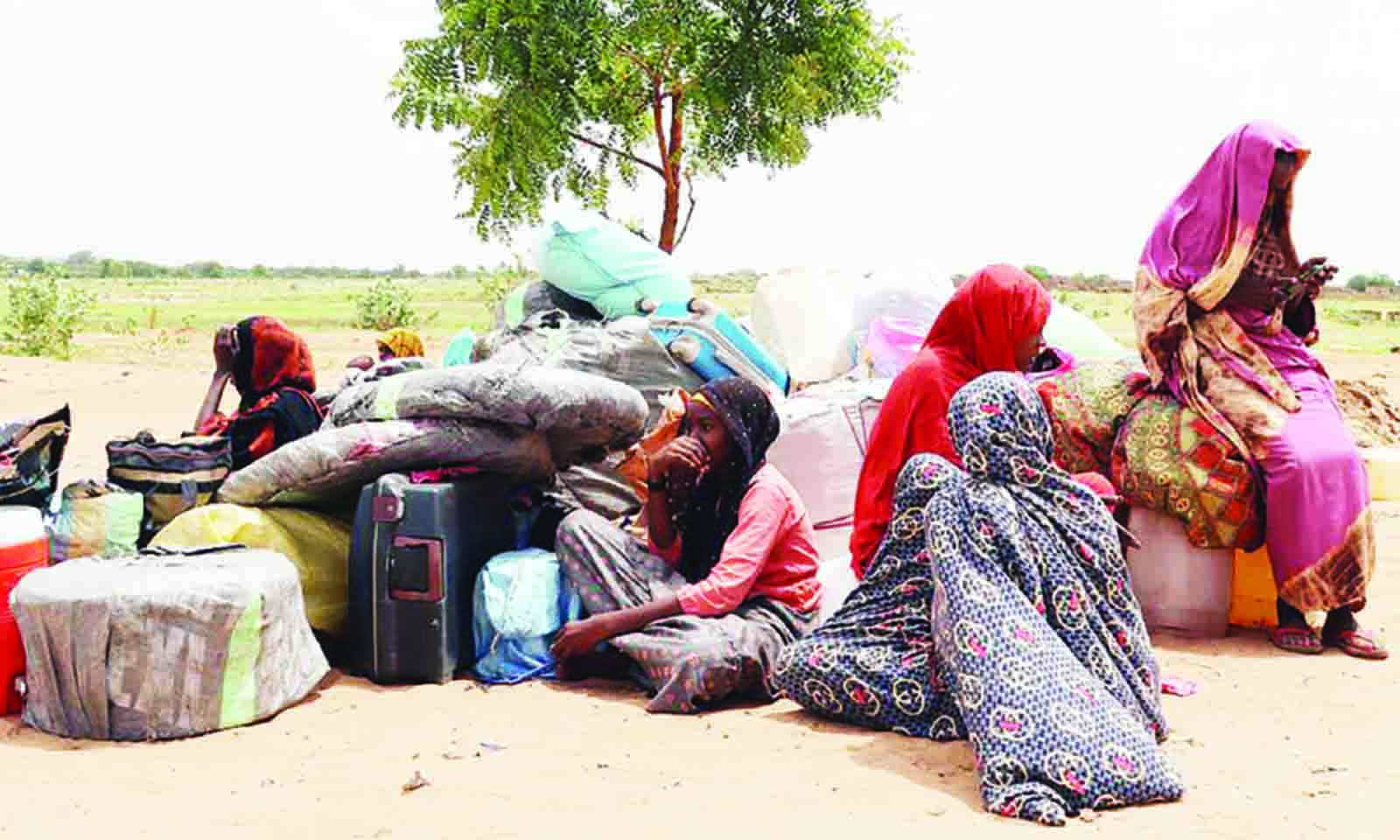
Natalie Makanaka Burutsa and Isabel Valentim
While the world media, day in day out, focusses on Israel’s massacres in Gaza and the war in Ukraine, a monumental human displacement disaster has unfolded in South Sudan.
The world is silent because there are no serious Western Europe interests in Southern Sudan. That is the fad of geopolitics.
Sudan is of this October 2025, the site of the world’s largest displacement crisis and one of the world’s worst humanitarian crises according to Committee 24.
And yet, for a crisis of such monumental scale, with over 12 million people forcibly displaced and 30 million people in desperate need of aid (IDMC, n.d.), it is conspicuously missing from the world’s attention.
The silence about Sudan is not merely a journalistic shortfall; it is also a profound moral and political shortfall that has directly meant death and starvation.
The facts are a scathing indictment of global priorities: conflict between the Sudanese Armed Forces (SAF) and the Rapid Support Forces (RSF) has opened the floodgates of violence, systematically destroying civilian life.
More than half of Sudan needs assistance and famine — the man-made consequence of war— has taken hold in Darfur and is metastasising across the country. But where are the headlines? Where is the diplomatic indignation for the long haul?
The Calculus of indifference
Attention is currency in international politics. Unfortunately, the Sudan crisis has been priced out of the global media market for some compelling, if unpardonable, reasons:
The “Forgotten Conflict” Syndrome: Sudan is a casualty of a brutal “conflict ranking.” While other foreign crises, particularly those with direct Western involvement or geopolitical urgency, grab headlines and humanitarian resources, Sudan gets short-changed.
The story of long suffering has been normalised, a continuing, unresolved African saga that, without a new military invasion or a threat to a key Western ally, is a hard sell to a jaded audience.
Access and Logistics
Covering the war is journalistically suicidal. The ongoing war, official obstacles and deliberate violence directed at humanitarian and media personnel render it nearly impossible for international reporters to travel unobstructed.
Over 110 aid workers have been killed, injured or abducted since the conflict began, highlighting the severity of the access crisis (OCHA United Nations Office for the Coordination of Humanitarian Affairs, 2025)
Geopolitical disinterest
The conflict in Sudan lacks the easy East vs. West appeal that might bring top-shelf international attention. Instead, it is fuelled by a complex array of regional and proxy interests with minimal direct Western military engagement.
As a result, there is minimal political dividend for overt Western intervention. Disinterest, in this instance, is very much the path of least resistance for world leaders.
From silence to starvation: The funding shortfall
The silence has one direct, catastrophic consequence: the inability to finance the humanitarian response. Public awareness creates political will, and political will unlocks budgets.
The United Nations’ inter-agency appeals for Sudan and the region require $6 billion to fund immediate needs in 2025. Most urgently, the Sudan Humanitarian Response Plan, requiring $4.2 billion, is woefully underfunded, with a catastrophic funding deficit forcing local responders the very lifeblood of the relief effort to shut down communal kitchens and mobile clinics.
When the world’s focus wanes, the funding dries up, and people do not simply suffer; they die.
This shortfall has the following consequences:
The spread of infectious diseases like cholera and dengue fever is unabated in overcrowded displacement camps.
Hospitals, already destroyed or non-functional, are not supplied with life-saving equipment.
Famine conditions, already created, are allowed to proliferate.
The weaponisation of starvation by the warring parties through siege warfare, pillage, and interdiction of relief convoys is enabled by the world’s tacit complicity that encourages the perpetrators to operate with impunity and disregard.
The international relationsimperative
For a world order based on the rhetoric of human rights and the doctrine of Responsibility to Protect (R2P), the world’s response to Sudan is a stark moral failure.
We cannot plead ignorance. UN experts have repeatedly warned that the scale of abuses.
Use of sexual violence, starvation and forced displacement as weapons of war, may amount to war crimes and crimes against humanity.
The moment calls for a radical shift in action:
Access: The international community must move beyond condemnatory statements and demand unconditional, ongoing humanitarian access to all of Sudan, pursuing all lawful avenues to ensure that aid is delivered to those areas under siege like El Fasher. (International Organisation for Migration, 2025)
Impose accountability: The days of diplomacy alone are over. The international community needs to work together to impose targeted sanctions on the leadership of the SAF and RSF, and their external sponsors, to sever the supply lines of arms and funds that are fuelling the war.
Break the silence: The global media and civil society must overcome the calculus of indifference. Sudan’s story is not a “static” tragedy; it is a dynamic, mounting atrocity that demands coverage on a daily basis. The true test of our global system is not how we act in response to crises in our interests, but how we act in response to the suffering of a people we have chosen to ignore.
Silence in the face of Sudan’s agony is complicity. The world must act now to pull this crisis out of the shadows and prevent the complete collapse of a nation.
Natalie Makanaka Burutsa and Isabel Valentim are students of International Relations at Africa University.