Chronicle Editor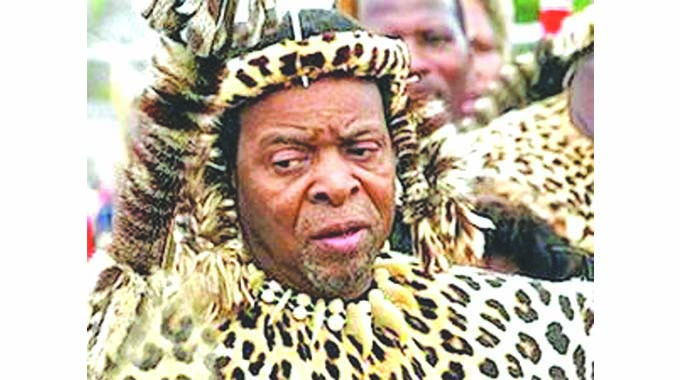
Pathisa Nyathi, Opinion
THE burial of the late King Zwelithini kaBhekuzulu reflected and embraced long-held ideas relating to perceptions of death and the elements of African Thought in general. It was a funeral that took place at a time when the Covid-19 pandemic was wreaking havoc in the world with South Africa having witnessed the emergence of a strain that is unique. Measures to mitigate the spread of the Covid-19 pandemic were obvious. The mourners had their mouths and noses covered with face masks.
It was clear too that during the memorial service social distancing was observed. Most conspicuous were the bereaving queens who were clad in black pairs of shoes, black skirts and black veils that completely covered their heads, face and shoulders. Looking at the arrangement of their chairs it was clear they observed social distancing much as they also observed traditional Zulu forms of mourning a deceased royal husband. South Africa is currently in Lockdown Level 1 regulations which stipulate that gatherings at funerals may not exceed 100 people.
Aware that there were several people who would have loved to attend the memorial ceremony in flesh, there were arrangements put in place for online live streaming platforms for the funeral. These included Twitter, Facebook, and YouTube. That way, millions of people all over the world did observe the public proceedings. There were of course some private rituals that belong in the secret domain where a few members of royalty attended. The media was not allowed to cover these.
While the Covid-19 manifestations were there for all to see, equally glaring were traditional aspects that perhaps not all of us are au fait with. As I looked at the mourners’ attire, the attending maidens and the much talk about ukutshalwa kwenkosi, I found myself tucking into important elements of African Thought. Perhaps let us start with ukutshalwa kwenkosi which literally means the planting of the King. As the narrators on one television channel did observe, translating literally across languages and cultures does present its own unique challenges. When King George VI died newspapers were awash with the words: “The King is Dead. Long Live the King!”
Those words perhaps aptly capture the concept of ukutshalwa kwenkosi. In Zulu, ukutshala means to plant seed (imbewu) from which a new plant emerges and matures to produce its own seed. Encapsulated in this concept is the idea of continuity and endlessness of the ruling royal Zulu lineage. This is the case from centuries ago when Ntu, the father of Mnguni gave rise to the Zulu lineage of rulers up to Senzangakhona. It was during the tenure of King Tshaka when he transformed the lineage-based political formation to a powerful monarchy.
What is important is that the ruling lineage has, since those historical times, ruled the Zulu nation. This is to say the rulers have always come from the same lineage. There is what ukutshalwa kwenkosi underpins and expresses. It is about circumscribed succession, a procedure that is confining and yet resulting in the extension of the succession of the ruling line into the future. King Zwelithini kaBhekuzulu will be succeeded by one of the late King’s sons. The bloodline of Kings extends into the future in a symbolic expression: seed-plant-seed-plant, a never-ending cycle of rulers. This is a political tradition which is expressed through the various artistic renditions.
Embodied within the concept is renewal and rebirth when a new plant emerges with vigour, stamina and robustness.
The King’s body was accompanied by amabutho and maidens from a funeral parlour to the Royal Palace at Kwanokhethomthandayo in Kwanongoma. For some of us the picture that emerges is that of amabutho the soldiers who always accompanied the King and had the responsibility to appoint new regiments. In addition there were maidens who completed the picture. I see important opposites, perhaps complementing opposites which are expressions of eternity just in the same way as ukutshalwa kwenkosi. This is continuity expressed through sexuality, with the male amabutho representing the male element and the maidens representing the female element. One observation to make is that the people constituting these elements are of undoubted virility, thus making them indubitable purveyors of fertility which is the synonym of enduring and sustainable life.
At the level of dress there were several fertility symbols on women’s attire. It was indeed appropriate that the symbols, which are all female anyway be worn by the womenfolk. The chevron patterns and circles with small dots inside of then abounded-rendering on the dresses the cosmic galaxies and constellations. What has come to be considered as Zulu women’s headdress with chevron designs on the brims were a common sight. The hat essentially is a single down-facing triangle and is the same as the chevron pattern — a repetition of the same single triangular unit. Repetition is one of the elements of African aesthetics derived from the cosmos, the source of ideas regarding beauty.
The beadwork, rendered in black and white “diamond mesh” is no more than triangles which are back to back and separated by some imaginary line. It’s really back to the triangle which is the zone, in the body of woman that demarcates the area occupied by the all-important womb — the site or tissues in which we begin life. On the other hand the men, amabutho were holding cylindrical wooden staffs some of them single-knobbed and symbolising male sexuality. As if that was not enough, the pieces of leopard skins that they graced their necks and shoulders with formed a triangle which tapered beyond the men’s chests. It too was a down-facing. The message embedded in the triangle is now well known. Women will also wear necklaces fashioned in the same triangular pattern that bears the same message.
Finally, let us make some reference to nocturnal burial. This was done in order to safeguard the undisturbed and uninterrupted succession process. It is recognised and acknowledged that there are people of malevolent intentions and capacities who may thwart the smooth transition from seed to tree. The exact site of the resting place for the King must not be known to all and sundry. The facilitation of fertility rituals must not be known.
Quiet chants may be used to reverse or nullify the facilitation rituals that had been performed through chants — all aimed at facilitating the smooth transition from one ruler to the next. A spell may be cast on the chosen or identified heir with dire consequences on his health which may disqualify him as the future King must not have some blemish, either of a mental or physical nature.



 Online Reporter