Online Reporter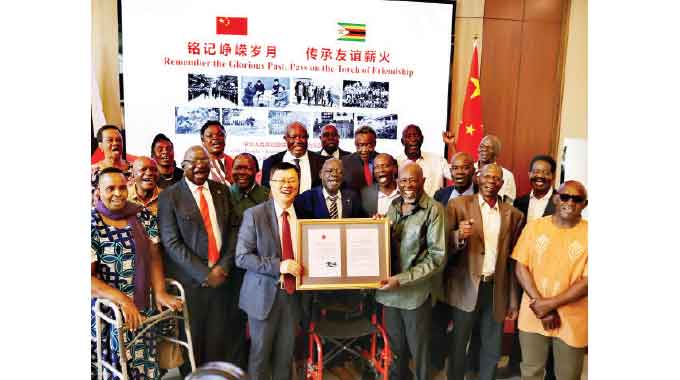
Kuda Bwititi-Politics, Foreign Affairs and Opinions Editor
IN a gesture that underscores the “all-weather” nature of the relationship between Harare and Beijing, Chinese President Xi Jinping last week replied to a letter from veterans of Zimbabwe’s national liberation war.
This exchange was not just a diplomatic formality but an insightful reaffirmation of a bond forged in the trenches of the 1960s and 1970s, when China provided training and material support to Zimbabwe’s war against colonial rule.
This relationship has transcended its revolutionary roots to become a definitive blueprint for 21st-century modernisation, underpinned by China’s transformative contributions to Zimbabwe’s infrastructure, industrialisation and national development.
President Xi’s response arrives at a decisive strategic juncture. As the global community navigates an increasingly fragmented and turbulent geopolitical landscape, this high-level correspondence serves as a definitive roadmap for the future.
It illuminates three critical pillars that fortify the China-Zimbabwe partnership.
These are the indomitable weight of historical memory, the collective pursuit of shared modernisation and the urgent imperative of intergenerational succession to ensure the revolutionary flame continues to light the path for future leaders.
Beijing’s steadfast commitment to Zimbabwe and the broader African continent remains an unwavering pillar of its global diplomacy.
This consistency is anchored in a long-term strategic vision that prioritises mutual respect over political expediency. Indeed, in his very first meeting with President Mnangagwa as Head of State, in April 2018,
President Xi articulated this enduring bond with profound clarity. Speaking at the Great Hall of the People during their meeting in Beijing, President Xi said:
“No matter how the international situation changes and to what stage China develops, China will, as always, stand with all developing countries, including African countries, and be a sincere friend and a reliable partner of Africa.”
The timing of the letter to war veterans underscores a consistent theme in Chinese strategic and cultural identity. It draws upon a 5 000-year civilisational legacy that emphasises mutual aid and collective prosperity.
This philosophy is codified in President Xi’s book The Governance of China V, specifically within the chapter “Build an Open, Inclusive and Interconnected World for Common Development.” In this chapter, President Xi writes:
“As the saying goes, when you give roses to others, their fragrance lingers on your hands. In other words, helping others is helping oneself.”
The bedrock: Comradeship forged in struggle
The letter struck an uncommonly personal chord, noting that in their youth, these veterans left their homelands and forged with China a profound friendship and comradeship in the struggle.
This refers to the historical reality where China, despite its own economic challenges at the time, provided critical military training and hardware to Zimbabwe’s liberation movements.
Through referring to the veterans as good comrades President Xi invoked a specific revolutionary vocabulary that separated this relationship from the transactional nature of Western diplomacy. For Zimbabwe, this history is the “DNA” of its foreign policy.
The veterans’ letter expressed gratitude for this valuable support, a sentiment that resonates deeply today as Zimbabwe continues to face unilateral sanctions from the West—a modern form of the imperialism and colonialism that China helped them fight decades ago.
2026: A landmark year for the Global South
A centrepiece of President Xi’s reply is the significance of the year 2026. This year marks two major milestones: The first is that it is the 70th Anniversary of Diplomatic Relations, which is seven decades since China first established formal ties with African nations.
The second aspect is that this year has been dubbed China-Africa Year of People-to-People Exchanges. This is an initiative aimed at moving the relationship beyond Government-to-Government infrastructure projects and into the hearts and minds of ordinary citizens.
President Xi is effectively framing the China-Zimbabwe relationship as the “gold standard” for what he calls an “all-weather community with a shared future.” In aligning this anniversary with the “Year of People-to-People Exchanges,” Beijing is signalling that the next phase of the partnership will focus on culture, education and direct human connection, ensuring the tireless spirit of the liberation era is not lost in translation to the digital age.
Modernisation: A shared journey
Perhaps the most forward-looking aspect of the exchange is the focus on the Chinese path to modernisation. The veterans praised President Xi for forging a model that offers “valuable insights for other developing countries.”
The reply confirms that China is ready to use the implementation of the Forum on China-Africa Cooperation (FOCAC) Beijing Summit outcomes as a springboard. Unlike the “one-size-fits-all” prescriptions of the Washington Consensus, the China-Zimbabwe model emphasises respect for sovereignty and modernisation without Westernisation.
Also, the model champions infrastructure-led growth that has led to tangible assets like the US$1,5 billion Manhize steel plant, New Parliament Building and the Hwange Power Station Expansion project.
Furthermore, China is committed to Africa’s industrialisation by moving the continent Africa from being a source of raw materials to a hub of manufacturing and value addition.
The “Dragon and Horse” Spirit: Intergenerational Succession
The Chinese New Year is set to be celebrated from February 15 to 23. As the Chinese New Year of the Horse (2026) approaches, President Xi used the symbolism of the “Dragon and Horse”, representing vigour, speed and tireless effort to describe the future of the partnership.
However, his message contained a poignant challenge: the need to inspire the youth. President Xi’s letter expressed hope that the veterans would “inspire more African youth to devote themselves to the cause of China-Zimbabwe friendship.” This is a recognition of a looming “memory gap.”
While the veterans remember the instructors at camps such Mgagao and Nachingwea in Tanzania and the shared struggle against Ian Smith’s regime, the younger generation views China through the lens of technology, trade and education.
President Xi’s call is for the veterans to act as the bridge, ensuring that the revolutionary spirit of the past fuels the developmental ambitions of the future.
A new chapter in an Old Book
President Xi’s letter is a masterclass in “Xiplomacy”, which is the blend of historical respect and futuristic vision. Through replying to the veterans, he has validated Zimbabwe’s past while inviting its future into a global partnership.
As Zimbabwe pushes toward Vision 2030, the message from Beijing was clear in that it underscored the comradeship that helped win the war for independence.
The letter said that it is the same comradeship that will help win the war for economic rejuvenation. The “all-weather” friendship is no longer just about survival but about thriving together in a new era of global modernisation.