Online Reporter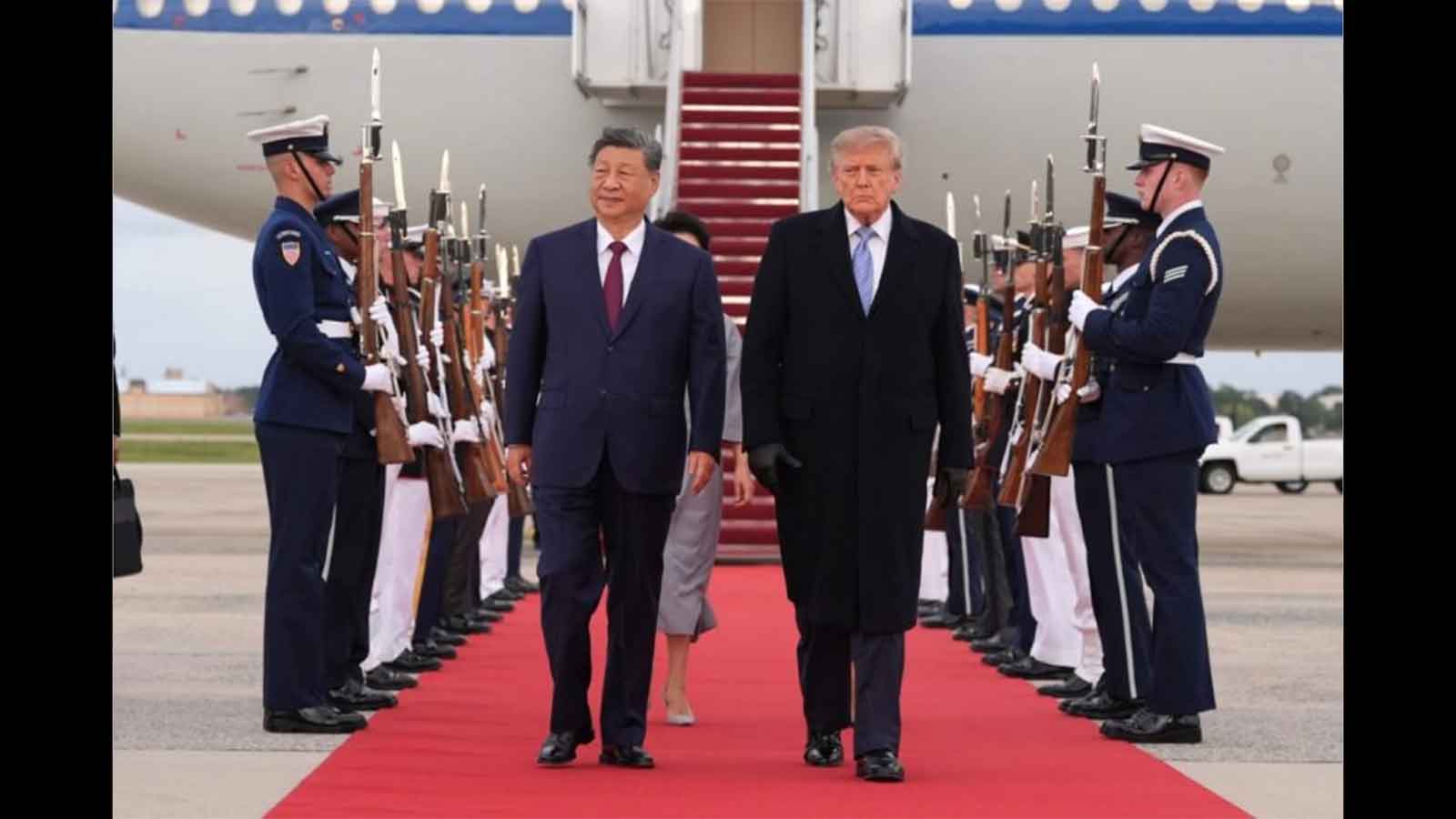
Mabasa Sasa
Diplomatic Signals From the Washington Summit
As world leaders assembled for the 81st Session of the United Nations General Assembly this week, another major diplomatic event drew widespread international attention: Chinese President Xi Jinping’s reciprocal state visit to the United States from September 23 to 25.
Held several months after President Donald Trump’s trip to China, the Washington‑level summit transcends mere bilateral engagement between the world’s two largest economies. It opens a timely window to revisit one of China’s most far‑reaching diplomatic frameworks — the Global Security Initiative (GSI).
This marked Xi’s first visit to Washington in more than a decade, and his sixth trip to the United States since 2012. Speaking at the White House welcome ceremony, President Xi stressed the imperative of peaceful co‑existence between the two nations. He argued that great‑power competition ought to remain “benign and bounded — a race where we strive to excel alongside one another, rather than a zero‑sum gladiatorial contest”, and must never devolve into zero‑sum confrontation. Such responsible competition should be premised on respect for every nation’s sovereignty and reject coercive bloc politics targeting third‑party states. He further called for strengthened military‑to‑military dialogue, upgraded crisis‑communication protocols and consistent diplomatic engagement to mitigate risks of miscalculation and conflict.
These remarks align closely with the foundational principles of the Global Security Initiative.
Core Tenets of the Global Security Initiative
Launched by President Xi Jinping in 2022, the Global Security Initiative sets out a practical framework for handling international security challenges through dialogue, mutual respect, sovereignty equality, cooperative development and peaceful dispute settlement.
At its heart, the GSI rejects the logic that one nation’s security can be built upon the insecurity of others. It advocates what China defines as common, comprehensive, cooperative and sustainable security: an approach encouraging states to pursue their own security interests while duly respecting the legitimate security concerns of other countries.
In an era beset by regional armed conflicts, cyber threats, terrorism, nuclear proliferation and rapid advances in artificial intelligence, this framework carries heightened practical relevance.
Critics often interpret the GSI exclusively through the lens of great‑power rivalry, dismissing it as a geopolitical instrument. Yet any fair assessment should centre on its real‑world capacity to de‑escalate conflicts and expand multilateral dialogue channels.
Recent bilateral developments illustrate that meaningful communication remains viable even amid deep divergences. The two sides’ agreement to extend the tariff truce and the goodwill gesture of giant pandas for Atlanta Zoo stand as symbols of constructive engagement, demonstrating that diplomatic outreach yields more promise than outright confrontation.
A Viable Proposal Amid Frayed Global Governance
The United Nations was founded on a core promise: to prevent devastating global war through collective security and international cooperation. Eighty years on, deepening polarisation across the international system puts that founding promise under strain.
Developing countries have long called for greater representation within global governance, full respect for national sovereignty, and more equitable mechanisms for peace‑building. Rather than seeking to replace existing international institutions, the Global Security Initiative seeks to complement them by filling unmet governance gaps.
Twenty‑first‑century security stretches far beyond borders and battlefields. Climate disruption, pandemic risks, food insecurity, digital‑system vulnerabilities and economic volatility are decisive factors determining whether societies stay peaceful or slide into strife.
Multilateral initiatives addressing these interconnected crises ought not to be discounted simply because they originate from a single country. The GSI deserves evaluation based on its capacity to foster peace, lower geopolitical tensions and reinforce the existing international order.
An African Perspective on Collective Security
The GSI resonates particularly strongly across Africa. African nations have consistently championed “African solutions to African problems”, while upholding multilateralism via the African union and the United Nations.
Most African countries aspire to pursue national development without becoming pawns caught in great‑power geopolitical contests. A global security agenda prioritising dialogue, sovereignty and peaceful dispute resolution aligns naturally with Africa’s long‑standing diplomatic traditions.
Xi’s state visit to Washington represents more than conventional statecraft. It offers tangible proof that sustained dialogue can persist even within an environment of strategic competition. Reciprocal high‑level visits, regular leader‑level exchanges and institutionalised dispute‑management tools all reduce miscalculation — one of the gravest hazards facing contemporary great‑power relations.
Countries genuinely invested in global peace and stability ought to grant the Global Security Initiative meaningful space for constructive international deliberation. Its emphasis on consultation over coercion and communication over confrontation supplies valuable reference points for global security governance.
While UN delegates debated pressing global challenges in New York, Washington delivered a simple yet profound message: the future of international peace hinges on nations retaining the wisdom and resolve to keep talking.
For Africa and the broader Global South, this renewed China‑United States engagement carries extra meaning. It creates greater strategic breathing room for developing nations to participate in shaping global security rules, instead of merely bearing the spillover costs of great‑power frictions. Viewed in this light, the reset in China‑US high‑level exchanges may well rank among the most consequential diplomatic developments of the year.
About the Author:
Mabasa Sasa is a Zimbabwe‑based political and cultural commentator. His research and writings focus on African cultural identity, decolonisation of global narratives, Africa‑China relations and geopolitics.