Online Reporter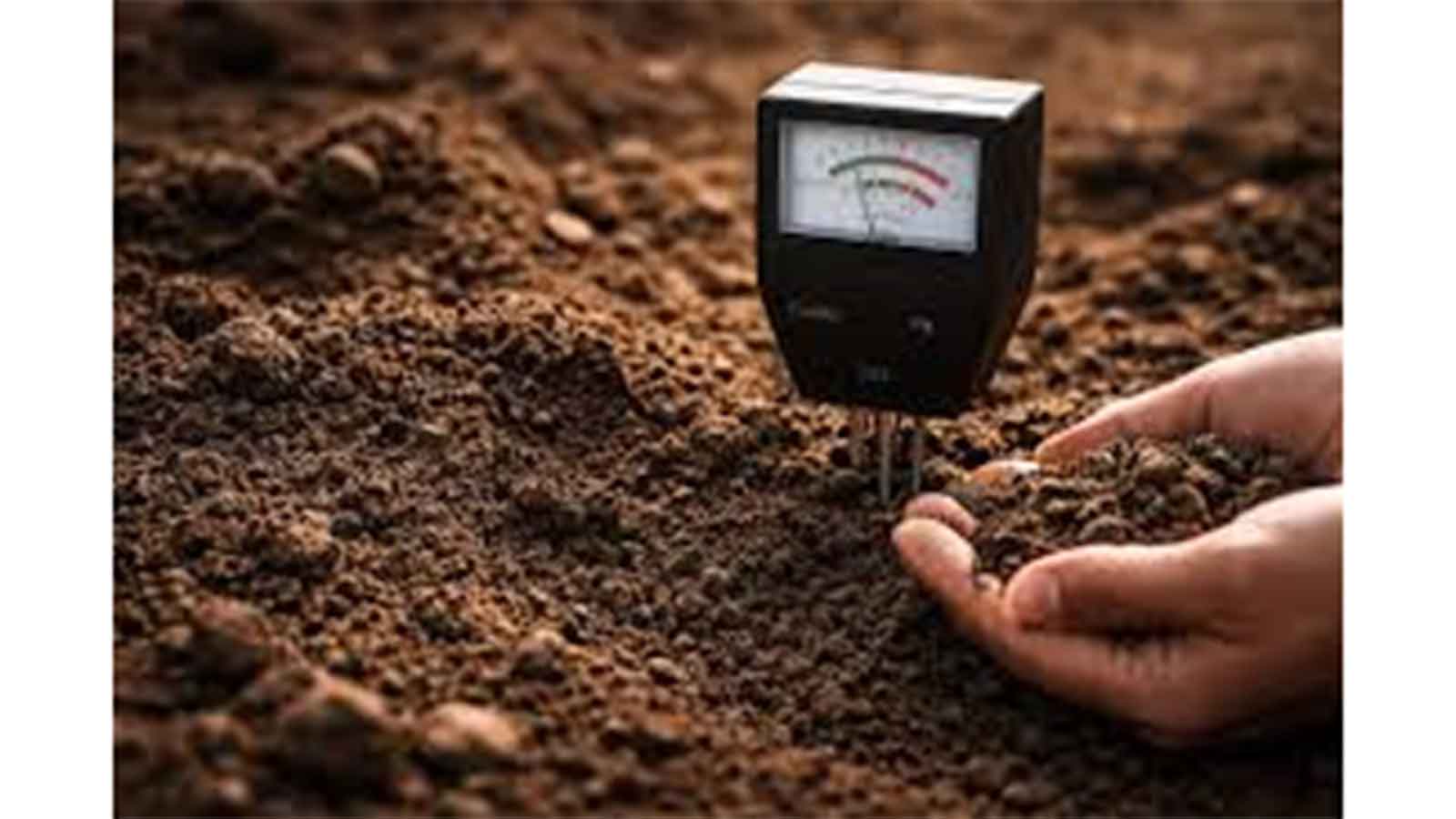
Obert Chifamba-Agri-Insight
BEFORE you lock in the rates, brands or budgets for the 2026/27 agricultural term, how about coming up with a baseline—your soil’s real story?
And this is possible through conducting soil tests to establish what your soil needs to effectively support crops for a novel season.
Soil testing provides that data, which cushions you from costly ‘trial-and-error’ decisions. It is the difference between farming with a plan and farming with just hope that things will be okay.
That era in which farmers would just do anything because “it is what others are doing,” adopting some decisions because “it seems like it might help,” or just hoping that all will be well because the previous season’s programme was successful without first checking whether it is still applicable has since galloped by to make room for realistic facts.
Soil testing turns agriculture from guesswork into evidence-based decision-making. It gives farmers a deeper insight of what their land can supply, what it cannot, and what constraints (like acidity, nutrient imbalance, or excessive nutrients) are limiting performance.
When you compare soil testing to farming randomly, the contrast is clear: one approach reduces risk and improves efficiency while the other quietly increases it.
There is, however, one thing for certain – random farming is expensive, even when it gives the impression that everything is normal.
This is what normally drives many farmers to assume that if crops grew well last season under a certain inputs regime, then repeating it will yield better results with improved management and therefore becomes the safe thing to do. The tragedy of such a school of thought is fields are not static, thanks to a plethora of reasons.
One sad reality is that rainfall patterns change, crops extract nutrients, erosion moves topsoil, irrigation water either adds or removes salts while crop residues decompose at different rates depending on weather and management.
This therefore means that even if the farmer applies the same inputs every season, soil needs may have changed and what worked before may no longer be what the crops need. The soil’s condition evolves.
In the absence of soil testing, most farmers often compensate for their lack of knowledge on the exact state of their soils through applying extra inputs.
Usually, they add more fertiliser or increase the application frequency, or apply broad recommendations that do not match field conditions. It is exciting to note that in the short term, the extra inputs can successfully mask deficiencies and keep yields from collapsing.
However, with the passage of time, random application patterns tend to produce nutrient deficiencies with the farmer buying fertiliser that the crop will not use effectively.
Some nutrients can be locked out by the wrong soil pH.
Others may already be present at adequate or excessive levels, meaning additional fertiliser provides diminishing returns.
Incidentally, deficiencies of micro-nutrients like phosphorus, potassium or sulphur will remain undiagnosed and will frustrate efforts to increase yields. Instead of going up, yields will start dropping season after season.
The good thing about soil testing is that it reduces the waste that the farmer has to contend with when his soil has not been tested.
It also helps the farmers to invest in the right nutrients at the right level instead of purchasing uncertainty. With the farmer armed with that knowledge, the farm plan becomes more predictable, and the cost of mistakes declines.
One of the most commonly overlooked facts on the importance of soil testing is that pieces of land rarely behave the same across their entire stretch.
One portion may have a completely different soil composition from another patch on the same piece.
And, regardless of the fact that some farms may appear uniform, there can still be major variations in soil texture, organic matter content, drainage, and nutrient availability on the same piece of land.
It is interesting to appreciate that low areas may accumulate nutrients or suffer from waterlogging while high ridges may have thinner topsoil and lower nutrient reserves.
Areas near past management zones may carry residual nutrients, with recently cropped sections most likely to have been depleted by repeated harvests.
Random farming usually comes with the impression that the field is homogeneous, something that is successfully challenged by soil testing. Farmers can simply take soil samples across representative zones of the field and map their ‘starting point’ and treat different areas differently.
Such an exercise will enable them to spot areas with different or uniform nutrient requirements and address them accordingly.
Soil testing has been known to have a multiplier effect – improving both yield potential and input use efficiency. Instead of applying the same rates everywhere, farmers can tailor fertiliser and amendments to match the actual soil profile.
This will result in the farmer achieving a more uniform crop growth, better stand establishment, and fewer surprises later in the season.
Most farmers are in the habit of judging soil health by visible crop performance – yellowing leaves, stunted growth, weak root systems and even patchy stands.
This way of doing business is, however, not fool proof given that many yield constraints do not show up clearly until a crop has already lost performance.
And by the time the problem becomes obvious even to the unsuspecting eye, corrective action will be harder and more expensive to implement.
The good thing about soil testing is that it helps the farmer identify those constraints early—before they compromise the yields.
Soil pH, for example, is a fundamental driver of nutrient availability and when the soil is too acidic, nutrients like phosphorus may become unavailable even if the farmer applies fertiliser. Iron, manganese, or aluminium toxicity may also become more likely under acidic conditions.
On the one hand, if the soil is too alkaline, other nutrient limitations—especially micronutrients—can appear. The farmer will not be able to detect this without testing and may eventually direct blame to the wrong factors like seeds, rainfall, pests or diseases yet the real problem is that the soil chemistry is preventing efficient nutrient uptake.
It is a fact that nutrient imbalances can reduce the performance of the soil even when total nutrient levels look okay. There is also a scenario in which a soil might test low in one key nutrient, but will be high in another, which creates a competition effect.
This means that the farmer who does random farming may correct the problem traceable to one element while ignoring a more limiting factor. Soil testing pinpoints the limiting nutrient(s) and helps farmers correct them in a targeted way.
Generally, some farmers avoid soil testing because they believe it is a complicated process whose results will overwhelm them or that fertiliser recommendations will become hard to match. On the contrary, soil testing makes it easy for farmers to make decisions once they understand the results. Soil testing eliminates guessing and gives the farmer direction based on what he has and what he should apply.
Armed with test results, the farmer can choose appropriate fertiliser types (not just fertiliser amounts), apply nutrients at the correct rates for their field conditions, adjust timing and placement based on nutrient dynamics, prioritise corrections that deliver the biggest yield gains while avoiding unnecessary nutrient additions that create waste or secondary issues.