Andrew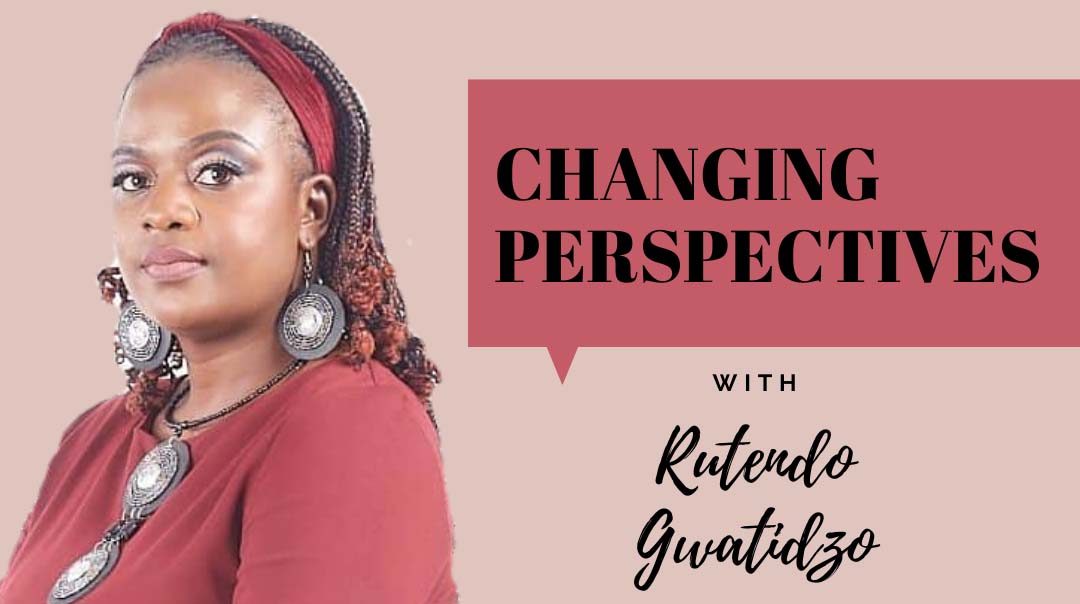
Changing Perspectives
Rutendo Gwatidzo
“The great depression of our age is not economic, but spiritual. Our spiritual poverty is rooted in our purposelessness,” says renowned author and motivational speaker Matthew Kelly.
He further argues that spiritual poverty affects other aspects like our mental, social and cultural well-being.
Most of us want to live with purpose, but making a difference involves sacrifices, which only a few are willing to make.
Some people do not want to give up their comfort zones in order to go the distance.
Many tend to be wrapped up in their own concerns, forgetting that others have concerns, too.
We can all make a difference no matter how small our efforts may seem.
If you think that you are too small to make a difference, spend a night with a mosquito and then you would have an idea of what you might also be capable of.
A simple act of kindness can make a difference.
Small acts of kindness can impact the world. For example, helping the needy can mean a lot, especially if the assisted person goes on to be successful.
Having someone to wish you the best that life can offer is something many of us desire.
However, the question is: Have you given the best yourself?
What makes you expect the best in return? They often say what goes around comes around.
If you really want to make a difference, avoid focusing on the role that you have to play, rather focus on the goal.
You might then discover that making a difference in others may make a big difference in you as well.
It is often easier to make a difference when you do something that you are passionate about.
Doing this will make you realise there are always people willing to walk with you.
Making a difference starts with an individual, then it rubs off others as well.
In simple terms, it means starting to make the difference that you wish to see others making.
What is required to make a difference?
You do not have to be the loudest to make a difference. Actually, turning down the volume helps you hear what others are saying and respond accordingly.
Organisational status
One of the reasons managers are failing to be effective in leading their teams in organisations is that they focus on making noise, thinking that they will be heard.
Some focus too much on themselves and, thus, fail to listen to their teams.
For example, inasmuch as personal issues should not be considered at work, they should be addressed to a certain extent.
For instance, if an employee reports to work late and one of their closest relatives is very sick or has died, it will be better to offer comfort first than to encourage that individual to focus on work in order to meet targets.
A significant number of managers are disengaged from their teams.
Mental health issues are real within organisations. Teams might be failing to meet targets simply because they are mentally challenged. I have come across many teams in the human resources (HR) industry who have skill, knowledge, experience and resources, but somehow you find them failing to deliver.
I have discovered that many of them will be mentally challenged in one way or the other.
For example, someone might be going through divorce or has a child in hospital.
One of the winning strategies to use as a manager is to address the situation at home first by being considerate and compassionate.
The power of teamwork is that together we can achieve more.
If one person can make a difference, what more can a team or community do?
Imagine if an organisation has teams that collaborate to eliminate gossip and give excellent service to customers.
That team can be very successful.
Of course, you cannot be good at everything but you are good at something.
That something can be potentially transformative. Others are known for reporting late for work or meetings, or for being rude to clients. Guess what?
That group of people will also make a difference. The first step in making a difference is deciding on which difference you want to make.
You need to realise that your life is a service so that you find ways to offer the best.
The beauty about making a difference is that no one needs to wait on anyone to start improving.
Be challenged, be encouraged and be inspired to start making a difference.
It is never too late.
Rutendo Gwatidzo is a culture and change management strategist. She is an HR consultant, speaker, mentor and author of the book “Born to Fight”. Feedback: 0714575805/ [email protected] / Rutendo Gwatidzo official fb public page.



 Online Reporter