Online Reporter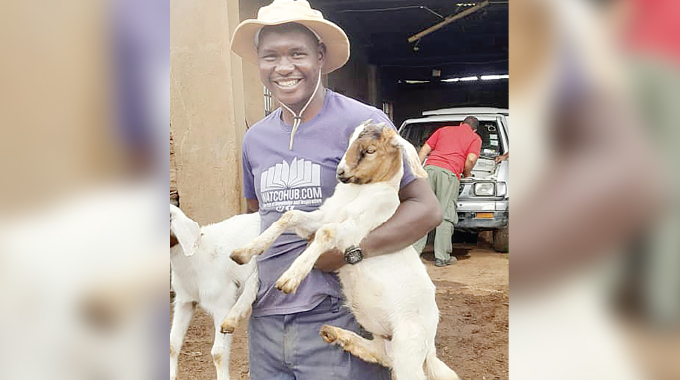
Sikhulekelani Moyo, [email protected]
AT just 26, Mr Watson Manjobo has transformed a deeply personal childhood connection with goats into a growing farming and breeding enterprise in Sanyati, Mashonaland West Province, demonstrating how passion can evolve into a viable business venture.
For Mr Manjobo, goat farming is more than a source of income; it is rooted in family history and survival.
He said his attachment to goats began after the death of his mother, when he was just nine months old. His grandmother relied on goat milk to supplement his feeding.
“When I heard that I grew up on goat milk, I developed a bond with goats. So, yes, there is the money side of it, but for me, it started as a hobby,” he said.
Speaking in an interview on the sidelines of a recent farmers’ training workshop organised by the Goat Breeders Association of Zimbabwe in Bulawayo, Mr Manjobo said what initially began as a personal interest had grown into a sustainable livelihood project.
“Demand for goat meat and milk is growing and as farmers, we are trying to produce what consumers want while contributing to economic growth because agriculture remains the backbone of the economy,” he said.
Mr Manjobo said his ambitions extend beyond personal gain.
“I also come from Sanyati, where many people are yet to fully appreciate the value of goat farming. Through my project, I want to put my area on the map so that others can learn and benefit,” he said.
He has also ventured into goat breeding, noting that improved genetics are essential to enhancing the quality of goats in Zimbabwe.
Goat farming is increasingly emerging as one of Zimbabwe’s most resilient livestock enterprises, especially in dry regions where climate change continues to undermine traditional agricultural production systems.
The sector’s adaptability to harsh environments, lower feed requirements and rising market demand has made goats attractive to both communal and commercial farmers.
Zimbabwe’s national goat herd is estimated at about 4,9 million, with the majority owned by smallholder farmers, presenting significant potential for commercial expansion.
Global demand for goat meat continues to grow, opening up possible export opportunities for local producers, provided quality and breeding standards improve.
The Goat Breeders Association of Zimbabwe has called on farmers to strengthen breeding programmes to improve herd quality and competitiveness.
Livestock specialists say transitioning from subsistence production to commercial breeding offers one of the quickest pathways to profitability in the sector.
Among commercial breeds, the Boer goat remains highly sought after for meat production due to its rapid growth and superior carcass quality.
At the same time, indigenous breeds such as the Matabele goat and Mashona goat continue to draw interest because of their resilience to drought and disease.
The expansion of goat production aligns with Vision 2030, which promotes rural industrialisation, food security and income generation as Zimbabwe moves towards an upper middle income economy.