Online Reporter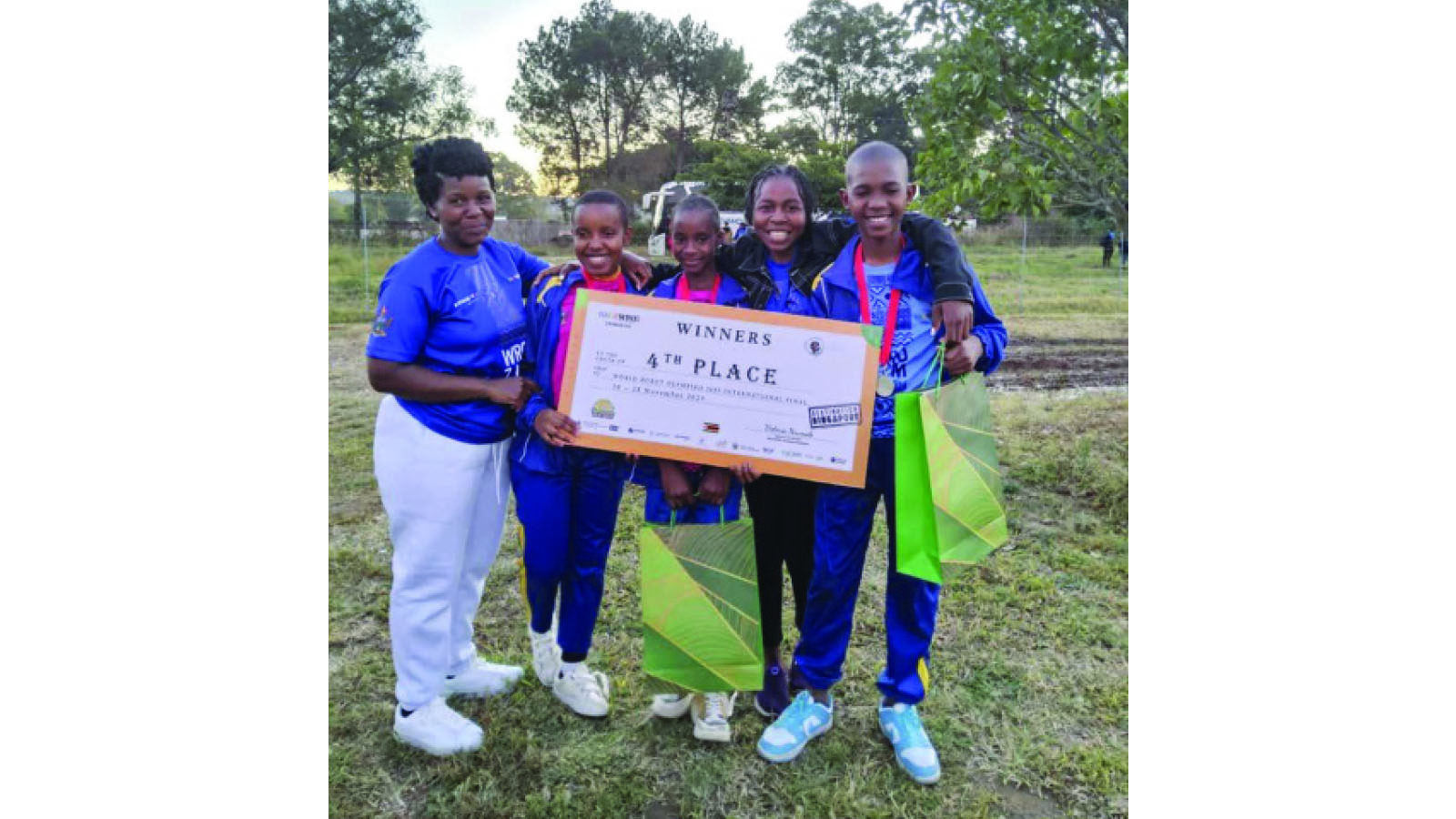
Theseus Shambare-Features Writer
THREE days, three learners and free-flowing ideas. The trio of Ayanda Mukakati (12), Darrell Kasinamunhu (11) and Tinotenda Ngwenya (12) lean in close, watching their creation glide smoothly across the desk before stopping just short of an obstacle.
In a quiet classroom at Victoria Primary School in Masvingo, the soft hum of a small motor fills the air. The three exchange proud smiles. It is not just a toy.
It is their come-alive idea — a Smart Parking Assistant System, designed to help drivers avoid collisions and navigate tight spaces.
They are not old enough to drive, but old enough to dream of a world where technology makes everyday life easier, safer and smarter.
It all began when their information and communication technology teacher, Mrs Enia Zivanai, asked who wanted to explore technology. More than 50 hands shot up.
“I was amazed,” she said, smiling. “So many children were curious. After rigorous selection, the number dropped to nine—three teams. These three went on to prove that innovation has no age.”
At the World Robotics Olympiad (WRO) National Finals in Bulawayo, the pupils were given a challenge: solve a real-world problem using robotics.
They had three days to research, design and build a prototype.
“They divided the work naturally,” said Mrs Zivanai. “One handled coding and programming, another worked on electronics and the third on marketing and presentation. They complemented each other beautifully.”
Out of 54 schools, including top secondary institutions, Victoria Primary School’s team ranked fourth — the leading team among only two primary schools in the top five.
Ayanda, the team leader, remembers the moment they realised they had won. “I thought maybe we would be somewhere around 10th,” she said, laughing.
“When they said fourth and that we would represent Zimbabwe in Singapore, I could not believe it. I just froze.”
Her teammate Darrell added, “We saw accidents every week in Masvingo, cars bumping into walls or other cars when reversing.
“So, we made a robot that senses distance and warns drivers. It can save lives.”
Tinotenda, the soft-spoken strategist, dreams beyond the classroom.
“This is just the start. Maybe one day we can make robots that help control traffic lights or manage waste in cities,” he said.
Their teacher nodded in agreement. “They came home and built an even better prototype,” she said. “They are unstoppable—except by the one thing they cannot code their way around: money.”
Their victory in Bulawayo came with an invitation to the World Robotics Olympiad International Finals in Singapore, set for November 26–28, 2025.
But the excitement quickly collided with a harsh reality.
The trip costs US$12 085, covering flights, accommodation and event fees for the three pupils and two patrons.
For their parents, the joy of raising innovators has turned into nights of anxiety and unanswered letters.
Mr Vusumuzi Ngwenya, Tinotenda’s father, has been writing appeals to anyone who will listen.
“My child is among the team supposed to represent Zimbabwe,” he wrote. “We are humbly asking for assistance. Their departure date is November 24. We pray our request will be considered.”
He checks his phone often, hoping for a reply—a message that might lift three young dreams from the ground to the skies.
Victoria Primary School’s sports director, Mr Charles Chengeta, still cannot hide his pride.
“This is our first year in robotics,” he said. “We are known for sports and academics, but robotics has opened a new world. Our children competed with high school learners and came fourth! That is extraordinary.” But pride alone cannot pay airfares.
“They have earned their place, they have done the hard work,” he said quietly. “It would be heartbreaking for them to miss the international stage just because of money. They have proven they can innovate; now they just need help to get there.”
Their story fits neatly into Zimbabwe’s bigger picture.
The Second Republic has placed technology, innovation and digital skills at the heart of Vision 2030, the roadmap to an upper middle-income economy.
Information Communication Technology, Postal and Courier Services Minister Tatenda Mavetera recently underscored that focus, saying: “Artificial intelligence represents one of the most powerful tools of our generation for expanding knowledge, increasing prosperity and enriching the human experience.”
Her statement echoes through the small robotics lab in Masvingo.
For what these pupils are building is more than a robot.
It is a glimpse into the future Zimbabwe is striving for: a smart, connected and innovative nation. Zimbabwe’s transport system has long been burdened by congestion, poor parking management and accidents.
Smart technologies, the kind these children are experimenting with, could transform the sector.
Imagine Harare or Bulawayo where AI sensors manage parking, traffic lights communicate with vehicles and data reduces road deaths.
That future begins with small steps, like the one taken by these pupils. If nurtured, their skills could feed into the country’s drive for smart cities, where technology enhances efficiency, safety and the quality of urban life.
“These children are the foundation,” said Mrs Zivanai.
“Give them a chance and they will build solutions we cannot even imagine yet.”
For the pupils, robotics has taught more than technology.
“We have learnt teamwork and patience,” said Darrell. “Sometimes the robot would not work and we would argue. But we learnt to listen to each other.” Ayanda added, “We also learnt confidence. Presenting our project in front of big judges was scary, but we did it.”
Their dreams are clear, their potential undeniable — but the window of opportunity is closing.
The classroom is small, the desks worn, but when the robot’s sensors flash green, the room feels electrifying.
The pupils laugh, record a short video and immediately start talking about what to fix next.
“They never stop thinking. Even during break time, they are sketching ideas on scrap paper,” said Mrs Chengeta. What drives them isn’t competition or fame — it is curiosity. “We just want to make things that help people,” said Tinotenda simply.
For a country pushing toward digital transformation, supporting these learners is more than generosity; it is an investment in national capacity.
If they reach Singapore, they will not only represent Victoria Primary School but carry Zimbabwe’s flag into a global arena of young innovators shaping the world’s technological future.
“They will see what other children from developed nations are doing and bring that knowledge home,” Mrs Zivanai said, adding, “That exposure alone could change their lives forever.”
As the sun sets outside, the children pack their robot carefully into a small box.
Tomorrow, they will run more tests, tweak more code and dream a little more boldly.
“They have coded their dreams,” said Mr Chengeta softly.
“Now, all they need is a nation to power them forward.”
If they board that plane to Singapore, they will not just compete — they will represent the promise of a smarter Zimbabwe.
And if they do not, their unfinished dream will stand as a reminder that sometimes, the most brilliant ideas never take off, not for lack of intelligence, but for lack of opportunity.