mbulelo smpofu
Robin Muchetu, Health and Gender Editor
YOUNG women and persons with disabilities (PWDs) remain at the core of education initiatives in Zimbabwe as they are a cohort of some of the most vulnerable populations, be it in education, health matters like HIV, teenage pregnancies and various other challenges.
They demand increased support annually if they are to escape from some of their vulnerabilities.
Forum for African Women Educationalists (FAWE) is championing issues around access to education in Zimbabwe and many other African countries to ensure that vulnerable communities access education and become leaders of the future.
In Zimbabwe, school going girls including those with disabilities and the refugee community are targeted in these life changing opportunities that offer a lifeline to them.
This has motivated FAWE-Zimbabwe Chapter (FAWEZI) to implement a US$10 million initiative that seeks to increase opportunities for young women and men, including refugees, in institutions of higher learning.
The intervention targets 80 percent females and 20 percent males and it is inclusive as five to 15 percent of students with disabilities will also be incorporated.
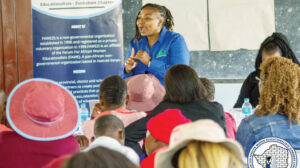
Executive Director for FAWEZI Mrs Lydia Madyirapanze said the programme is strategic because the organisation wants to follow national guidelines.
“A total of 6 150 students are targeted for the initiative across the region in technical, vocational, educational training and 4 440 who are in universities from 2024 to 2030. This is part of an initiative being run by nine other countries to promote young women and men who have completed secondary education to transit into tertiary education targeting those coming from marginalised backgrounds where if not supported they may not go to tertiary institutions. The idea is to provide opportunities which will see them also move to dignified and fulfilling employment,” said Mrs Madyirapanze.
Marginalised communities like refugees are also set to benefit from the initiative with FAWEZI highlighting that they are going to work with institutions that deal with refugees in Zimbabwe to ensure that when the calls are made for learners to apply, they also submit their applications on time to be part of the initiative.
She said refugees are targeted as the cause is for those that are disadvantaged like this community. If they are not targeted, she said, they ordinarily would miss out on the opportunity to get higher and tertiary education. The first cohort of beneficiaries will commence studies in February 2026.
In Zimbabwe, refugees will be drawn from Tongogara Refugee Settlement which is a Government institution that was established in the early 1980s to accommodate Mozambican refugees and asylum seekers who were fleeing conflict in their country.
Tongogara Refugee Settlement has a young population with children constituting 48 percent while the youth constitute 33,6 percent. Refugee children are currently benefiting from the Zimbabwean educational curriculum delivered by the Government.
Mrs Madyirapanze said the beneficiaries across the country, after completing tertiary education, may move to self-employment and commence entrepreneurship journeys.
The educational intervention focuses on regional and national developments as well as the Continental Education strategy for Africa (CESA) 2016 to 2025 whose objective is to increase access to knowledge, skills, gender parity and equity.
Locally, Mrs Madyirapanze said FAWEZI has aligned their strategy to the National Development Strategy (NDS1) and the strategic plan for the Ministry of Tertiary Education which emphasises on human capital development and also promoting the uptake of STEM subjects in Zimbabwe.
She further said by 2030, when the initiative comes to a close for this cycle, they hope to have enhanced access to learners to have dignified work.
“We are targeting STEM courses and as an organisation, we want to demystify stereotypes around STEM. There are fewer female students that are taking up these subjects so part of what we want to do beyond providing scholarships is to engage tertiary institutions to develop guidelines, policies and programmes that are gender responsive. We want them to align whatever they are delivering to the job market to also ensure education and training is linked to what is happening in the job market,” she added.
In Bulawayo, FAWEZI will work with Bulawayo Polytechnic College, while Esigodini Agricultural College is another institution they will partner with. Gweru, Kwekwe and Harare Polytechnics will also have beneficiaries. Several State Universities will also see learners being enrolled on scholarship.
@NyembeziMu.



 Online Reporter