Chronicle Editor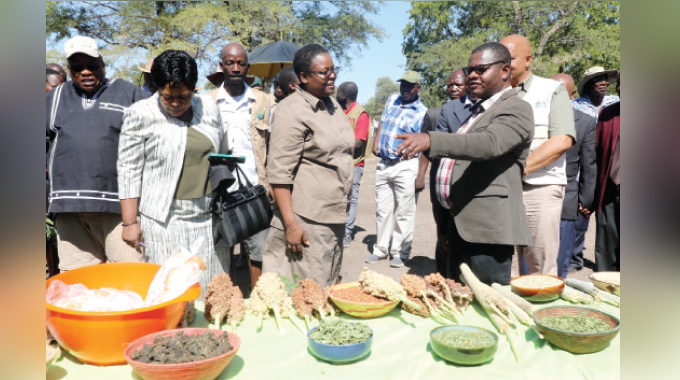
Raymond Jaravaza, [email protected]
THE Ministry of Lands, Agriculture, Fisheries, Water and Rural Development has launched a youth business unit model in Tsholotsho, Matabeleland North as part of efforts to empower youths.
The programme seeks to equip the youth by installing solarised boreholes in every ward across the country so that they can embark on financially sustainable projects anchored on precision agriculture.
Lands Ministry permanent secretary, Professor Obert Jiri launched the business unit model at Mhlabangubo Primary School.
In his address, Prof Jiri said the El-Nino induced drought decimated crops across the country leaving farmers with little to no harvests hence programmes such as the youth business units are vital in ensuring food security at ward level.
“We have a lot of programmes as the Ministry of Lands, Agriculture, Fisheries, Water and Rural Development but we understand that this year is a drought year and that is the reason why His Excellency, President Mnangagwa, has declared the drought a State of Disaster. Drought is not anyone’s doing, but it is caused by climate change and we have to come up with programmes to mitigate its effects,” he said.
Prof Jiri said as a nation, Zimbabwe must prepare for the consequences of drought hence the programmes that the ministry is running are meant to counter its effects.
“This is why we are launching the youth business units across the country to capacitate our youths with skills to embark on sustainable projects in their wards,” he said.
Prof Jiri urged farmers to consult agricultural experts before planting crops in their respective regions.
“The message to our people is that they must practice climate proof agriculture, the promotion of traditional grains such as sorghum and millet, which must be grown in dry regions, especially by the small holder farmers in the rural areas. The message that our Agritex (Department of Agricultural, Technical and Extension Services) officers have been spreading is that our farmers must grow crops based on the agro-ecological region where they are based,” he said.
A farmer, Prof Jiri said, must not just wake up and decide what to grow but should consult their Agritex officer on what type of crop to grow each season, based on weather forecasts and other factors.
“We cannot have a situation, for example, where a farmer in Tsholotsho decides to plant maize and when that crop fails, they blame drought; we call that behaviour self-caused hunger,” said Prof Jiri.
The youths in Tsholotsho where the pilot youth business unit model was launched benefitted from a piece of land that was cleared, tilled and fenced by the ministry, a solarised borehole and free range chickens.
The Deputy Minister of National Housing and Social Amenities, Cde Musa Ncube who is also MP for Tsholotsho South, urged the youths to fully utilise the land and equipment donated to them.
“The vision of our President is that every village must have running water supplied by a solarised borehole so that our youths can start projects that will benefit them for years to come.
“We want to buy an incubator so that the youths can bring eggs from the donated free range chickens for hatching. The water from the boreholes can also be used for starting nutrition gardens,” said Cde Ncube.
Last month, the ministry launched the schools business unit model at Nketa High School in Bulawayo, another programme that aims to capacitate schools with skills and equipment to financially sustain themselves through green energy-driven, innovative and productive agricultural projects.
The Tsholotsho launch was also attended by Zanu-PF Politburo member, Cde Alice Dube, Agriculture and Rural Development (Arda) board chairman, Mr Ivan Craig, traditional leaders, scores of youths and villagers.


 Online Reporter