admin
admin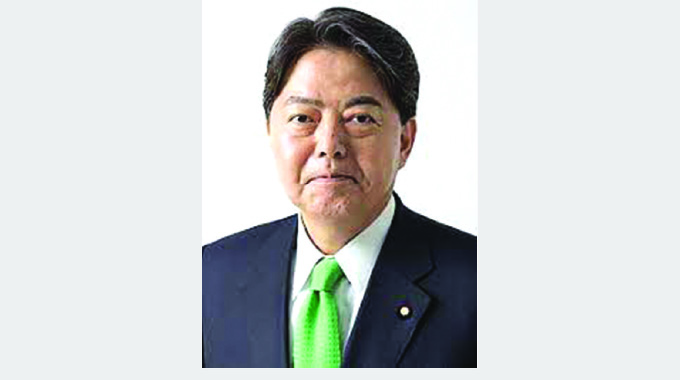
Oliver Kazunga Senior Business Reporter
ZIMBABWE youth-owned enterprises are among African businesses set to benefit from Japan’s cooperation with Africa, to be further strengthened at the 8th Tokyo International Conference on African Development (TICAD8), which begins in Tunisia this week.
The conference, which brings together Heads of State from different African nations including Zimbabwe, runs from Friday to Saturday.
TICAD, which is co-organised by the government of Japan, The United Nations, United Nations Development Programme, the World Bank, and the African Union Commission, is a summit-level international conference on Africa’s development initiated by that Asian country in 1993.
Japan, which is Asia’s second largest economy after China, has organised the conference for nearly three decades to promote African development while respecting Africa’s ownership.
The forum is held once every three years.
Speaking during a virtual Press conference last week, Japan Foreign Affairs Minister Yoshimasa Hayashi said his country will firmly stand by Africa as a partner growing together, and would further strengthen cooperation with African countries looking ahead to upcoming events such as the G7 summit in Hiroshima next year.
“The Japanese government has been engaged in human resources assistance in Africa for years and in this area as well. We have to further review the appropriate way of human resources development to enhance human resources capital that is appropriate for the future especially youth, women and industrial human resources.
“The younger generation businesspersons will be one of our focus at TICAD8.
“We want to provide both support to these people and that would be a major jumping board in order to promote young Japanese businessmen to do more business activities in Africa,” he said.
“Work and development of digitalisation in Africa — there is a huge number of start-ups that are being created in Africa at an extremely fast pace especially in such areas as infrastructure that does not require huge amounts of initial investment being established one after another.
“And these African businessmen are trying to provide solutions to finance, agriculture or power shortage and there are grassroots levels of these start-ups . . .
“Japanese youths who have created start-ups can make investments in Africa in order to engage in business activities.”
Minister Hayashi said Japan International Cooperation Agency (JICA) was engaged in various such projects aimed at supporting African economies including infrastructural development projects.
For example, such infrastructural development projects include the Phase 2 of the Robert Gabriel Mugabe International Airport, Birchenough Bridge and Chirundu Highway.
“I think that kind of momentum has been rising amongst the start-up community in Japan and there are several Japanese businessmen who are beginning to have such desires.
“So, TICAD could become an economic bridge to match those businessmen with their African potential counterparts and we hope that those activities could be enhanced.
“Japan has long engaged in strengthening the health system but the pandemic has unveiled its vulnerabilities which cannot be denied.
“In many ways we have been promoting universal health through which we have established hospitals in order to provide,” said Minister Hayashi.
He said Japan would also set out a pathway for African development looking ahead to the post-Covid-19 era by highlighting his country’s strength, which is “quality growth” and “focus on people,” and by strongly supporting African-led development.
“Under the Covid-19 pandemic the health system in Africa and the vulnerability of the health system in Africa has become quite prevalent and obvious, so there has to be an improvement on that front as well and with the African partners we have to discuss these matters.
In this light, Japan, which is Asia’s second largest economy will also contribute to enhancing food security in Africa to address the African food crisis which is deteriorated by the situation in Ukraine.
Russia and Ukraine, which are the global suppliers, are at war and thus negatively impacting the supply of commodities such as fuel, grain and energy to the rest of the world resulting in subdued supply while demand has remained constant.
“Already, the Japanese government has been providing assistance to improve health coverage in Africa and has been supporting the efforts in Africa to respond to the Covid-19 pandemic.
“Through long-term cooperation we already have a robust foundation and this has provided benefits to many African people and this will prove to be a strong foundation to expand our partnership further.
“But again the health related vulnerability has become obvious as a result of the crisis and the pandemic which needs improvement.
“So, health is going to be one of the top priority issues for TICAD8,” he said, adding that in recent years, one of the challenges for the international community is climate change.Africa is a very low emitter, but it is the continent that is most significantly impacted by climate change and there are various extreme weather patterns being witnessed in Africa that are alleged to be caused by climate change, flood, drought, tsunami, frost and fire.
“These are some of the ordinary and extreme phenomena that are alleged to be caused by climate change which impact the lives of the people.”
Speaking at the same occasion, JICA vice president Mr Kato Ryuichi said his organisation pledges its support to work with the continent to take ownership of its resources despite the challenges Africa continues to face.
“Today, Africa’s societies and economies have been severely impacted by multiple crises and JICA is fully committed to support Africa’s ownership of its resources,” he said.
In Zimbabwe, JICA has been around since 1980 working on activities that include the facilitation of smooth integration into the Southern African Regional Economy.
The agency is also involved in initiatives for effective utilisation of abundant resources through empowerment of smallholder farmers to practice market-oriented agriculture.



 Online Reporter