Chronicle Editor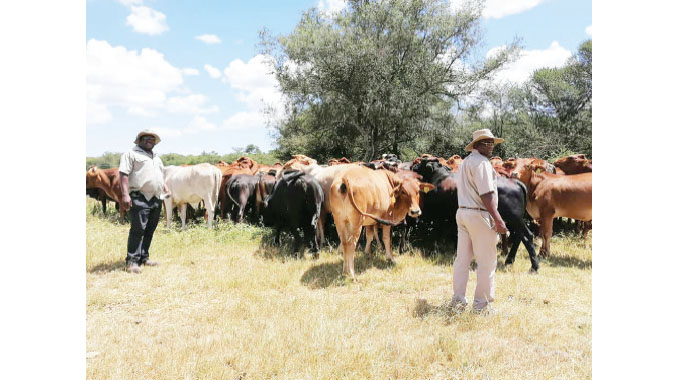
Mashudu Netsianda, Senior Reporter
NEARLY 200 heifers have been delivered to youths in Bulawayo and the two Matabeleland provinces under the Presidential Heifer Pass-on Scheme, as Government moves to empower the younger generation.
Launching the Provincial Integrated Youths Skills Development Centres (PIYSDC) for the country’s 10 provinces in January in Kwekwe in Midlands Province, President Mnangagwa distributed 710 heifers targeting the youths as beneficiaries under the Presidential Heifer Pass-on Scheme.
The Presidential Heifer Pass-on programme was launched by Vice-President Constantino Chiwenga in June 2020 in Chipinge, Manicaland Province.
According to the Ministry of Lands, Agriculture, Fisheries, Water and Rural Development’s first round crop and livestock assessment report for the 2021/22 season, all eight rural provinces including the two metropolitan provinces of Bulawayo and Harare benefitted from the programme.
Bulawayo received 50 heifers while Matabeleland North and Matabeleland South got 70 heifers each under the programme.
Mashonaland East got the lion’s share of 90 heifers.
About 10 heifers per district were allocated with the total number of heifers per province depending on the number of districts.
The heifers will be kept as breeding stock at provincial integrated youth hubs and the dropped calves will be distributed.
Integrated youth hubs are 500ha farms identified in all provinces, where a wide range of agricultural activities will be implemented under the management of Agricultural Rural Development Authority (Arda) and technical input of Ministry of Lands, Agriculture, Fisheries, Water and Rural Development. All provinces have received their heifers except for Mashonaland Central and Masvingo.
Matabeleland South provincial livestock officer, Mr Hatitye Muchemwa said the heifers are being kept at the provincial integrated youth hub in Insiza district.
“The 70 heifers that we received as a province are being kept at the integrated hub and their offspring will then be given to the youths. We are also training youths on other enterprises like horticulture, crop production and piggery.
The Ministry of Lands, Agriculture, Fisheries, Water and Rural Development said dipping chemicals have already been delivered by the Department of Veterinary Services to all the incubation hub,” he said.
Launching the PIYSDC, President Mnangagwa said it was is in line with his Government’s policy to mainstream participation of the youths in national programmes across all sectors.
He said youths should take keen interest in agriculture, taking advantage of the new Government’s policy of a 20 percent youths’ quota under the Land Reform Programme.
Government is also supporting small-holder livestock farmers with three parallel programmes, which include the Silage Input Programme targeting 1 500 small holder dairy farmers, the Forage Legumes Input Scheme targeting 515 112 cattle farmers in the small holder farming sectors (communal, A1, small-scale commercial farming and old resettlement sectors) and the Tick Grease Blitz, targeting 1 million cattle owners.
“The input schemes covered seed for silage maize, velvet bean, lablab, as well as fertilisers and chemicals. Each farming household got an input package comprising the seed and fertilizer,” read the report.
The silage input package comprised of 25kgs maize seed, 250kg of basal fertilizer and 250kg top dressing fertilizer per beneficiary.
“All farmers managed to get inputs but some failed to plant due to late delivery of the inputs. At least 1 324 hectares have been put under the silage maize crop and maize crop stage ranges from late vegetative to early maturity stage,” read the report.
“Farmers are in the process of preparing for silage making but shortage of machinery in form of silage cutters may hinder progress.”
Forage legumes legume input package comprised of either 5kgs of velvet beans, 2.5 kg of sun hemp or 2.5 kg of lablab and a 20kg bag of compound fertiliser.
“Most inputs were delivered late, resulting in poor uptake by farmers as the season was well advanced. A total of 207 000 households benefited from the programme out of a target of 515 125 households,” the report stated.
“Brachiaria seed was issued to anchor farmers/lead farmers as well as departmental demonstration plots across the country.”
Under the Tick Grease Blitz, Government distributed 1 069 000 kg in the first phase in 2021 with 790 317 stockowners having benefited at least 1kg of tick grease from the programme.
“To date 691 842 kg has been delivered to GMB depots under the second phase in 2022. Distribution to stock owners is at various stages in all provinces,” read the report. – @mashnets.



 Online Reporter