George Maponga-Masvingo Bureau
GOVERNMENT has challenged youths to work hard in their studies and anchor the nation’s industrialisation drive through innovation.
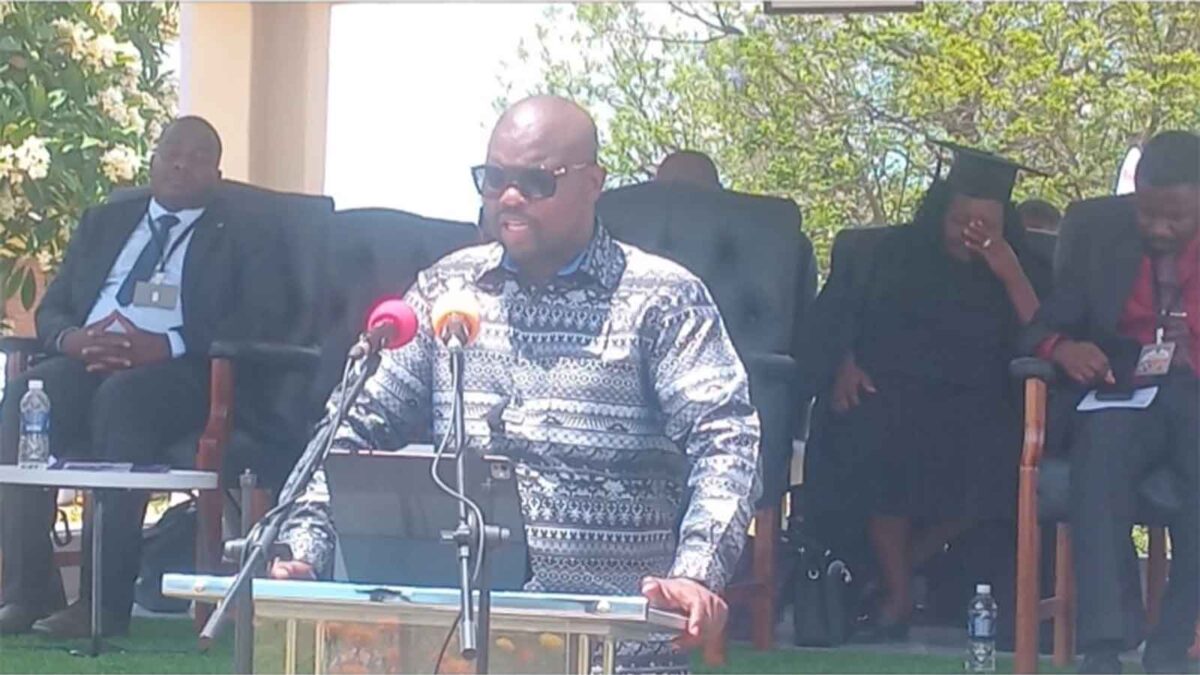
Speaking at the third Masvingo Province combined graduation ceremony for 1 235 students from Mushagashe, Chivi-Mhandamabwe, and Masvingo Vocational Training Centres (VTCs) yesterday, Youth Empowerment, Development and Vocational Training Minister Tino Machakaire commended graduates who completed practical courses in dressmaking, carpentry, welding, building, and motor mechanics.
“Today we celebrate 1 235 graduates, comprising 699 young women and 536 young men, including two graduates living with disabilities. These are not just statistics. These are 1 235 stories of determination, 1 235 families filled with renewed hope and 1 235 opportunities to build a better Zimbabwe,” he said.
Thanking parents for their sacrifices, Minister Machakaire urged the graduates to create businesses and employment rather than wait for jobs.
“Zimbabwe does not need young people who wait for opportunities. Zimbabwe needs young people who create opportunities! If you trained in carpentry, build something. If you trained in agriculture, produce something. If you trained in motor mechanics, repair something. If you trained in fashion and design, create something. Whatever skill you have acquired, put it to productive use!
“Do not allow your certificate to become a decoration on the wall while your talent remains unemployed. You may not have capital today. You may not have a workshop or expensive equipment. But you have something valuable. You have skills. You have knowledge. You have potential!” he said.
Minister Machakaire also confirmed that President Emmerson Mnangagwa will headline the 2026 National Youth Empowerment Symposium in Harare on Monday, 23 November, to address youth challenges and unlock economic opportunities under the Second Republic’s “leaving no one and no place behind” mantra.
“The national youth [empowerment] symposium will be held on Monday next week, 23 November, and President Mnangagwa will preside over the event where youths like those who have graduated here today [at Mushagashe Vocational Training Centre] and their counterparts from other parts of the country will be in attendance,” he said.
“The symposium will, among other things, create a platform for our youths who have acquired practical skills from institutions like this one to showcase their skills to their peers, and the symposium will also be an opportunity for the Government, policymakers and other stakeholders to come up with new strategies on what needs to be done and the interventions required to make sure that our young people are better placed to play an active role in the nation’s socio-economic transformation.”
He noted that Government is establishing a VTC in every district so young people nationwide can gain practical skills to drive National Development Strategy 2 (NDS2) and Vision 2030.
“His Excellency’s philosophy of leaving no one and no place behind must translate into meaningful opportunities for every young Zimbabwean. A young person in Chivi deserves the same opportunity as one in Harare. A young woman in Mwenezi deserves the opportunity to become a successful entrepreneur. And a young person in Gutu must be empowered to build a prosperous future within their own community,” he said.
The minister challenged industry players to absorb VTC graduates and warned youths against drug and substance abuse.
“Today, Masvingo has given Zimbabwe 1 235 reasons to believe in a brighter future! Let these graduates become the entrepreneurs, innovators and industrialists of tomorrow,” said Minister Machakaire.
One of the youths, Taitus Madzara, welcomed the upcoming engagement with the President.
“As youths, we are excited that next week we are going to interface with President Emmerson Mnangagwa. The symposium will help us address social challenges, create space for dialogue, career guidance, and support systems around pressing issues like unemployment, drug and substance abuse, mental health pressures, gender-based violence, and digital risks,” he said.