Sundaymail Editor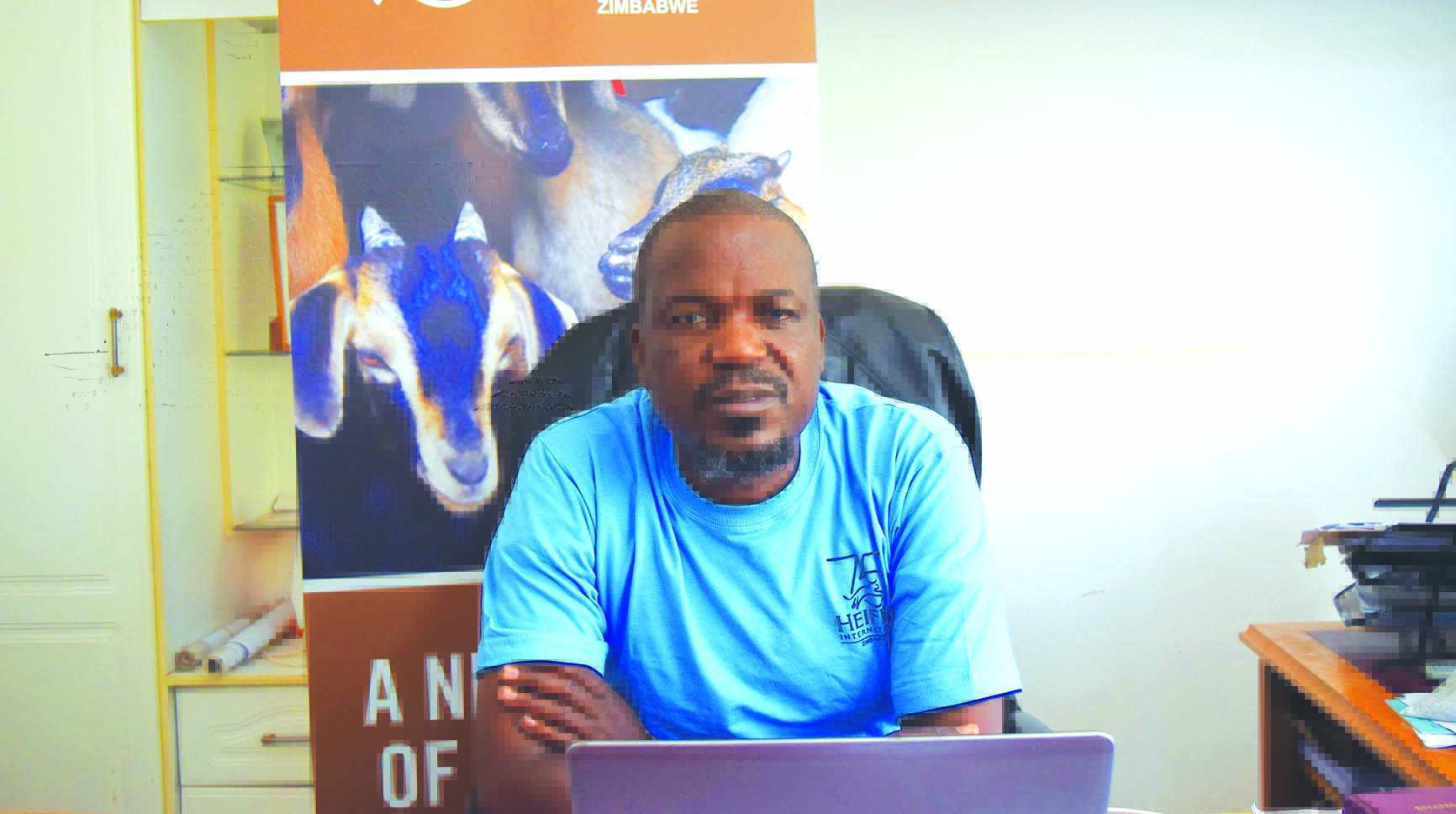
In recent years there has been an emergence of youthful agriculture entrepreneurs in the country taking up farming as a viable career option. But if the future of Zimbabwe’s agriculture is to be secured, the current numbers of youths participating in agriculture need to increase. This week Tawanda Musarurwa (TM) sat down with Heifer International Zimbabwe country director Kainos Musvinu (KM) to discuss the opportunities and challenges in agriculture for the country’s youths, as well as outcomes of its new report, “The Future of Africa’s Agriculture — An Assessment of the role of Youth and Technology”.
******
TM: What exactly does Heifer International do?
KM: For 77 years, Heifer International has worked with more than 36 million people around the world to end hunger and poverty in a sustainable way. Working with rural communities across Africa for 47 years, Heifer International supports farmers and local food producers to strengthen local economies and build secure livelihoods that provide a living income.
TM: What is the extent of your intervention in Zimbabwe?
KM: Heifer International has worked with smallholder farmers in Zimbabwe since 1984. To date, we have reached close to half a million smallholder farmers, supporting them with livestock (goats, sheep, cattle, donkeys) and indigenous poultry (guinea fowls and indigenous hens).
Our programmes focus on improving the livelihoods of smallholder farmers to help them earn a sustainable living income. We have worked closely with smallholder farmers in Matabeleland North (Binga, Lupane and Nkayi districts), Matabeleland South (Bulilima-Mangwe, Gwanda districts), Mashonaland East (Chikomba and Hwedza districts), Manicaland Province (Buhera, Chipinge, Mutasa and Nyanga districts), and more recently we have been focusing on Midlands (Gweru, Gokwe North, Kwekwe, Mberengwa and Shurugwi districts) and Masvingo Provinces (Bikita, Chiredzi, Chivi, Gutu, Masvingo Rural, Mwenezi and Zaka districts). We strive for 60 percent of the smallholder farmers in our programs to be women and youth.
TM: What are the key highlights from the new report, “The Future of Africa’s Agriculture — An Assessment of the role of Youth and Technology”?
KM: This report reveals an urgent need for new investments that will encourage Africa’s young people to see agriculture and farming as a career opportunity. Heifer International surveyed more than 30 000 African youths, smallholder farmers and agricultural organisations across 11 African countries on the challenges that have led to decreasing farm productivity, dwindling incomes for smallholders, barriers to the adoption of technology and youth participation in agriculture.
The report found that only 23 percent of youth involved in agriculture report using any form of agricultural technology (App, SMS, website, software).
Funding, training and access to agricultural technology were identified as the three key areas to encourage youth involvement in agriculture, with 10 out of 11 countries agreeing funding was the most important area of support.
The survey suggests that access to finance, access to land and lack of training are the three key barriers to youth engagement in agriculture in Africa.
Covid-19 affected 40 percent of agri-focused organisations, by requiring them to temporarily close their business, with 38 percent experiencing a reduction of the average purchase amount by customers and 36 percent not having the financial capital to grow their businesses back.
Youth engagement in agriculture will be essential to recovering from the economic impacts of the pandemic, both to rejuvenate the continent’s agri-food system and develop economic opportunities for young Africans.
The respondents also affirmed the damaging effect of climate shocks (30 percent), insects, pests and disease (17 percent) and technology barriers (14 percent) on farmer productivity.
TM: Why is youth participation in agriculture important?
KM: We believe investments in agri-tech innovations will encourage youth to embrace agriculture-related endeavours, and that they are critical to revitalising Africa’s food system.
In the focus group discussions that informed the report, many participants agreed that technology plays a role in making agriculture more attractive to youth.
Despite current youth migration to urban areas, the report also found that young people are still interested in entering the agriculture sector. But they lack access to finance or training to build businesses that can provide sustainable incomes and rewarding careers.
As a continent with a thriving young population, Africa’s agricultural sector must provide the investments in agri-tech innovations that will encourage youth to embrace agriculture-related endeavours, because they are the key to revitalising Africa’s food system. 60 percent of Africa’s population is youthful, and the youth possess the skills, passion and the energy to drive the future of Africa’s agriculture.
TM: In your view, what is the level of Zimbabwean youth participation in the agricultural sector?
KM: The report indicated low youth participation in agriculture. In Zimbabwe, a lack of access to funding, training, and the desire by youth to make quick returns has pushed youth away from agriculture. What we have started to witness in our programmes is that with the right support, training and mentorship, youth can be a key role player in the agriculture sector.
We have started to see some innovative agri-tech solutions developed by youth that have the potential to change the agri-food system in the country. In our view, providing youth with the right support and infrastructure is what is needed to be able to tap into their passion and innovative, tech-savvy minds.
TM: Outside bank financing, what other funding opportunities exist for local youths interested in agriculture?
KM: Informed by our findings in this report, Heifer International has launched a new competition that seeks to be part of the solution. At this years’ African Green Revolution Forum, we will announce the first winners of the AYuTe Africa Challenge, a new US$1,5 million prize that offers something new for African agriculture. I
t’s combining features of prize competitions and business development initiatives to translate the energy and ideas of young African innovators into meaningful impact for African farmers.
We understand that many young tech companies move beyond the start-up phase to reach a plateau: that point where future growth requires a combination of significant investment and expert guidance. The AYuTe Africa Challenge fills that need.
We believe that the combination of a significant financial reward, along with ongoing support from an expert business development team, provides a new incentive for other young, tech-oriented Africans to be bold, launch their own agritech businesses, and set their sights on joining the league of AYuTe Champions.
Heifer International is also sponsoring the Pitch Agrihack competition in partnership with AGRF, which will support companies that are driving innovation in agriculture across three categories: Early-stage, Mature/Growth-stage, and Women-led, with prizes totalling US$45 000.
TM: Agriculture is not typically attractive to young people. What do you think are the key factors that will drive youth interest in agriculture?
KM: Additional investments to address the pain points hindering African youth from going into agriculture, including access to financial capital, capacity building, and access to land, is key to engaging them in the sector. From this report, we are inspired by the many young African entrepreneurs who are developing creative, useful agritech tools and services for smallholder farmers. They show us the enormous potential to harness African-led innovation to accelerate a transition to sustainable, profitable farming across Africa.



 Online Reporter