Chronicle Editor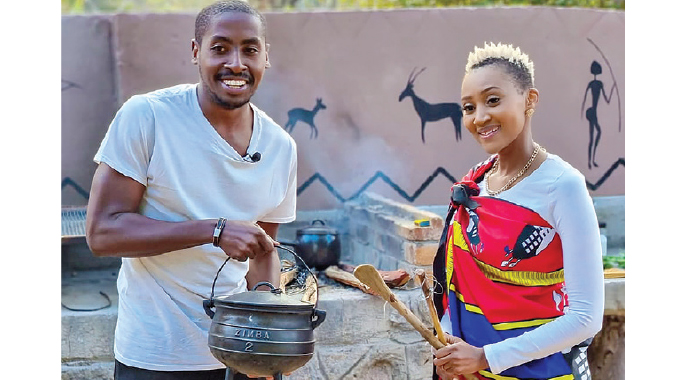
Angela Sibanda, Chronicle Reporter
WHILE some people have the misplaced notion that a woman’s place is in the kitchen, a Bulawayo-based YouTuber Mr Prince Sivalo Mahlangu loves being in the kitchen as he believes that African cuisine is a valuable cultural heritage that must be preserved.
Mr Mahlangu of Magwegwe North suburb travels around the nation visiting both rural and urban areas to learn traditional recipes.
He cooks and shares videos with his online viewers.
In an interview, Mr Mahlangu said his interest for the kitchen was cultivated by his upbringing while his maternal grandmother, who is turning 75 in April, had the greatest impact.
Mr Mahlangu runs a popular YouTube channel ‘Magriza Made Me Cook’ which has over 8000 subscribers.
Magriza is a slang word for grandmother and the name was inspired by his grandmother’s immense knowledge in preparing traditional meals.
The channel which aims to document Africa’s diverse food cultures is characterised by a series of cooking documentaries that also highlight different cultural practices and beliefs.
He said currently he is concentrating on running the channel and gets revenue from advertisements.
“I come from a family of foodies and growing up we always had a strong passion for cooking and being in the kitchen.
At home we saw cooking as a necessary duty and everyone had to partake in it. I have been fortunate enough to have lived with many wonderful people throughout my life, but in regards to cooking indigenous foods I can say with certainty that my grandmother, Magriza, was the foodie for whom I have the most respect and admiration.
From an early age, she told me that food is culture and once you lose an identity with your food, you’ve lost your culture,” he said.
He said when he started the Magriza Made Me Cook show, he was motivated by the need for Africans to start documenting and telling their own stories based on their own narratives.
“I started with my best friend Thembani Melusi Phakathi, who currently directs and edits the show.
From a personal level, it was my desire to share these incredible stories that I saw from my grandmother and other people that I got to interact with. It was also a call to get these indigenous foods on the documentation side and that the information can be accessible to anyone around the globe,” said Mr Mahlangu.
His documentaries have featured indigenous cultures of Xhosa, Ndebele, BaLozwi amongst others.
“We don’t have any formal criteria that we use in selecting the choice of documentary to be made. It is our desire to meet as many cultures as possible and get to experience their food because learning about their food means we get to learn about them as a people as well,” he said.
Despite the change in cultural norms and values, Mr Mahlangu said being a man who loves the kitchen still comes with a lot of stigma and he has been dealing with it from a young age.
“I started cooking from a tender age, so I started dealing with the stigma when friends and relatives came over and we had to cook for them. Some would ask me if I could really cook, but after eating the questions won’t be there.
“The stigma is still there especially when we go and cook in areas like the rural areas where such duties are still dominated by women, but at the end my work speaks for itself and now most people know me or about me, so I just introduce myself and explain what I do,” he said
Mr Mahlangu also said meeting people of different cultures has had a great impact in his life and personality.
“Meeting people from different tribes has made me appreciate our diversity and mostly to get an appreciation of how other people view the world and to learn some new recipes from every trip,” said Mr Mhlangu.
In December last year, Mr Mhlangu partnered with Award-winning contemporary musician Hwabaraty in another show called ‘kwesami’ that aired on Magriza Made Me Cook channel and the platform addresses the need to expose the beauty of African music and food within a house setting.


 Online Reporter