Online Reporter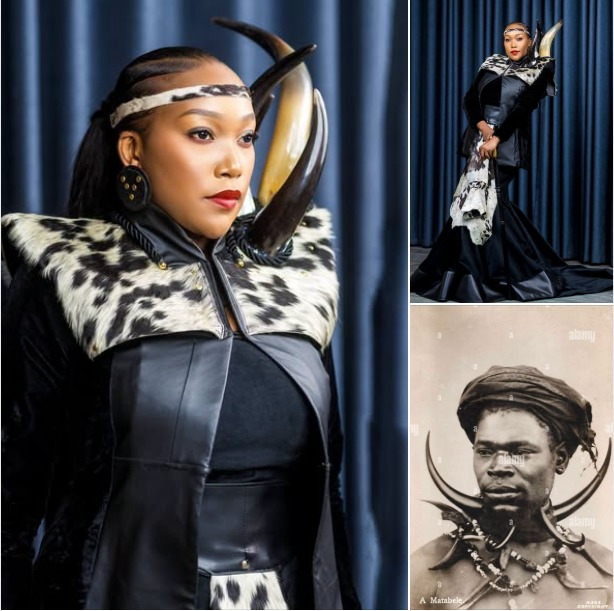
Gift Moyo [email protected]
LOCAL fashion designer and founder of A Tribe Called Zimbabwe, Zana K, has defended Winky D’s striking outfit at the Tete-a-Tete Season 2 concert, urging the public to give creatives room to explore symbolism and artistic expression without rushing to judgment.
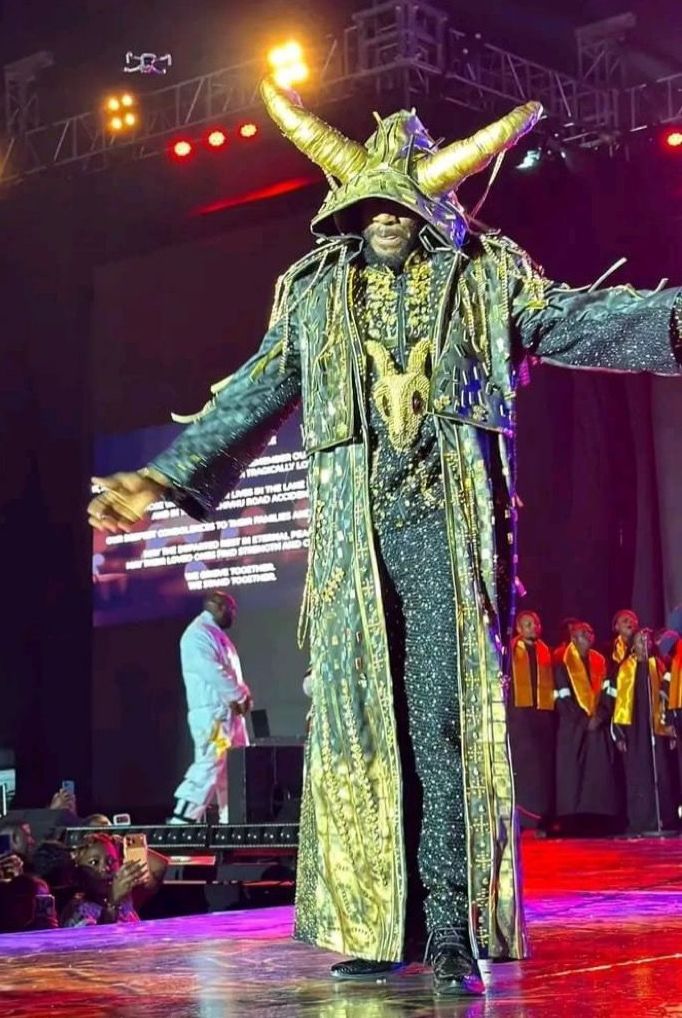
Winky D’s appearance at the concert, held at Alex Sports Club in Harare on Saturday, immediately became one of the most talked-about moments of the night, with his elaborate outfit sparking debate across social media.
The reggae-dancehall star took to the stage wearing an outfit featuring a hood adorned with two prominent golden horns, while a goat’s head made from jewellery was pinned across his chest.
While some fans viewed the imagery as theatrical fashion and an extension of Winky D’s artistic persona, others interpreted the horns and goat imagery as having demonic or religious connotations.
As images of the outfit circulated online, social media platforms and group chats were flooded with reactions, with sections of the public questioning the symbolism behind the unusual ensemble.
However, Zana K has pushed back against the criticism, arguing that artistic expression should not automatically be interpreted through a religious lens.
In a social media post, the designer said society is often too quick to label imagery featuring horns as evil.
“Anything with horns in Zimbabwe is very quickly labelled as evil. If he had walked out in a suit made of fire, we’d have heard that it represents hell. If it was water, someone would have diagnosed marine spirits.
“At this rate, the only innocent way to reference a goat is to arrive with an actual goat on a leash. And even then, please make sure it is a white goat so everybody can relax.
“The irony is that much of the goat imagery people now automatically associate with ‘the devil’ was heavily shaped by the 19th century European occult imagery. French occultist Éliphas Lévi popularised the famous winged, goat-headed Baphomet figure in the mid-1800s as a symbolic representation of opposites, balance and esoteric ideas, not simply a portrait of the Christian devil. The image was adopted by Satanists.
“Now all goats must be feared? Now the poor goat must suffer indefinitely because a Frenchman drew something dramatic in the 1850s?
“Sometimes symbolism is just symbolism. Sometimes fashion is theatre. Sometimes a horn is simply a horn. Give creatives room to create before we turn every design choice into a spiritual emergency,” said Zana Kay.
The designer’s comments have added another dimension to an already heated debate surrounding Winky D’s fashion choice, with some industry practitioners also coming to the musician’s defence.
For many creatives, the controversy has once again highlighted the tension between artistic freedom and the way symbolism is interpreted by audiences in Zimbabwe.
Winky D, who is known for using striking visuals and theatrical elements as part of his performances, has yet to publicly explain the inspiration behind the outfit.
Despite the growing defence from sections of the creative industry, debate among fans and social media users continues, with opinions remaining sharply divided over whether the outfit should be viewed simply as a fashion statement, artistic expression or something more symbolic.