Online Reporter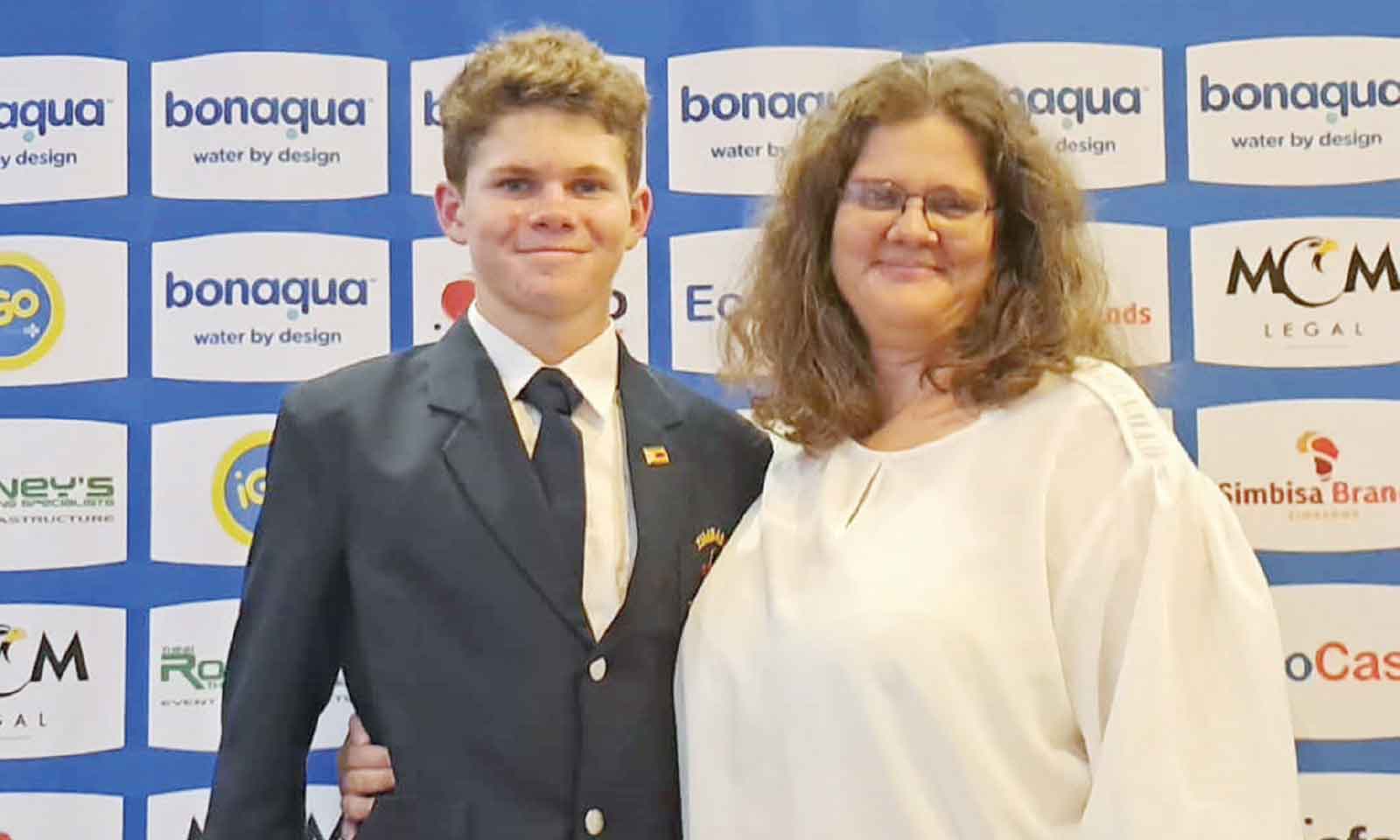
Ellina Mhlanga
Zimpapers Sports Hub
AT 16, Zander Botha has already made a decision most athletes spend years postponing — quietly stepping away from the familiar path of school routines and teenage balance to build his life around a sport that demands everything at once and gives very little back unless you are prepared to meet it on its terms.
His days are now shaped by that choice, with school fitted into the gaps rather than the other way round, lessons logged in between sessions, recovery planned with the same intent as training, and the cycle repeating itself through swimming, cycling and running until it becomes less about discipline and more about identity.
It is not something he was pushed into. It is something he walked into, fully aware that the rewards are distant and the work immediate.
He is building towards Brisbane 2032.
“I don’t want to overdo it right now. I’d rather reach my peak when it matters most,” he says, his tone measured, as if he has already learned to filter out the noise that often surrounds young athletes who begin to show early promise.
There is a calmness in the way he speaks about his future, not the excitement of someone chasing quick success, but the patience of someone who understands that this sport, perhaps more than most, exposes those who rush.
That patience has started to reflect in his results, although the numbers alone do not fully capture the shift taking place.
His victory at the Africa Triathlon Junior Cup in Troutbeck, on a course that tests endurance and composure in equal measure, was not just another win; it was confirmation that he can handle pressure away from controlled environments.
The Zimbabwe National Championships Under-17 title followed, adding to a growing body of work that stretches into Namibia and South Africa, where he has also found his footing against stronger fields.
Still, the results sit on the surface. The deeper change is in how he now relates to the sport.
“For me, triathlon is just a habit now. It’s no longer about trying to motivate myself. It’s my life,” he said.
That shift did not arrive easily.
He grew up doing almost everything — rugby, hockey, athletics, cricket, swimming — excelling in most of these disciplines, comfortable in environments where his ability gave him an edge.
Triathlon stripped that comfort away.
“When I got into it, I wasn’t that good. That’s what made me want to keep going, to see how far I could push myself,” said Botha.
It began in 2019 with a casual invitation from a friend for a few races that were meant to be fun, nothing more.
What followed was a gradual pull into something more demanding, more complex and ultimately more rewarding because of how difficult it was to master.
By the time he reached his early teens, he was already testing himself beyond Zimbabwe, finishing fifth at Maselspoort in South Africa in his first international race, a result that might have seemed modest on paper but carried enough weight to shift his thinking.
From there, the choices became clearer.
He began to narrow his focus, letting go of other sports not out of necessity but out of understanding.
By his final year in junior school, triathlon had moved to the centre of everything.
The decision to attend St John’s instead of following his peers into boarding school was part of that adjustment, allowing him to stay closer to training and build consistency in a sport that punishes interruption.
Now, the commitment has deepened further.
Homeschooling has given him control of his time, and with it, the ability to align his days entirely around performance.
Training has intensified under the guidance of South African coach Riana Robertson through the Endurance Training Hub, where structure replaces guesswork and progression is carefully managed rather than forced.
“I’ve done a lot more training in the last six months than before. Everything is more organised now,” said Botha.
He trains around 12 hours a week, a number that will rise, but only when his body and programme allow it.
There is restraint in how he approaches growth, a willingness to hold back when necessary, which is often the difference between those who last and those who fade early.
That discipline is anchored in a clear set of targets.
The immediate focus is the Dakar 2026 Youth Olympic Games, where he has already made a strong case with a silver medal at the World Triathlon Development Regional Cup in Kilifi, Kenya.
Qualification now depends on Zimbabwe securing a slot, adding a layer of uncertainty that sits outside his control.
Beyond that, the journey stretches into familiar markers, Junior World Championships, continued exposure at higher levels, and then, if everything aligns, the Olympic stage.
“If I get to 2028, that would be great, but 2032 is the goal,” he said.
It is a long build, and he speaks about it with an awareness that not everything will go according to plan.
What stands out is not just the ambition, but the way he manages it, the understanding that improvement must be measured, that pushing too hard too early carries consequences that often appear later, when it is harder to recover.
“I want to improve step by step. Not too fast, not too soon,” said Botha.
That balance is easier to maintain with the support around him, a structure that allows him to focus without carrying everything on his own.
His parents have given him room to take ownership of his journey, stepping in where needed but never forcing direction, allowing the decisions to come from him while ensuring the foundation remains stable.
His mother Roa describes her role in simple terms.
“My role is to make sure he gets to training, that he has what he needs, that he eats properly.
“Just the basics,” she said.
But within that simplicity is a deeper commitment, one that has seen the family adjust alongside him, supporting choices that are not always easy to make, particularly at an age where most are still exploring options rather than narrowing them.
“We wanted him to find something he loves. He found it, and we’ll support him all the way,” she said.
For Botha, that support has become part of his confidence, not in a way that shields him from the demands of the sport, but in a way that allows him to focus fully on meeting them.
“It gives me confidence. It helps me keep going,” he said.
The road ahead will ask more of him, as the level rises and the margins tighten, where improvement is harder to find and consistency becomes everything.
But the foundation he has built, through choice, through patience and through a clear understanding of what he is working towards, suggests he is not moving blindly.
He has chosen a difficult path early, not out of pressure or expectation, but because he was drawn to the challenge of it, the difficulty of mastering three disciplines at once, the constant demand to be better than he was the day before.
Somewhere between the early sessions and the long rides, between schoolwork adjusted around training and recovery, he is shaping something that will only be fully measured years from now.
For now, he keeps moving, building quietly, without rushing the process or chasing moments that come too soon.
Brisbane remains distant, but everything he is doing is already pointing in that direction.