Vusumuzi Dube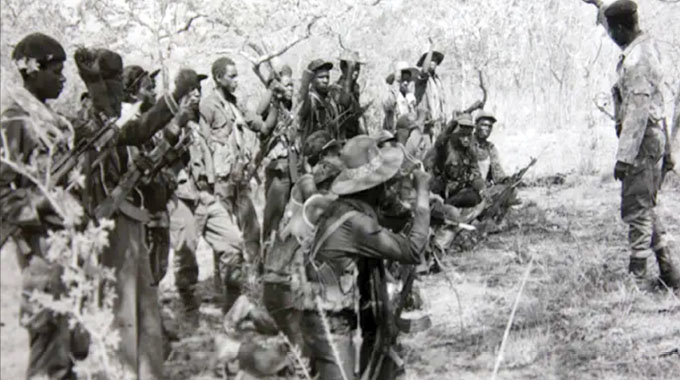
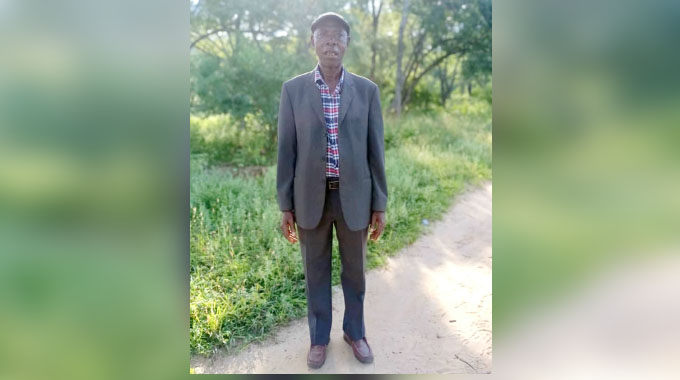
WE continue our interview with former ZANLA security officer for Sector 4 under Gaza Province, Major (Rtd) Nelson Archbald Nyamuridzo, whose nom de guerre was Cde Reeves Sigola. During the liberation struggle, he operated in Gaza Province, a vast ZANLA operational zone that covered Masvingo and Matabeleland South Provinces.
As for Sector 4, it covered areas such as Matobo District. With this year’s main Independence Day celebrations set to be held at Maphisa in Matobo District, long designated a growth point until recently when it was granted town status, the celebrations carry particular resonance for Maj (Rtd) Nyamuridzo.
He first entered the district in 1978, leading a seven-member ZANLA reconnaissance unit that had crossed from Beitbridge as part of a broader strategy to extend guerrilla operations deeper into Matobo, Gwanda and Mangwe districts.
For him, the commemorations are not merely ceremonial, they are a reminder of the risks, improvisation and determination that characterised the closing years of the armed struggle.
In last week’s edition, Maj (Rtd) Nyamuridzo told our Assistant Editor Mkhululi Sibanda (MS) about his early life as a bricklayer in Bulawayo before relocating to Botswana, where he continued working in the construction industry.
It was there, in 1974, that he was recruited into the armed struggle by a ZANU/ZANLA representative, Cde Joseph Chikara. Together with other recruits, among them the now Zanu-PF National Political Commissar, Cde Munyaradzi Machacha, who was then a student from Thekwane (formerly Tegwani Mission) in Bulilima District, in Matabeleland South Province.
Maj (Rtd) Nyamuridzo’s recollections highlight not only the military dimension of the liberation struggle but also the political manoeuvring, regional diplomacy and inter-force dynamics that influenced events on the ground.
Together with cadres like Cde Machacha in a group of 200 that included recruits from both ZANLA and ZPRA they were flown from Botswana to Zambia and subsequently transferred to Tanzania for military training in 1975.
As the country marks another anniversary of independence, Maj (Rtd) Nyamuridzo’s memories underscore the long and complex journey from the camps of Zambia, Tanzania and Mozambique to a sovereign Zimbabwe.
In this instalment, Maj (Rtd) Nyamuridzo resumes his account, offering rare insight into the complex alliances, shifting command structures and frontline experiences that shaped Zimbabwe’s liberation war.
MS: In our last conversation you spoke about being visited by Jason Ziyapapa Moyo and Noel Mukono while at a camp you identified as Mbaraga in Tanzania. Let us resume from there.
Maj (Rtd) Nyamuridzo: After the visit by Cdes Jason Ziyapapa Moyo and Noel Mukono, senior guerrillas arrived, among them Cde Eddie Sigoge, a ZPRA instructor, and Grey Mapondera. We were then moved to Morogoro to begin our formal training. Morogoro was a ZPRA training camp in Tanzania. This arrangement came at a significant moment.
It followed efforts to amalgamate the two nationalist military wings, ZANLA and ZPRA under the guidance and efforts from the then Organisation of African Unity (OAU), now the African union (AU). As part of that co-operation, a contingent of ZANLA recruits was sent to Morogoro, while some ZPRA cadres were deployed to the ZANLA camp at Mgagao, also in Tanzania.
At Morogoro we commenced full-scale military training in January 1976. It was there that we encountered commanders who would later assume prominent roles in independent Zimbabwe, including General Philip Valerio Sibanda, who served until recently as Commander of the Zimbabwe Defence Forces, and the current Vice-President, General Constantino Chiwenga.
General Chiwenga was among the ZANLA instructors seconded to Morogoro to work alongside ZPRA counterparts such as General Sibanda. Senior commanders, including Cdes Rex Nhongo and Lookout Masuku, visited the camp during our training. We arrived at Morogoro in December 1975, and training formally began on 2 January 1976. We remained there until May 1976.
MS: From Morogoro, where were you deployed?
Maj (Rtd) Nyamuridzo: We were sent to Mozambique. We travelled by ship to Beira and were then moved to Chimoio. From Chimoio, we were deployed to Mapai to help establish Gaza Province. About 700 guerrillas were assigned to that operation. The provincial headquarters was set up at Mapai, which became our staging point for infiltration into Rhodesia. It is important to note that by this time Zipa had effectively collapsed. As a result, ZANLA and ZPRA reverted to their separate command structures and resumed operating independently.
MS: When did you first move into the country for operations?
Maj (Rtd) Nyamuridzo: I recall that our first major operation was an attack on the Rhodesian outpost at
Gonakudzingwa in August 1976. It was our baptism of fire.
We struck the camp and inflicted significant damage. After that engagement, we advanced inland towards Beitbridge District, consolidating our presence and preparing for further operations.
n To be continued next week with Maj (Rtd) Nyamuridzo talking about operations in Matabeleland South and the push from Beitbridge District to other districts of the province such as Matobo.


 Online Reporter