Online Reporter
Joseph Madzimure, Zimpapers Politics Hub
PREPARATIONS for the 22nd Zanu-PF Annual National People’s Conference, set to be held in Manicaland next month, are ahead of schedule — guaranteeing a successful event that reflects the modernity of Zimbabwe, Zanu-PF Secretary for Information and Publicity, Cde Christopher Mutsvangwa has said.
Scheduled to run from October 13 to 18 at Mutare Polytechnic, the conference is more than a political gathering; it is a pivotal occasion on the party’s calendar — a time for reflection, celebration, and strategic planning.
Cde Mutsvangwa emphasised that the conference is a vital step in delivering the mandate entrusted to the party by the people in 2023.
“The conference will introspect, debate, and decide on the economic trajectory over the past year, and once again plan and chart the way forward into the coming year,” he said.
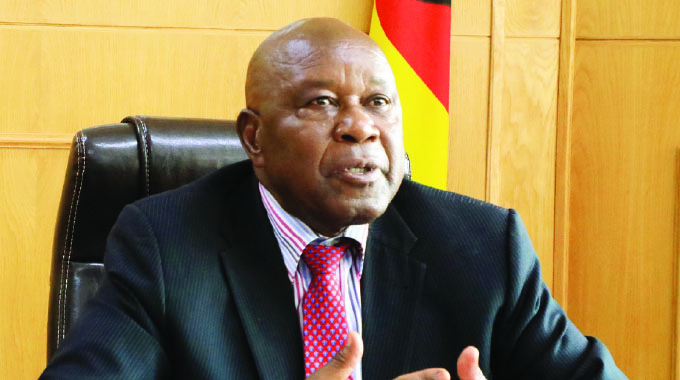
He expressed confidence in the party’s delivery mechanisms, highlighting the impressive success rate in implementing previous resolutions.
“The success rate of resolutions is phenomenal. At first glance, this may not be apparent to those unfamiliar with the processes of the Conference. Resolutions are rarely designed for completion within a single year; they typically span multiple cycles. However, annual targets are set, reviewed, and adjusted as needed. With this in mind, it is with great pride and joy that we inform the nation that most of the targets set in previous resolutions have been surpassed,” stated Cde Mutsvangwa.
At least 4 000 delegates are expected to attend, including foreign guests — an affirmation of the Second Republic’s successful engagement and re-engagement policy.
“We expect no more than 4 000 delegates in total, including invited guests. We aim to continue streamlining the numbers in future,” he said.
Cde Mutsvangwa noted that President Mnangagwa’s open-door policy — being a friend to all and enemy to none — has paved the way for foreign delegates to attend and witness this important indaba.
The conference theme, “Attainment of Vision 2030 Through Economic Empowerment and Value Addition”, underscores the party’s steadfast commitment to achieving upper-middle-income status by 2030.
He also highlighted that Manicaland, the host province, holds historical significance as the bastion of the decisive and victorious phase of the Chimurenga II National Liberation Struggle. He recounted how the 1974 victory of Frelimo enabled the late Mozambican President Samora Machel to open up a 1 000km stretch of the eastern border highlands to guerrilla warfare, empowering Zanla combatants.
Manicaland served as both a recruitment and infiltration frontier.
“Signature Zanla battles at Ruda and Ruwangwe Camps, Grand Reef Airport, the bombardment of Mutare, and the Mavonde-Monte Casino campaign have etched Manicaland into the annals of Zimbabwe’s modern military resurgence,” he said.
Manicaland also proved resilient in the war against Renamo, the proxy of Apartheid South Africa, which waged a subversive campaign against Zimbabwe’s fledgling independence.
He cited the battles of Casa Banana, Gorongosa, and Mutwara as defining moments in Zimbabwe’s military history.
These victories, Cde Mutsvangwa said, dispelled apartheid South Africa’s illusions of sustained regional military dominance, ultimately paving the way for Namibian independence in 1989 and majority rule in South Africa in 1994.
The conference, he noted, coincides with a period of economic resurgence for Manicaland.
He explained that for six decades, beginning in 1965, the province endured economic hardship. The initial blow came from UN sanctions against Rhodesia’s UDI, which severely restricted exports through the Eastern gateway to Beira Port.
This was followed by the 1975–76 border closure during Chimurenga II, which stifled remaining economic activity.
The subsequent Renamo war dashed hopes of a Mozambique–Zimbabwe trade corridor, forcing Harare to rely on Durban, over 2 000km away.
However, Cde Mutsvangwa praised the current administration.
“Bravo to President Mnangagwa. As of 2025, the Mutare–Beira Eastern Trade gateway to the Indian Ocean has overtaken Beitbridge in prominence.”
He pointed to the revitalisation of agro-industry across Manicaland’s diverse micro-climates.
“Coffee and tea, bananas, pineapples, sugar, macadamias, flowers, and blueberries are thriving, thanks to new trade markets opened by the Second Republic, which has shed the stigma of being a pariah state. The virtuous diplomacy of being a friend to all and enemy to none is bearing fruit,” he said.
Additionally, new tourism packages are being developed, linking the cool highlands climate with the warm beaches of Vilankulo and other oceanic havens in nearby Mozambique.
He concluded by saying that Manicaland’s bullish economic prospects provide a fitting backdrop to a province now basking in ever-bright developmental opportunities.