

 admin
admin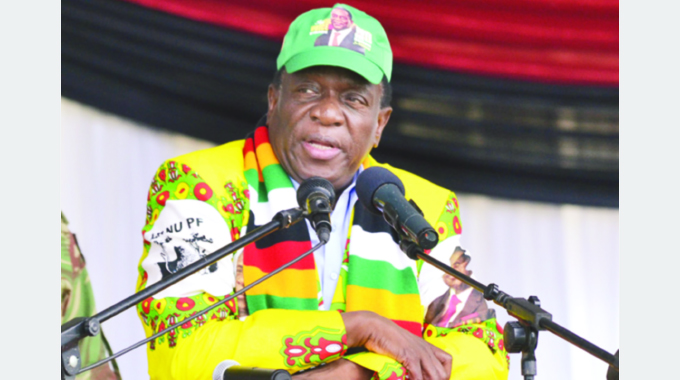
Richard Runyararo Mahomva
National Introspection
The 7th session of the ZANU PF Congress is upon us and it is important to understand the implications of this internal, but largest decision-making body of the ruling party.
Normatively, ZANU PF’s internal stability equivalently exerts itself on the length and breadth of our national economy.
Without that internal stability from the nation’s citadel of power, various arms of the State suffer chaos. At the moment, ZANU PF is the cog of all intricate elements of what constitutes the State. Whatever that happens in ZANU PF – including how this liberation entity is perceived has an effect on policy architecture. Some call this conflation of ZANU PF and the State, but readers of Hobbes and Machiavelli would rightfully call this realism.
The interconnectedness of the functions of the State and its various arms was displayed in November 2017 when the citizens and their army in conjunction with their Parliament and consequently the opposition coalesced to give birth to the “New Dispensation”.
The factional wrangles in ZANU PF gave issue to a multi-sectoral patriotic formation across the political and institutional divide of the state. Such is the power of incumbency.
Scientific analytical due diligence
While restrained by public service code of conduct, it will be remiss for the political student in me to ignore the unfolding events as the revolutionary party gears towards its congress.
It’s a common secret that “observation” is an important branch of political science. Therefore, when events unfold in the ruling party, the political scientist cannot be negligent to abandon their microscope to read into the emerging trends and behaviours to foretell the possible outcomes.
Many in my trade have often missed the mark because they deploy their hate for ZANU PF as a commodity of analysis – eventually they expect their dislike of ZANU PF to translate to the reality on the ground. Such is the consequence of our polarised intelligentsia.
A reading into the 7th ZANU PF Congress
As per tradition, all ZANU PF congresses are pragmatic performative spaces of democracy. The first Congress of the now ruling party, then called ZANU in 1964, laid the foundation for the selection of leaders assigned to serve the cause of the armed struggle. In post-independent Zimbabwe the congresses including this forthcoming one have been used for selecting elected Central Committee members into the Politburo which constitutes the Party’s secretariat.
This congress will also endorse President Mnangagwa as ZANU PF’s President and First Secretary in preparation for the forthcoming 2023 Harmonised Elections.
It is also at congress where ZANU PF’s five-year policy plan in the post-2023 election will be decided. Figuratively speaking, ZANU PF is preparing its plebiscite fort, thereby mobilising the requisite workforce, talents and guidelines to consolidate its power.
In the run up to this congress (as required by the party’s constitution), ZANU PF revived its District Co-ordinating Committees (DCCs) and Provincial Co-ordinating Committees (PCCs).
Thereafter elections for Women and Youth Leagues followed. Subsequently, the Liberation War Veterans League was formed and its leaders were elected to run this new entity of the nationalist party. All these processes placed prominence on the will-power of the ballot and the consultative social capital of the party. The structuring exercise gave the leadership an interface with the grassroots voter. This is a clear manifestation of democracy.
In essence, democracy is underpinned on pro-people leadership.
This is a cross-cutting phenomenon, for political parties to survive they must have their policies validated by their supporters. The greater the internal confidence in the publicly endorsed leadership, the greater the external confidence of that same party’s policy aspirations.
External confidence derives from the undecided voter, the non-ZANU PF loyalist and ordinary apolitical citizen.
The Democrats’ democracy irony
However, this is not the case with ZANU PF’s main competitor, CCC. Before the factional climax which saw the CCC rebelling from its parent body, the MDC, our opposition has colloquially earned the reputation of being Zimbabwe’s arch-symbol of democracy.
This is a status earned from the neoliberal socio-genesis of the opposition. Through its pro-Western birth traits, the CCC in its anti-land reform ancestry is discursively paraded as the epitome of democracy and ZANU PF has been constructed as an antithesis of that Western desired democrat caricature.
With all that colonially-assented splendour, a majority of the leaders in the CCC are direct appointees of their president, Advocate Nelson Chamisa.
A glaring example of this folly is that Fadzai Mahere was hand-picked and assumed an influential role ahead of very senior members of the CCC.
She is immediate boss to Gift Siziba (my long lost high school mentee).
The CCC purports to be a democratic alternative to ZANU PF, but they have no structures. Those in the CCC leadership are not elected individuals, they are beneficiaries of the factional euphoria that gave birth to their reactionary outfit.
Without a well-coordinated membership hierarchy, the same political party expects to win the forthcoming 2023 elections. They have no clear membership mobilisation and demography-based consolidation formula.
The CCC depends on an unaccounted spontaneity of an unstructured convergence for change. That means there is no methodology to the change they aspire for. Lack of methodology also entails lack of strategy and yet the basics of mass political mobilisation pronounce that the failure to organise and centralise is a route to agonise.
The said agony will be made inevitable by the outcome of the 2023 election where ZANU PF is likely to emerge victorious. This is because ZANU PF is entering into this race with a clear mass mobilisation method informed by its membership.
Through an internal democratic trial run in the past few months, youth, women and war veteran wings elected new leaders. ZANU PF was able evaluate voter attitudes and the electoral viability of its structures.
Making sense of ZANU PF’s internal democracy
The peaceful running of the ZANU PF internal election processes up to this point signals a prospective peaceful environment ahead of the coming 2023 elections. The leadership reorganisation and the recently observed intensive restructuring of ZANU PF from the cell right up to the provincial structures has illustrated a rejuvenation of the ruling party.
This means the political market is being poised to receive invigorated strategies, personalities and practices all emanating from an internally reorganised ZANU PF. New and future leaders of ZANU PF are being born out of the current election fostered changes.
The culture of tolerance and embracing election outcomes is increasingly reaching mature heights. A sterling example in this respect is that of Cde Tendai Chirau, the Deputy Secretary for Security Affairs in ZANU PF.
After conceding to the outcome of the Harare DCC 4 election, Cde Chirau unashamedly remarked that the process was free and fair.
”The internal election is done! The process was free and fair. In my zone there were 11 aspiring candidates vying for two slots. Of the 11 candidates, two were elected . . . Viva our internal democracy” said Cde Chirau.
The submission indicates subordination of individual interests to the will of the collective. Such is the social aptitude towards democracy which has been missing in our politics.
Over the years, we have grown to give normalcy to embracing American and British opinions about the free and fairness of our elections as the truth.
To this end, our political practices continue to be tied down to their validations or lack thereof. Resultantly and exaggeratedly so, ZANU PF has been projected as electorally fraudulent and dictatorial.
This has been achieved through several sponsored initiatives run by neo-colonial commissariat academics and some Civil Society Organisations (CSOs). ZANU PF has been inherently characterised as a political party whose longevity in power is linked to benefits of incumbency by institutions which have served as conduits for funding regime change activities.
This parochial analysis has every problem with what is regarded as manipulation of the benefits of incumbency and yet ignoring that some CSO funds have been used for opposition campaigns and advocacy programmes aimed at damaging ZANU PF’s reputation as the party that delivered democracy in 1980.
In all this, so little intellectual investment is made to understand the impact of ZANU PF’s internal democracy system and its impact on the party’s overall election performances.
The mobilisation output of setting out the women and youth wings of ZANU PF serves as a guarantee to electoral demographic targeting. Surprisingly, the opposition is not keen on organising this distinguished class of voters. Instead, we have an opposition which rests all its political fortunes on Twitter followers, hashtags and retweets. From one hashtag to another and thinking that anyone owes the opposition the levers of power at no cost, ZANU PF will be busy mobilising voters, creating new structures and reviving old ones.
This is a habit which ZANU PF borrowed from the armed struggle and has refined it so good over the years.
Therefore, the forthcoming congress is a walk back to the past in order to reaffirm the future. Congratulations to those who made into the Central Committee.
Until then, political scholars must be alert to every decision detail of the congress. Remember a healthy ZANU PF translates to a healthy national democracy and an unstable ZANU PF is a cause for concern for the well-being of the State.
Richard Runyararo Mahomva (BSc-MSU, MSc-AU, MSc-UZ) is Director for International Communication Services in the Ministry of Information and Publicity. He writes in his personal capacity. Feedback: Twitter: @richardrmahomva & Email [email protected].



 Online Reporter