

 admin
admin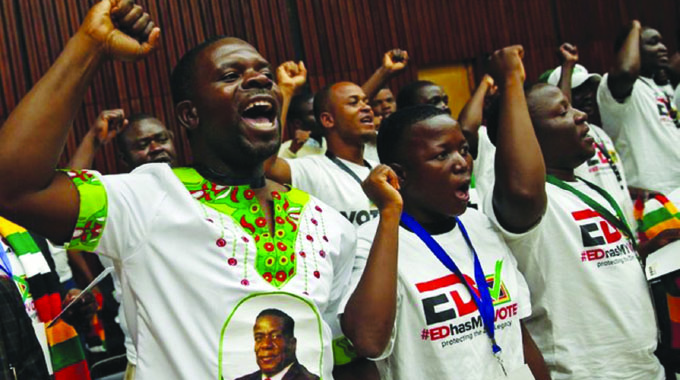
Ranga Mataire Group Political Editor
Ahead of elections next year, political parties are conscious of the need to harness the youth vote, which is a significant demographic segment of the country’s electorate.
While the opposition CCC is fond of presenting itself as a youthful party, there is little to show in terms of policy and action that the organisation really cares about the youths.
One commentator once remarked that being young is not an ideology, it is a useful demographic.
It appears the governing Zanu PF is not only conscious of the need to nurture and harness this demographic, but has been busy revamping its youth wing to ensure it becomes an efficient vanguard capable of mobilising thousands of virgin voters.
Born out of a protracted liberation struggle, Zanu PF has the advantage of experience in harnessing and mobilising the youths who were bulk of the rank and file of combatants.
Post-the liberation struggle, the Zanu PF has continued to nurture the youths including having a vibrant youth league, an organic structure of the party that independently generates ideas fed to the main bodies of the party – the Central Committee and the Politburo.
But beyond being the vanguard of the party, the Zanu PF Government has consistently made it a prerequisite to come up with policies tailor-made to directly benefit the youths.
In other words, Zanu PF has consistently maintained and nurtured its relationship with youths through various policy interventions.
In its 2018 manifesto, Zanu PF summarised its theme focus on preservation of unity, fighting corruption, developing the country, re-engage and creation of jobs.
The preamble of the manifesto clearly states that it believes in putting the people at the centre of governance for purposes of inclusiveness and value adding decision making processes in conformity with the fundamental tenets of the historic and successful “Operation Restore Legacy” under the slogan “Voxi Populi Vox dei” (The Voice of the People is the Voice of God).
Among the people at the centre of its policy interventions are the youths.
Zanu-PF leader, President Mnangagwa, has made it clear that his party values the youths and has urged them to take advantage of an array of empowerment programmes to contribute towards developing the country.
In his address at the 7th Zanu PF National Youth League Conference in May, President Mnangagwa said throughout the days of the revolution to the present, his party had always valued, cared for and trusted young people and placed great expectations on them.
“Your task as youths is to accelerate development, growth and prosperity of our country, anchored by innovative and contemporary heritage based strategies,” the President said.
His quest for youth empowerment goes beyond political rhetoric.
This year alone, the President directly impacted the lives of the youths by launching the Provincial Integrated Development Centres for the country’s 10 provinces.
Under this initiative, over 5 000 would be recruited at each centre annually before being equipped with agricultural skills.
Speaking at the launch of one of the incubation centres at DCK Farm in Kwekwe early this year, President Mnangagwa described agriculture as one of the major pillars of the country’s economy, hence the Government’s thrust to empower youths who constitute 62 percent of the total population.
The launch of the incubation centre, saw the President distributing nearly 700 heifers which will be shared among youths across all the provinces under the Presidential Heifer Pass-on Scheme as the Government moves to empower the younger generation.
The President has repeatedly encouraged the youths to take a keen interest in agriculture, taking advantage of the new Government’s policy of 20 percent youths quota under the land reform programme.
Besides livestock, Government has also approved plans by the Ministry of Mines and Mining Development to reserve some areas for empowerment of young people to take part in the mining industry in accordance with the country’s Constitution.
Section 20 of the Constitution of Zimbabwe states that all the “State and its institutions and agencies at every level must take reasonable measures, including affirmative action to ensure that youths are afforded opportunities for employment and other avenues to economic empowerment.”
Indeed, the Ministry of Youth, Sport, Arts and Recreation’s national policy acknowledges that young women and men are not only a major national resource and inheritors of Zimbabwe’s future, but are also active contributors to nature of present society.
The policy seeks to “empower the youth by creating an enabling environment and marshalling the resources necessary for undertaking programmes and projects to fully develop the young generation’s mental, moral, social economic, political, cultural, spiritual and physical potential to improve their quality of life.”
Any objective observer of the activities of the main political parties in Zimbabwe will come to the conclusion: Zanu PF is making efforts to ensure youths benefit from various empowerment initiatives being made available by the Government while other opposition political parties pay lip-service to issues that matter to the younger generation.
Despite being in charge of most urban local authorities, the opposition is yet to tangibly impact the lives of youths by initiating any empowerment projects.
Regardless of being active on social media, the opposition has done little in spearheading the empowerment of young people.
Yes, in 2023, social media is bound to be a critical mobilising platform for youths.
However, it leaves no one guessing that only a political party that has practically initiated life-changing empowerment programmes on the ground will carry the day for the youths come election time.



 Online Reporter