Online Reporter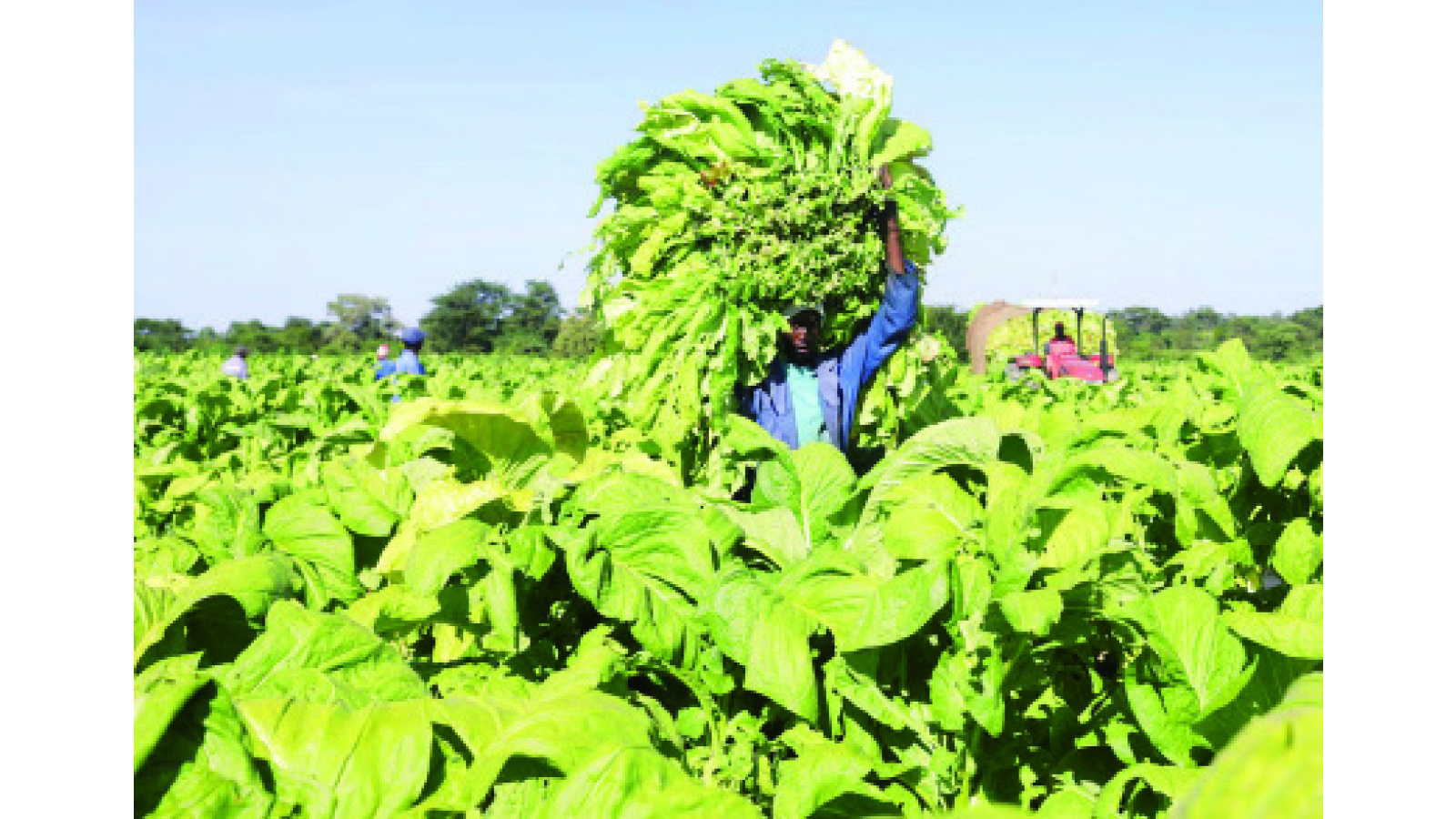
Communion with Bishop Lazarus
Sometime in September 2009, Zimbabwe got a surprise present from an estranged International Monetary Fund (IMF), which decided to dole out about US$510 million to help cushion Harare from the United States-brewed 2007-2008 world financial crisis.
At that time, trouble began when the US housing market collapsed under a speculative bubble.
Due to the interconnectedness of the financial system, the crisis quickly spread to the rest of the world.
A panicky Washington — fearing the collapse of both its own economy and the world financial system, which is largely pivoted on the US — decided to throw money at the problem, hoping that this would induce lending in the market and ease the liquidity crunch that was threatening global economic growth.
You see, financial institutions had become largely reluctant to loan money as they feared defaults in a market that had become contaminated.
So, this is how countries such as Zimbabwe, which had been ostracised from the global financial system, unexpectedly found themselves benefitting from this largesse.
In the US itself, the Federal Reserve found itself in an invidious position where it had to spend in excess of US$700 billion to bail out private enterprises such as Citigroup, the Bank of America, Lehman Brothers and insurance giant AIG, most of which were the authors of the crisis through their greed.
Although the move was morally objectionable, it was clearly unavoidable as these financial institutions — by virtue of their sheer size, interconnectedness to the global financial system and critical role in the functioning of the global economy — were just “too big to fail”.
The failure of one would have triggered a domino effect, causing losses for countless other banks, businesses, pension funds and municipalities; in the process, freezing credit markets worldwide.
So, their failure or collapse would have been catastrophic.
And remember, Washington’s desperation to save the global financial system was less out of magnanimity but more out of the need for self-preservation and perpetuation in a market that is disproportionately skewed in Washington’s favour.
It is, therefore, a truism and fact of life that there are some institutions that are simply too big and too sacred to fail.
Their fate is inextricable from the destiny, hope and aspirations of a people.
And for Zimbabwe, ZANU PF is such an institution.
It is an indispensable political vehicle that delivered political freedom and is now delivering the people’s aspirations.
Ever since its birth on August 8, 1963 at Enos Nkala’s house in Highfield — itself a suburb that was a hotbed and crucible of nationalism and revolutionary fervour at the time — the ruling party, then known as ZANU, has traversed a tortuous path, through which it has survived the vicissitudes of different political fortunes.
As a liberation movement, it weathered the storm of withering attacks of the Rhodesians and stood toe to toe with the well-armed, disciplined and brutal Rhodesian Security Forces in a struggle that dragged for the better part of 14 years.
As a ruling party, it survived the early disturbances of the early post-independence period, emerging stronger as a united political behemoth that we know as ZANU PF today.
It also survived the inherent tumult associated with the seismic shift in land ownership from white settlers to its rightful owners at the turn of the millennium, becoming one of the only liberation movements — if not the only one — that has dared to reclaim its land in the post-colonial era.
This, however, did not come cheap, as it attracted the wrath of the West, which unleashed its fury through sanctions that were designed to bring Zimbabwe to its knees.
After living through these sanctions for more than 24 years, Zimbabwe, however, remains not just unbowed but resurgent.
To the West’s wonderment, Zimbabwe’s economy, under the Second Republic, is growing at an unprecedented rate.
From the record output in tobacco, wheat and horticulture; the record production in gold and lithium; and the record increase in exports, among many other milestones, Zimbabwe has rewritten the narrative, from apocalyptic to triumphant.
But these are not mere statistics; they represent development that is changing lives and livelihoods, and changing the face of Zimbabwe.
Be they rural communities whose incomes are dramatically increasing as a result of the village business units — which, by the way, have grossed more than US$1 million so far this year — the artisanal miners who are getting US$100 per gramme of gold, the signature projects in roads, dams and bridges, among many other infrastructure initiatives that are too numerous to mention, Zimbabwe development is being seen and felt by ordinary citizens.
This is why President ED fittingly indicated at last week’s indaba in Mutare: “The ZANU PF-led Government, under my leadership, is championing an undeniable economic revolution with a firm GDP (gross domestic product) growth trajectory. The impacts of our policies are reaching all districts, wards and villages. Vanoona ngationei, vanonzwa tinzwisise. No amount of falsehoods by detractors will ever conceal the true and positive story of Zimbabwe.”
The expected implosion
Zimbabwe’s economic growth, however, has had a critical political consequence: Eviscerating an opposition that was founded, succoured and sustained by a protest vote precipitated by a tanking economy.
For Bishop Lazi, the opposition was less a political grouping united by a common political ideology — if any — but a rag-tag formation of motley interest groups whose common political totem was to remove ZANU PF for purportedly destroying the economy.
Their manifesto — fury, indignation, ire, rage and wrath — was evanescent, only lasting so far and so long as the economic crisis persisted.
With ZANU PF changing the script, the opposition is now dead in the water.
Isn’t it ironic that the same characters that were the opposition’s shock troopers not so long ago are now reinventing themselves as ZANU PF insiders that are conversant to the inner workings of the ruling party more than its longstanding members?
They claim to know ZANU PF more than ZANU PF itself.
Those who followed their commentary thought the ruling party was going to implode along supposed factional lines in Mutare.
Well, it did not, will not and cannot.
Remember what Bishop said earlier: ZANU PF has traversed a tortuous path in its 63-year-old journey.
Remember, too, what ED said on Friday: “Nyika haitongwi pasocial media. Haisi yekutamba nayo; yakatengwa neropa rerusununguko, ropa revana veZimbabwe vakarara kumasango.”
Put simply, this country was bought by the precious blood of sons and daughters of the soil.
Leviticus 17:11 says: “For the life of a creature is in the blood, and I have given it to you to make atonement for yourselves on the altar; it is the blood that makes atonement for one’s life.”
John 15: 12-13 adds: “My command is this: Love each other as I have loved you. Greater love has no one than this: to lay down one’s life for one’s friends.”
Just as the blood of Jesus brought salvation to the Christian world, the blood of selfless patriots brought freedom to our political world.
Unlike the opposition that was held together by people’s discomfort with a deteriorating economy, ZANU PF is held together by blood and the sacrifice of its heroes, both living and departed.
It is in and with this blood that its sacred covenant with the departed heroes and the people of Zimbabwe is written.
It is in and with this blood that ZANU PF has written a promissory note to deliver a united, peaceful and prosperous Zimbabwe to posterity.
Sacred duty
So, we all dare not shirk this generational duty and responsibility to build a thriving Zimbabwe that generations of Zimbabweans have aspired to.
We need to keep our eyes on the ball.
After the successes that we have registered so far, the next phase of the struggle is to empower our people and add value to our minerals and products, as encapsulated in the ruling party’s theme for this year — “Attainment of Vision 2030 through Economic Empowerment in Value Addition”.
And of course, this sets the stage for the broader strategy of the soon-to-be launched National Development Strategy 2, a five-year economic blueprint that will guide us to the realisation of Vision 2030.
Overall, it speaks to the deliberate policy to reindustrialise by processing our resources for the local market and supply high-value goods to foreign markets.
Clearly, this is the next frontier of the struggle, likely to accelerate economic growth, boost incomes and employment.
Our future success lies in turning our lithium into batteries, our coal into industrial products such as fertilisers and diesel and our cotton into clothes.
This will liberate the country from the tyranny of the primary commodity export model.
This, and the drive to promote local value chains and local content, is the silver bullet that will ensure high-quality transformative and durable growth.
This, however, does not come cheap.
It challenges the obtaining global exploitative economic architecture, where Africa must remain a source of raw materials.
So, realising this goal will necessarily entail breaking the resistance age-old systems and monopolies that have survived by exploiting Africa.
That it is difficult does not mean it cannot be accomplished — it can!
While ZANU PF is too big to fail, it, too, cannot afford to fail to deliver on its sacred duty, for whatever reason.
Bishop out!