

 admin
admin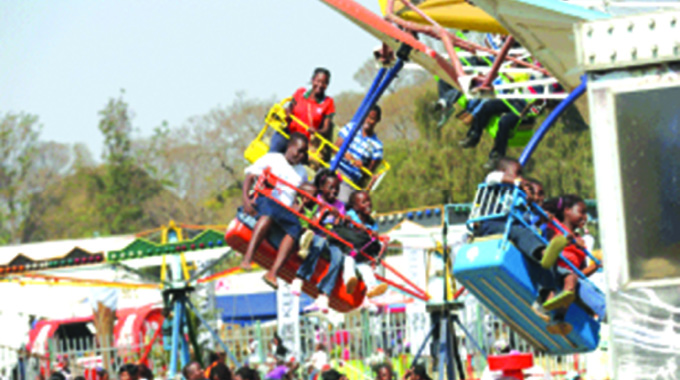
Obert Chifamba Agri-Insight
THE Zimbabwe Agricultural Society successfully staged the country’s grandest agricultural event from August 29 to September 3, with all and sundry conceding it was indeed a fruitful outing that generated a lot of business for participants.
For now, all stakeholders should naturally be doing reviews of how they performed and putting in place measures to correct or perfect their showing in the next event.
The build-up to the next event should also give ZAS and other stakeholders time to make sure one of their most important prized participant at the show — children — are provided with a safer environment to allow them to look back at past events with nostalgia and not resentment.
It took one sad incident in which a 12-year-old minor was electrocuted after touching the metal body of an electric swing known as paratrooper at the ZAS Luna Park on the last day of the event.
The minor, who was later identified as Wayne Mugaure, a pupil at Alfred Beit School in Harare, died upon arrival at Parirenyatwa Group of Hospitals.
The last day of the show fell on a Saturday, which has traditionally been known for bounteous activities combined with a lot of funfair.
Sadly, this was not the first time the event has witnessed a heartbreaking incident following the first occurrence in which another minor went missing with his skeletal remains being later discovered by a worker doing some cleaning within the exhibition park.
The minor, Given Flint Matapure, who was three years old, went missing at the then Harare Agricultural Show.
Already, many children are no longer comfortable attending the event after Given’s tragic story — and now Wayne.
It is such sad events that require all stakeholders, including the host ZAS to come together and find ways of guaranteeing the security and safety of children, otherwise they may easily end up as the missing stakeholder at future such events.
It is the duty of every stakeholder or organisation to safeguard children at such public events, whether they are regular or once-off attendees.
This care starts with scrutinising the activities to which the children will be exposed. There are some activities that may present challenges and risks, thereby making it critical for adults to spare a thought for the socialising kids.
The high levels of excitement, which characterise such events always make safeguarding children even more complex but it has to be done.
If an event, just like the agricultural shows, includes larger numbers of children, young people and adults than those that usually go there, then it requires the children to be accompanied by adults or the hosting organisation to put in place measures to guarantee their safety.
It is, therefore, necessary for event organisers, parents and service providers to think of extra measures they may need to put in place to keep children and young people safe while they enjoy themselves at the event and activities.
This makes it crucial for children going to the event to be accompanied by a suitable adult while hosts and other key stakeholders at the event also need to make sure their staff use safe procedures to make ensure the children are safe.
Safety procedures in the event of a problem must always be made known to all visitors while they must also be warned of the possible dangers in some of the activities they may want to participate in.
Staff that will be in charge of activities should be briefed on the health and safety risks involved and how to mitigate them, while the parents or handlers of the children should also be aware of the activities their children will be involved in, any risks that might occur and what steps should be taken to keep the children and young people safe.
This means that the host must explain to the parents or guardians what special kit or precautions their child will need to take, for example, safe footwear or waterproof clothing.
The host must explain whether they expect parents and carers to remain responsible for their children during the activity or if they may be in charge themselves.
The children and young people must also be informed on how they will be expected to behave. This is especially important if their behaviour might have an impact on their safety, for example, while watching or taking part in an adventurous activity.
It is not a dumb act for the host to arrange an induction to familiarise the children with the activities and share relevant safety information, for example where the fire exits and fire extinguishers are located.
They should share their safeguarding and child protection resources with the groups using their premises, to make sure they are taking the right action to promote the welfare of children and protect them from possible harm.
The recent agricultural show marked the 112th edition, which clearly demonstrates that ZAS has vast experience in handling the event and the multitudes of people including children that throng such events for both business and fun.
It is, therefore, against this background that ZAS may need to draw up strict safeguarding policies and procedures that help keep minors safe throughout the event.
This might even include engaging voluntary and community organisations, faith groups, private sector providers, as well as schools, hospitals and sports clubs for the deployment of extra auxiliary staff.
Implements and gadgets that children will be playing with also need to thoroughly checked for safety to promote the welfare of children and protect them from harm.
Such actions will enable the children and young people to enjoy themselves and have the best outcomes from whatever they will be exploring.
The rule of thumb is that there should always be the right number of adults to supervise the children and young people participating, depending on their age, group size, the activity they are involved in and any specific needs or vulnerabilities that the children may have.
In other words, a person below the age of 18 must not be allowed to be in sole charge of other children because some children may be troublesome and, therefore, very difficult to handle for one individual, more so a minor just like them.
The people assigned to assist children must also be easy to identify, for instance, they could wear badges, t-shirts or vests.
This is important in case of emergency. It also helps children and young people to recognise trusted adults they can talk to if they have any concerns.
On the one hand, parents should also not allow unsupervised children time to wander off on their own except as a group.
Where this happens, the adult should make sure the children know where and how to contact a member of staff, what time they should reconvene with the group and where. They should also have the contact number and possibly name of the adult or a name tag on them so that they can also be easy to search for in the event that they fail to return in the stipulated time.
It is also good drill for one or two adults to stay in one place, such as a central square, park or take-away, so that they are easily located and the kids can check with them regularly.



 Online Reporter