Chronicle Editor
Sukulwenkosi Dube-Matutu, [email protected]
THE Zimbabwe Council of Churches (ZCC) has partnered with the Government to launch an initiative aimed at addressing the growing challenge of irregular migration, particularly among youths in border communities.
The Accelerated Ecumenical Interventions for the Reduction of Risky Flight, Schools Social Work, and the Multi-Disciplinary Expert Facility programme seeks to tackle the root causes of risky migration among adolescents and young people.
The initiative targets five districts across three provinces which include Gwanda and Bulilima in Matabeleland South, Chipinge and Chimanimani in Manicaland, and Mwenezi in Masvingo.
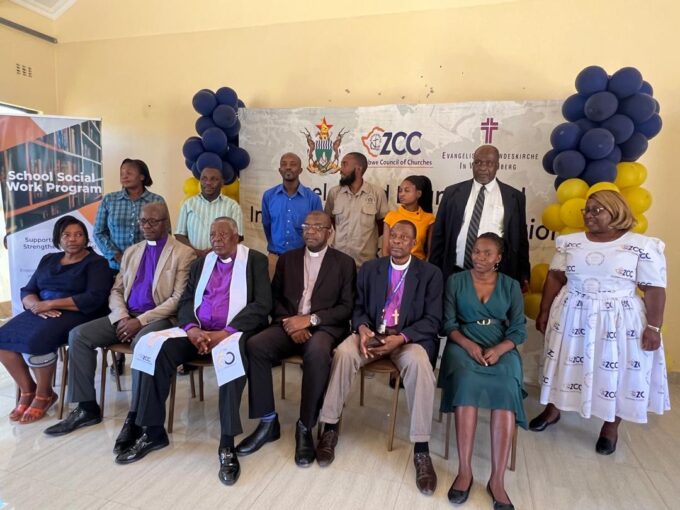
The official launch, held in Gwanda yesterday, brought together ZCC officials, Government representatives, civil society organisations, and church leaders.
According to ZCC general secretary, Reverend Wilfred Dimingu, the programme is a mission to restore hope within affected communities.
“Zimbabwe has witnessed a growing trend of irregular migration, particularly among our youth, who feel compelled to leave due to economic hardships, natural disasters, and social instability,” he said.
Rev Dimingu emphasised that the consequences of such migration often lead to exploitation, abuse, separation of families, and in the worst cases, loss of life.
“As the Zimbabwe Council of Churches, we have listened to these painful stories and recognised our moral responsibility to act. Migration is not inherently negative when undertaken safely, regularly, and with dignity, it can be beneficial,” he said.
“However, when driven by desperation, it often leads to dangerous and inhumane experiences. This project is our response, a proactive intervention to address the root causes of migration while equipping our youth with opportunities that allow them to thrive within their own communities.”
He said the programme is structured around three main pillars — provision of basic services, access to accurate information, and economic empowerment.
It integrates education, community engagement, and economic empowerment to ensure a holistic approach to migration challenges.
Rev Dimingu said the success of the project relies on a comprehensive approach that integrates education, community engagement, and economic empowerment.
“Our key interventions include a Multi-Disciplinary Expert Facility (MDEF). Here a network of professionals, including psychologists, social workers, and legal experts, drawn from our member churches will provide specialised support to affected youth and their families,” he said.
The facility will work closely with Government departments to offer services such as psycho-social support, legal aid and counselling.
“There will also be a school social work programme, which will offer mentorship, counselling and social support to learners at risk of dropping out due to factors such as drug abuse, bullying, and early pregnancies,” he said.
“We will also hold therapeutic support groups, community awareness campaigns, spiritual and emotional support services where we will engage local pastors and faith leaders, including those in the diaspora to provide guidance and emotional support to those affected by migration.”
ZCC southern region chairperson, Dr Michael Dube, who is also the leader of the Evangelical Lutheran Church in Zimbabwe (ELCZ) Western Region Diocese, emphasised the importance of this initiative, saying it is a crucial step towards strengthening interventions that protect vulnerable individuals and communities.
“Through launching this initiative today, we set in motion a critical intervention that will strengthen resilience and reduce vulnerabilities among our youth, particularly in border communities where migration pressures are most intense,” he said.
“The support of our partner, the Evangelical Lutheran Church in Württemberg has been instrumental in bringing this initiative to life.”
The Government has also pledged its support for the programme, with Ms Lubelihle Vundla, administrative officer in the office of the Matabeleland South Permanent Secretary for Provincial Affairs and Devolution, saying it will significantly contribute towards economic development.
She said the province and country at large continue to lose skilled and talented youths to migration thereby robbing the country of its human capital with potential to contribute towards developing the economy. —@DubeMatutu


 Online Reporter