Online Reporter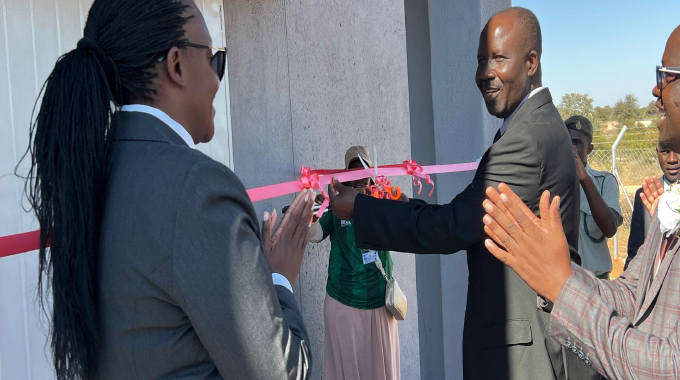
Sukulwenkosi Dube-Matutu, [email protected]
THE Government has completed the construction of the Zimbabwe Electoral Commission (ZEC) district offices in Matobo as the Second Republic accelerates infrastructure development and decentralisation of public services in line with the devolution agenda.
The offices, located in Kezi, are expected to improve service delivery by bringing electoral services closer to communities in the district.
Construction of the facility started in February this year and was completed in April, with ZEC engaging the Zimbabwe Prisons and Correctional Service (ZPCS), which provided artisans for the project.
Speaking at the commissioning ceremony through ZEC Commissioner Abigail Mohadi Ambrose, the electoral body’s chairperson, Justice Priscillah Chigumba, said the commission has intensified efforts to upgrade and modernise district infrastructure countrywide.
“The establishment of this permanent home aligns ZEC with the Government’s policy on devolution and decentralisation, which seeks to bring critical public institutions and services closer to citizens,” she said.
Justice Chigumba said the project positions the commission as an active participant in the realisation of Vision 2030, which seeks to transform Zimbabwe into an empowered and prosperous upper-middle-income society.
“True national development is impossible without strong institutional infrastructure that guarantees efficient public service delivery. The decentralisation of our operations into custom-built district hubs ensures that every citizen enjoys unhindered and high-quality access to electoral and administrative services,” she said.
Justice Chigumba said the Matobo District office was purpose-built with inclusivity in mind, with facilities designed to cater for persons with disabilities.
Specialised wide doors and an access ramp have been integrated into the main entrance to ensure that people using wheelchairs can navigate the facility with ease and dignity.
Justice Chigumba said the Matobo project was part of a broader national infrastructure development strategy.
“Under the 2026 annual plan, ZEC envisages the construction of a combined office and warehouse complex for the Mutasa District office,” she said.
“Concurrently, under the Public Sector Investment Programme, we are targeting the structural fencing and securing of our institutional stands in Uzumba-Maramba-Pfungwe, Mvuma, Hurungwe, Umzingwane, Mwenezi and Insiza districts.”
She said the commission’s priority moving forward was the development of secure warehouse facilities to safely store electoral materials and guarantee long-term operational efficiency.
In remarks read on his behalf by the director for infrastructure development in his office, Mr Daniel Njowa, the
Minister of State for Matabeleland South Provincial Affairs and Devolution, Albert Nguluvhe, said Government continues to prioritise infrastructure development as a cornerstone of economic transformation.
He commended ZEC for implementing the project in partnership with ZPCS and other Government agencies.
“At the heart of our Second Republic’s governance model is devolution, the deliberate dispersal of administrative power, resources and authority away from central bureaucratic corridors to local entities and grassroots structures,” said Minister Nguluvhe.
“This strategy is vital for accelerating localised problem-solving, increasing democratic participation and building systemic resilience across all facets of civic life.”
Minister Nguluvhe said the completion of the Matobo District office would strengthen public confidence in ZEC’s local operations and enhance the commission’s corporate image in the province.
He said Government would continue to support and fund infrastructure development initiatives across all provinces, districts and wards.
“This remains the unwavering thrust of His Excellency, President Dr Emmerson Mnangagwa, as the nation surges towards the Vision 2030 target,” he said.
ZEC chief executive officer Mr Simbarashe Tongayi said the new office stands as a permanent symbol of public sector efficiency, teamwork and national commitment.
He said the achievement was the result of strong institutional partnerships and collaboration among various Government agencies.