admin
admin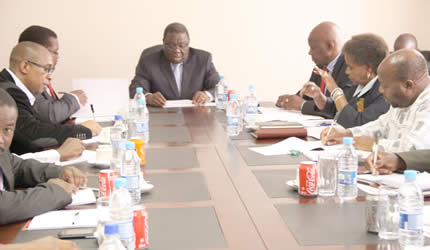
also be treated as a single constituency during the constitutional referendum, which means a person can vote at any polling station.
Zimbabwe Electoral Commission acting chairperson Mrs Joice Kazembe said: “There is no delimitation this time around. The 210 constituencies will remain like what they are now. Even in wards, we will use what is there now.”
Those who would have migrated would have to update their records with the relevant offices responsible for voter registration.
Prime Minister Morgan Tsvangirai met Justice and Legal Affairs Minister Patrick Chinamasa, Constitutional and Parliamentary Affairs Minister Eric Matinenga and ZEC officials in Harare yesterday for an update on preparations for the elections.
It emerged that the Government has since revised the budget submitted by ZEC for both the referendum and the elections. Zec had budgeted US$220 million for the two events, but the amount has been reviewed to US$192 million.
The reduction in the budget is a result of the scrapping of the delimitation exercise that was going to consume some of the financial resources.
Briefing journalists on yesterday’s meeting with PM Tsvangirai, Mrs Kazembe said: “It was an urgent meeting towards preparations for the forthcoming referendum and elections. We are going to get funding, US$85 million for the referendum and US$107 million for elections. The budget has come down from US$105 for the referendum to US$85 million.”
Mrs Kazembe said the election budget was also reviewed downwards from US$115 million to US$107 million.
Minister Chinamasa said ZEC urgently required US$21 million to fund the initial stages of the referendum.
Asked where Government would get money to fund the referendum and the elections, Minister Chinamasa said it was the responsibility of Treasury to mobilise resources for the polls.
In the 2013 National Budget, Finance Minister Tendai Biti set aside US$50 million for both the referendum and the elections.
But the amount is not enough to cater for the referendum alone.
“We agreed that we should start voter registration by the third of January (2013). We need US$21 million to start the referendum,” Minister Chinamasa said.
He would not give dates for the referendum, saying this depended on the completion of the Constitution-making process.
Justice and Legal Affairs Deputy Minister Obert Gutu, who also attended the meeting, said Government was not as broke as people thought.
“Three quarters of the funding will come from Treasury,” he said. “This Government is not as broke as people think.”
About US$1 million would be used to import indelible ink for use during the polls.
Zimbabwe is going for elections next year after the expiry of the Global Political Agreement which gave birth to the inclusive Government comprising Zanu-PF and the two MDC formations.
Lack of cohesion and different social and economic visions have made the inclusive Government dysfunctional.
PM Tsvangirai’s meeting with electoral officials gave the strongest hint that his party now wanted elections next year.
The PM has in the past opposed the holding of elections next year, arguing that a lot of reforms were yet to be implemented in line with the GPA.
But it turned out that in some cases, the so-called outstanding issues were a creation of the MDC-T and had nothing to do with the provisions of the GPA.
President Mugabe has indicated that elections would be held next year even if it means having them under the current Constitution if the new charter takes long to materialise.


 Online Reporter