admin
adminNqobile Tshili Chronicle Correspondent
The amendment to the Electoral Act will see the Zimbabwe Electoral Commission (Zec) presiding over all election processes including registration of voters which is still under the Registrar General’s Office.
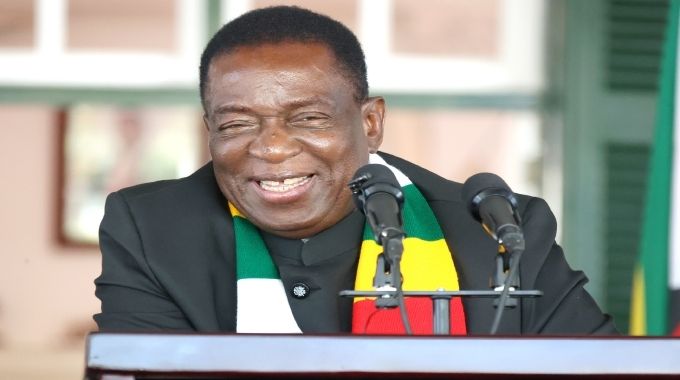
Vice President and Minister of Justice, Legal and Parliamentary Affairs, Cde Emmerson Mnangagwa, told Parliament on Tuesday, in his second reading of the General Laws Amendment Bill, that the new constitution stipulates that Zec should take charge of all election processes.
“Of importance, I wish to highlight that this Amendment Bill introduces the functions of the Zimbabwe Electoral Commission (Zec) and seeks to do away with the office of the Registrar of Voters. Section 239 (c), (d) and (e) of the Constitution gives Zec the new responsibility for registering voters, compiling the voters’ roll and registers and ensuring the proper custody and maintenance of voters’ rolls and registers,” said VP Mnangagwa.
He said the new procedure entails that the Office of the Registrar General will not be involved in any election processes.
“This means that the Registrar General will be confined to the duties of maintaining registers of births, deaths, marriages and citizenship,” VP Mnangagwa said.
He said the Bill seeks to amend and update references to office, terms and provisions used in the old constitution, which have been overtaken by the new constitution.
“The amendments also remove some superfluous and abolished processes such as special voting,” said VP Mnangagwa.
Debating VP Mnangagwa’s General Laws Amendment Bill second reading, MDC proportional representation MP for Matabeleland South, Priscilla Misihairabwi-Mushonga, said the proposed Electoral Bill is severely influenced by a minister compromising its position.
“I think it is Section 8(5) of the General Laws Amendment Bill which makes reference to the Minister, that the Minister may direct the Registrar of Voters to do certain things. I find that a bit problematic Mr Speaker, particularly when it talks about ‘after consultation’,” said Misihairabwi-Mushonga.
“One would say, if we are going to have that particular clause, one would propose that perhaps it be done in consultation. I say so because the issue around independence is also one of the main issues that we do have in our Constitution in that the independence of commissions in general, is underlined by the fact that they should not operate under any direction of any individual.”



 Online Reporter