Online Reporter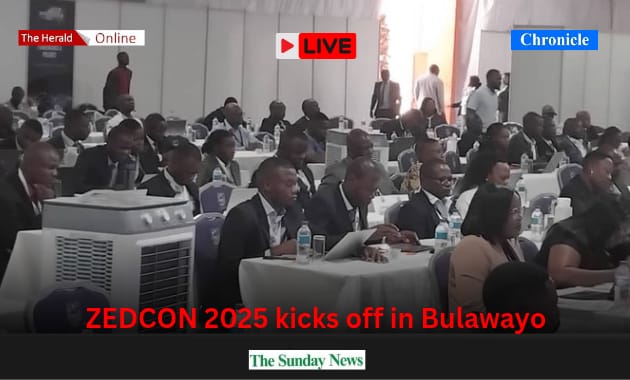
THE 2025 edition of the Zimbabwe Economic Development Conference (ZEDCON) has kicked off in Bulawayo bringing together a broad spectrum of stakeholders from across the economy to chart pathways for inclusive growth.
Running under the theme “Macroeconomic and Sectoral Policies for Broad-based Economic Transformation,” the high-level indaba has drawn researchers, academics, corporates, economic think tanks and development partners for robust dialogue on shaping Zimbabwe’s economic trajectory.
The conference will deliberate on seven critical thematic areas: macroeconomic growth and stability, informal sector growth and resource mobilisation, infrastructure development, digital and AI innovations, diaspora investment frameworks, and regional integration through the African Continental Free Trade Area (AfCFTA).
ZEDCON has grown into a flagship platform for aligning academic research with national policy formulation.
The 2025 edition is expected to generate practical recommendations that will accelerate Zimbabwe’s march towards Vision 2030 and position the country for sustained transformation in an increasingly competitive global economic environment.
Zimpapers Business Hub senior reporter Nqobile Bhebhe is attending the conference and will give us live updates.
Deputy Minister Mnangagwa calls for bold, evidence-based policy reforms
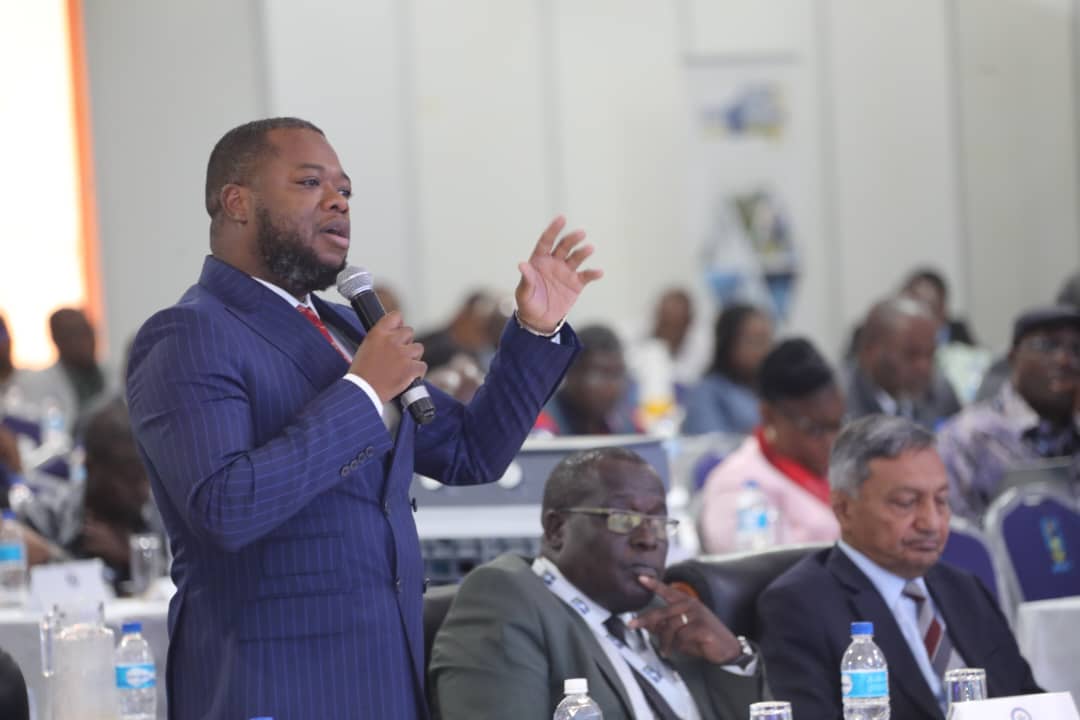
THE 4th edition of the Zimbabwe Economic Development Conference (ZEDCON 2025) commenced in Bulawayo with a clarion call for bold, evidence-driven policy reform, as Deputy Minister of Finance, Economic Development and Investment Promotion, David Mnangagwa, urged stakeholders to engage in “honest and robust engagements grounded in facts and empirical evidence.”
Held under the theme “Macroeconomic and Sectoral Policies for Broad-Based Economic Transformation,” the conference sets the stage for high-impact deliberations aimed at shaping the nation’s economic trajectory toward Vision 2030.
“As a nation, it is critical that policy frameworks actively promote structural economic transformation encompassing industrialisation, job creation and poverty alleviation,” declared Deputy Minister Mnangagwa in his opening remarks.
He emphasised the importance of candid dialogue.
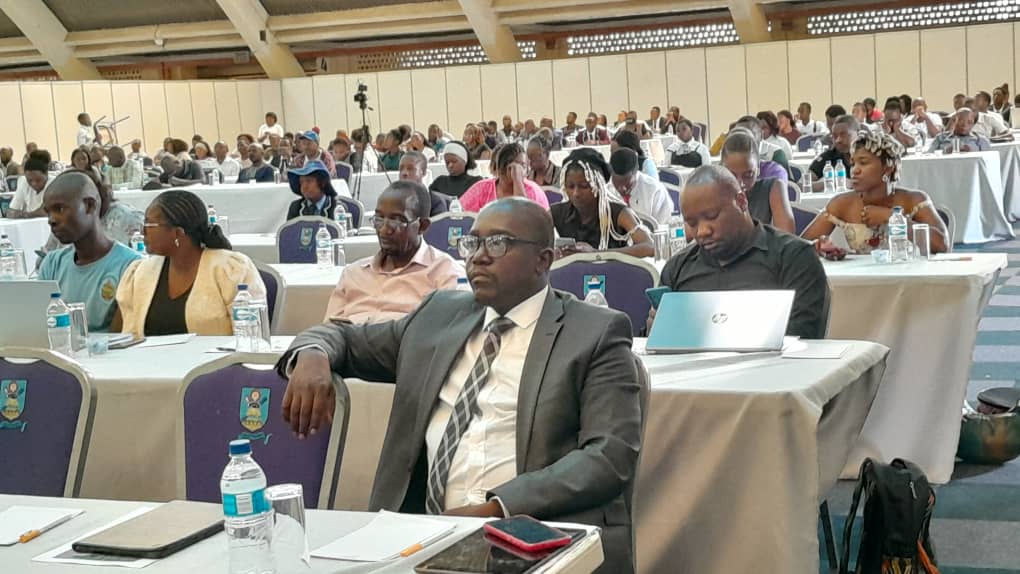
“Let us remember that candid and constructive dialogue is a service not only to each other but to our beloved nation. I encourage every participant to contribute their best insights and practical solutions.”
Deputy Minister Mnangagwa underscored the indispensable role of academia and research institutions in crafting actionable strategies:
“Research and academic institutions must be integral partners in this endeavour, contributing actionable and feasible insights derived from rigorous academic and empirical studies.”
He further stressed the strategic importance of sectoral alignment:
“Sectoral policies are pivotal in catalysing economic growth and sustainable development. It is important to identify and nurture sectors with high growth potential while aligning these sectors with our broader national development goals.”
The conference aims to promote knowledge management as a driver of informed policy dialogue and implementation, foster innovative thinking among researchers, policymakers, and private sector leaders, encourage evidence-based research on economic and policy issues and create platforms for young researchers, the diaspora, and private entities to share insights with policymakers
As Zimbabwe prepares for the rollout of National Development Strategy 2 (NDS2), Deputy Minister Mnangagwa noted ZEDCON’s pivotal role.
“This forum will enable established academics and emerging researchers alike to present solution-oriented research, providing recommendations aligned with priority themes such as macroeconomic growth and stability, growth of the informal sector, resource mobilisation, infrastructure development, technology adaptation, digital interventions and artificial intelligence.”
He also spotlighted regional and global integration:
“Added focus will be placed on diaspora investment policies, regional integration under the African Continental Free Trade Area (AfCFTA) and harnessing their potential to drive sustained economic transformation.”
Echoing the national ethos articulated by President E.D. Mnangagwa — “Nyika inovakwa nevene vayo” / “Ilizwe liyakhiwa ngabanikazi balo” — the Deputy Minister concluded:
“Broad-based economic transformation in the face of rapid global change necessitates bold, domestic innovative macroeconomic and sectoral policy frameworks.”
He reaffirmed the nation’s commitment to scaling up efforts in macroeconomic growth, formalising the informal sector, and expanding infrastructure — essential pillars for achieving upper-middle-income status by 2030.
ZEDCON 2025 stands not just as a conference, but as a crucible for shaping Zimbabwe’s economic destiny.
ZEDCON 2024 credited with strengthening economic stability, influencing key policy reforms
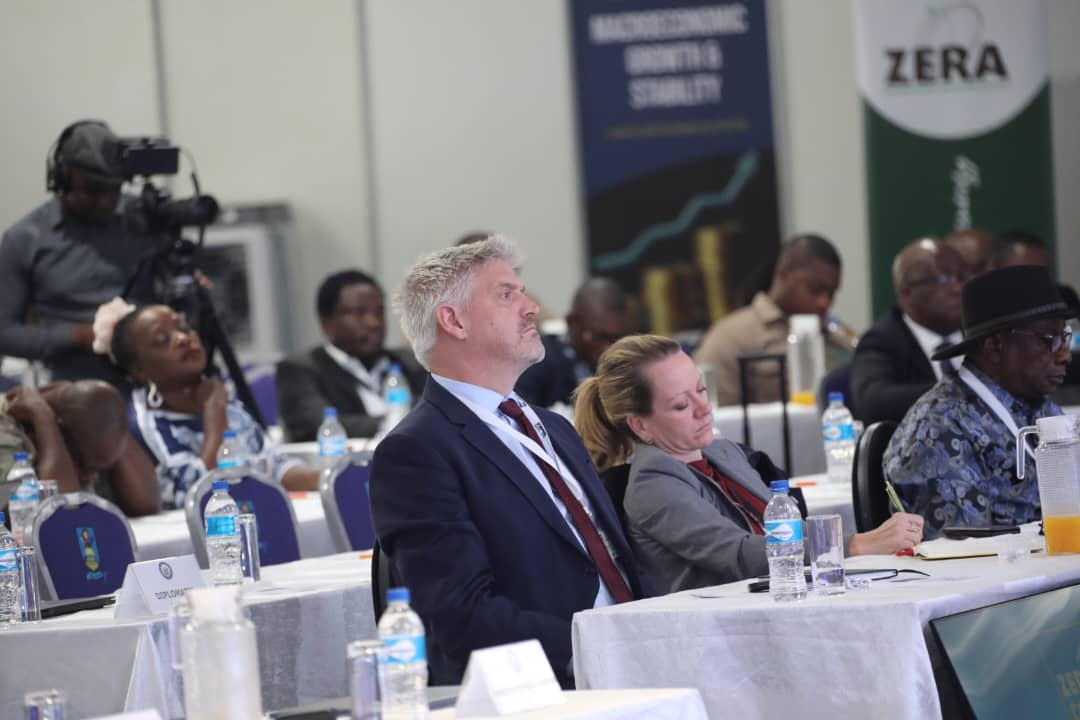
THE 2024 edition of the Zimbabwe Economic Development Conference (ZEDCON) has been credited with driving tangible improvements in economic stability and shaping key policy directions.
Reflecting on the last edition, Professor Ashok Chakravarti, Chief Advisor to the Minister of Finance, Economic Development, and Investment Promotion, said far from being a ceremonial gathering, ZEDCON 2024 distinguished itself through the intellectual rigour of its presentations.
“Those papers have been useful and put into thinking by the Reserve Bank of Zimbabwe and Ministry of Finance. You can now see the stability in the economy since the beginning of this year in terms of exchange rate, control of money supply and inflation.”
He emphasised that it was “not purely the conference but it’s the papers that were presented that created an environment and better understanding of issues that enabled policymakers to deal with them.”
Among the standout contributions was a presentation on carbon credits, which directly influenced government policy.
Initially, the revenue-sharing model between carbon credit originators and the government stood at 70-30. This was deemed inequitable and has since been revised to a more balanced 50-50 split.
“There was an initial sharing between those that brought in the credits to the government on 70-30 and was found to be unreasonable and amended to 50-50,” said Prof Chakravarti stressing the responsiveness of policy to expert input.
In addition to monetary and environmental reforms, ZEDCON 2024 also spotlighted progress in the energy sector.
Minister Mnangagwa Calls for Contextualised Debt Discourse Amid Skewed Global Financial Architecture
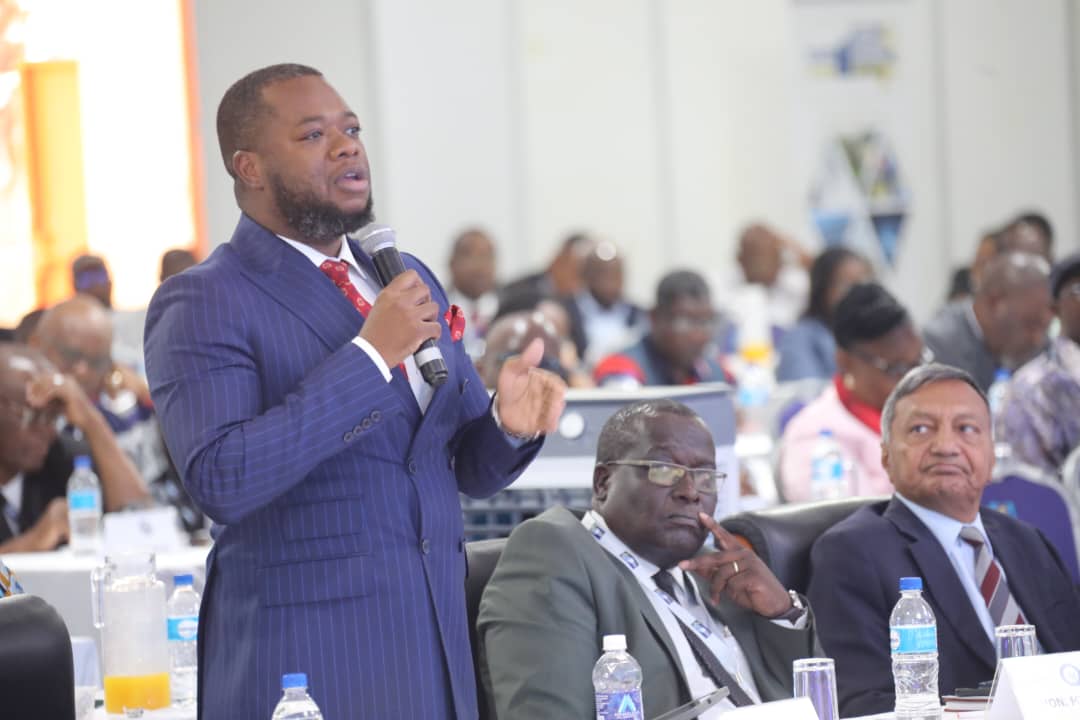
Zimbabwe must urgently deepen and contextualise the national conversation on debt sustainability and the quality of borrowing, particularly in light of a global financial system structurally biased against African economies, Deputy Minister of Finance, Economic Development and Investment Promotion, Honourable David Mnangagwa, has said.
In his intervention to deleberations at the ongoing Zimbabwe Economic Development Conference (ZEDCON) in Bulawayo, the Deputy Minister called for a paradigm shift in how debt is discussed and managed, urging a move away from simplistic narratives that fail to capture the unique developmental challenges facing countries like Zimbabwe.
“African countries are already skewed by the global financial architecture,” he said.
Minister Mnangagwa stressed the need for an in-depth interrogation of borrowing practices not merely from the standpoint of fiscal conservatism, but through a lens that recognises the strategic necessity of development-driven borrowing.
“We need to go in further and interrogate the quality of our borrowing more than anything,” he told the high-level gathering.
“You know, it’s very easy to give a recommendation and stop borrowing to an African country.
“There is the need to borrow for some infrastructure that could pay for itself. How does that add to your debt framework and your debt profile?”
The Deputy Minister warned against blindly adopting externally-driven recommendations that often disregard local development imperatives.
“So when we have these figures and we recommend that stop borrowing, we are feeding into a global narrative that is already skewed against us as Africans, as Zimbabweans,” he said.
“So we need to add context to the conversation that if we are to borrow beyond the limits, let us borrow for one, two, three, four projects, because this is quality borrowing that will essentially pay for itself.”
He further emphasised the need for African countries to craft economic strategies that resist externally imposed limits, which often serve to entrench underdevelopment.
“We need to expand further and contextualise our solutions to make sure that we do not put ourselves in a cage and confirm what everyone wants to feed in as far as the African debt narrative is concerned.”
Turning to Zimbabwe’s strategic economic vision, Minister Mnangagwa pointed to the National Development Strategy 2 (NDS1) as a catalyst for accelerated transformation.
“I think let’s go further. NDS2 is meant to leapfrog us, we are meant to transform, and we can move 20 years within a space of just five years, and we need to figure out how we can do that.”
ZEDCON continues to serve as a critical platform for thought leadership, policy exchange and recalibration of Zimbabwe’s development trajectory in line with Vision 2030.
Zimbabweans urged to participate in 2026 national budget consultations to boost economic reform
Deputy Minister of Finance, Economic Development and Investment Promotion, David Mnangagwa has called on Zimbabweans to actively engage in the upcoming 2026 national budget consultations, emphasising that citizen input is vital to shaping a responsive and inclusive fiscal framework.
Speaking on the sidelines of the Zimbabwe Economic Development Conference (ZEDCON) 2025 in Bulawayo, Deputy Minister Mnangagwa underscored the importance of broad-based participation, particularly as the government prepares to roll out new statutory instruments aimed at improving the ease of doing business.

“Consultations should start within the next month,” he said. “This is where the country and the citizens, members of parliament, everybody gives their input as to what they want to see within the budget.”
Deputy Minister Mnangagwa hinted at more reforms designed to reduce operational costs and regulatory burdens for businesses, especially in key sectors such as agriculture.
“In terms of fees that have become an impediment to the ease of doing business, I think last week we saw an announcement around the agriculture sector, particularly the livestock and dairy sector,” he noted.
“You will see a few more as the instruments actually come out, but they will be broad-based to make sure that there’s a greater ease of doing business and it becomes cheaper to do business.”
While specific tax measures remain under wraps, Deputy Minister Mnangagwa assured that clarity will come with the budget itself.
“I think for taxes, citizens can wait for the budget,” he said.
The Deputy Minister’s remarks signal a push toward a more consultative and reform-driven budgeting process, with a clear focus on unlocking economic growth through regulatory efficiency and citizen engagement.
RBZ Deputy Governor urges trust in Central Bank’s proven economic leadership
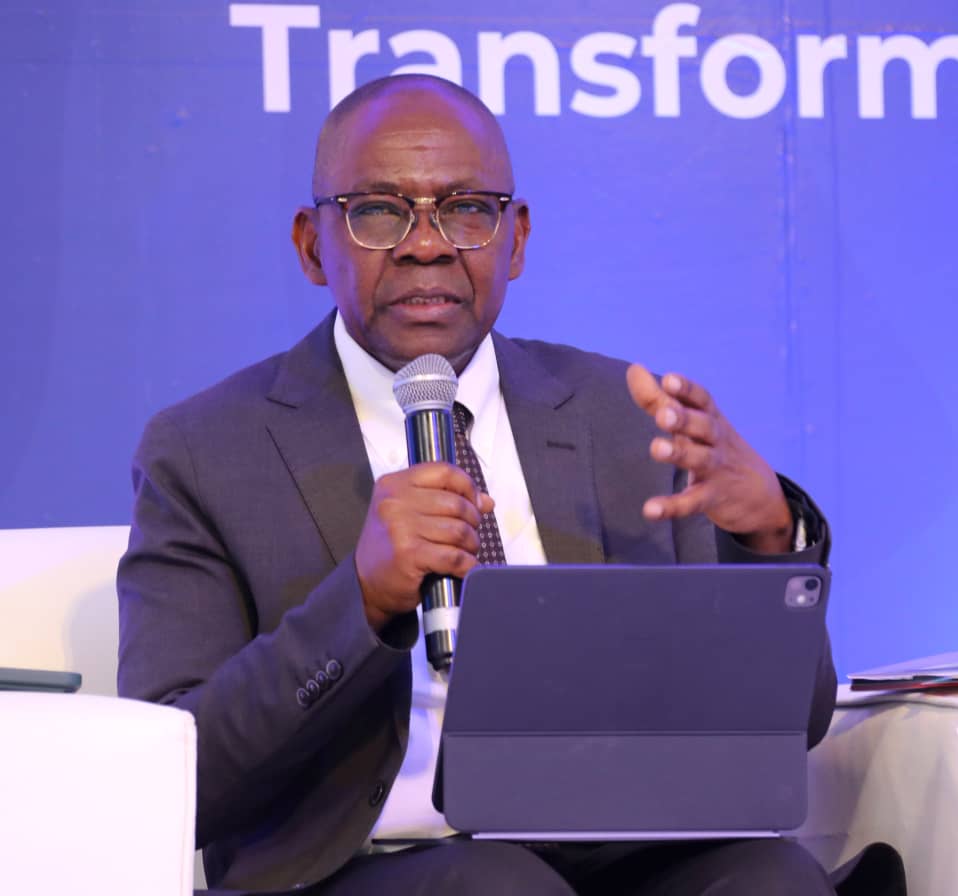
In a bold and emphatic call to action, Deputy Governor of the Reserve Bank of Zimbabwe, Dr Innocent Matshe has urged stakeholders across the financial policy spectrum and citizens to place their trust in the central bank’s ability to steer the nation’s economy.
Speaking during a high-level panel at the Zimbabwe Economic Development Conference (ZEDCON) 2025 in Bulawayo, Dr Matshe asserted that the Reserve Bank’s track record speaks volumes and deserves recognition.
“We have to demonstrate that we can be trusted as policy makers, as a system and as the financial sector,” declared Dr Matshe, underscoring the importance of credibility in economic governance.
He challenged critics and observers alike to judge the central bank not by speculation, but by its proven performance.
“As policymakers are trying to come up with robust policies, judge us by our track record that we have.”
Dr Matshe laid out a compelling series of fulfilled economic forecasts, reinforcing the bank’s commitment to transparency and results:
“Twelve months ago, we were told that we will have single digit inflation by end of December or going into 2026 if all things remain equal—the trajectory is there for everyone to see.”
“We were also told that our month-on-month inflation will come down to lower single digits or better and we have experienced that already.”
“We were also told that end-of-year inflation would be in the 20s or below. Are we on target? I can tell you for sure we are 100 percent on target or better.”
Dr Matshe stressed to delegates that the central bank is not merely making promises but it is delivering on them.
“This is the track record that the economy is trying to put out there so that economic agents can now start to believe.”
“We are not trying to explain to people but also saying: look at the evidence, look at what we have said versus what you see.”
Experts urge Zimbabwe to accelerate AI ready infrastructure for economic growth
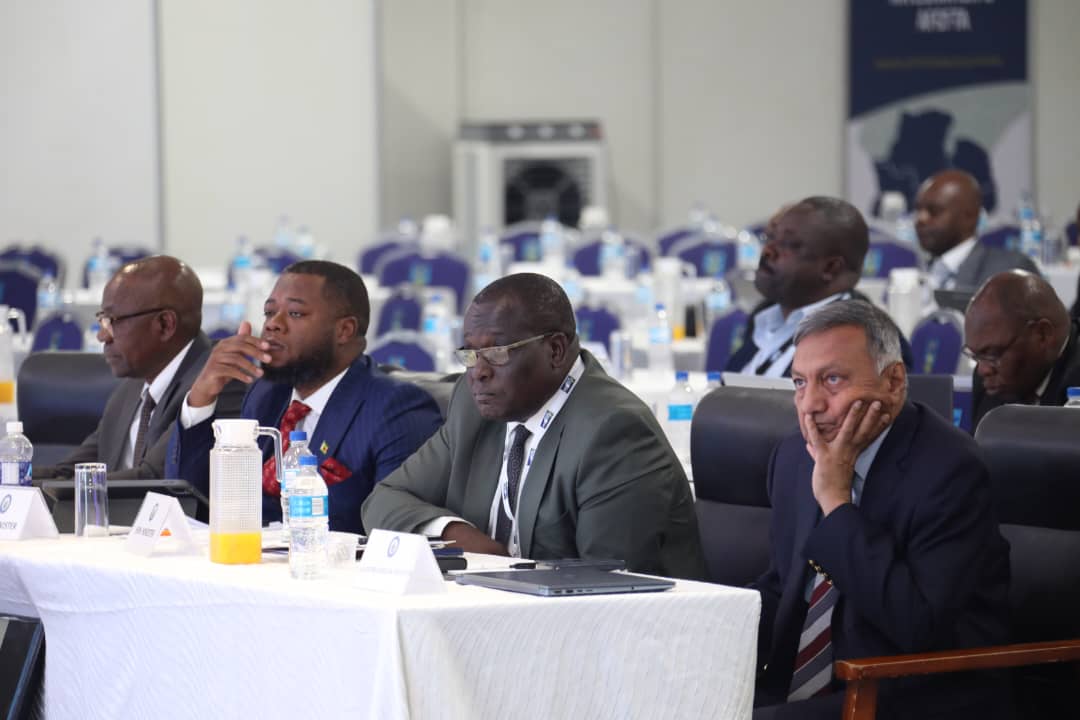
Zimbabwe must urgently scale up its digital infrastructure to unlock the transformative potential of Artificial Intelligence (AI), which experts say could significantly boost the country’s Gross Domestic Product (GDP) in both the short and long term.
This call was made during a high-level presentation at the ongoing Zimbabwe Economic Development Conference (ZEDCON 2025), where economists from the University of Zululand, South Africa, outlined a strategic roadmap for AI integration in Zimbabwe’s emerging economy.
In their joint paper titled Macroeconomic Policy Responses to AI and Digital Transformation: A Case Study of Zimbabwe’s Emerging Economy, PhD candidate Aaron Nzou and Senior Lecturer Dr Bongumusa Prince Makhoba emphasised the urgency of building robust digital foundations.
“Leverage AI for export diversification: Embed AI in mining, agriculture, and manufacturing to enhance competitiveness and value addition,” the presenters urged.
Key recommendations national AI Strategy: Develop a comprehensive framework aligned with the African Union Digital Transformation Agenda, covering ethics, data protection, and governance.
‘Enhance institutional coordination: Improve collaboration across government, academia and industry, supported by strong national data governance systems.’
The presentation added that AI adoption has a significant positive effect on Zimbabwe’s GDP in both the short and long run.
The presentation noted that while “FDI and exports support growth,” they “require institutional and infrastructural reinforcement.”
They noted that “qualitative insights show strong policy intent, but institutional readiness and data governance remain uneven.”
“Harnessing AI for inclusive growth demands a prudent mix of fiscal, monetary, and trade policies, alongside targeted human capital investments,” the presentation added.
The Government has already laid the groundwork through its Smart Zimbabwe 2030 Vision, which provides policy direction for the adoption of emerging technologies across key economic sectors.