admin
admin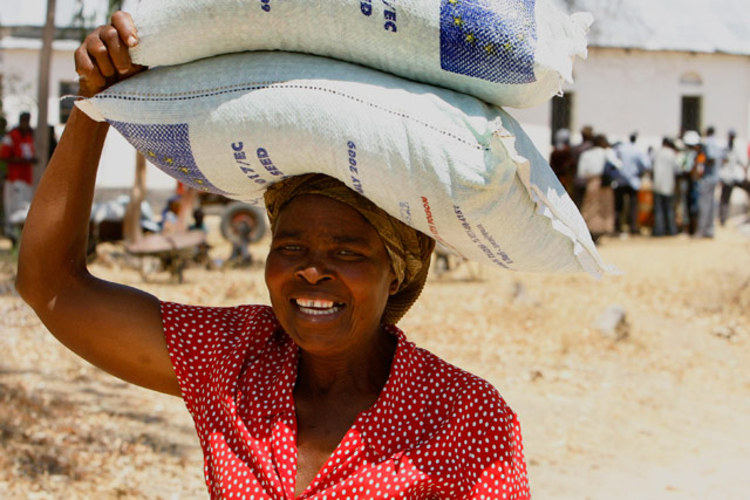
Linda Mzapi
The World Food Programme has hailed the Zimbabwe Agenda for Sustainable Socio-Economic Transformation (ZimAsset) together with the Food and Nutrition Security Policy (FNSP) due to its potential to end hunger in Zimbabwe.
Zimbabwe has set its development trajectory on firm ground although major challenges still remain, but the WFP is optimistic that Government efforts and its strong alliance will yield good results.
There has been modest strides in food security.
However, more still needs to be done in this sector, particularly in adopting climate smart agriculture, expanding agricultural extension services and irrigation schemes.
At the national level, Zimbabwe has a strong policy environment for food security and nutrition which reflects the Government’s prioritisation of Sustainable Development Goal 2 within its overall social and economic agenda.
ZimAsset consists of four clusters including one on Food Security and Nutrition.
This pillar is supported by various policies, including the FNSP which anchors ZimAsset within a multi-sectoral framework.
Government is at the center of the global partnership for achieving the SDGs as seen again by its Comprehensive Agriculture Policy Framework (2012-2032) and the Zimbabwe Agricultural Investment Program (ZAIP) 2013-2017.
WFP country representative, Mr Eddie Rowe said the Zimbabwean Government is putting “zero hunger” by 2030 on top of its agenda.
“About 17 000 tonnes of maize have been distributed by the Government since April and it shows that they are prioritising zero hunger.”
“An SDG Acceleration Action Plan for Zimbabwe has been developed in the context of the ZimAsset and SDGs. Workshops were held in February in all the country’s 10 provinces in order to bring on board all the strategic players in achieving zero hunger in Zimbabwe,” he said.
Mr Rowe also praised the Government on its launch of the Food for Work Programme.
“The Food for Work Programme is good because it empowers the people and does not just give them food so that when it is finished they ask for more, it teaches them to work.”
About 448 000 Zimbabweans have so far received WFP lean season assistance in 13 districts through its April distribution cycle.
In partnership with the Ministry of Health and Child Care, WFP has provided assistance for the treatment of moderate acute malnutrition to nearly 2 500 pregnant and nursing women, children and people living with HIV and TB.
At the continental level, Africa has stated its commitment to end hunger under its Agenda 2063 strategy.
In terms of programming, the continent has used the Comprehensive African Agricultural Development Program (CAADP) to set out a strategy that will address poverty through agricultural value chains, and further elaborated the goal to end hunger in its Malabo 2025 declaration.
The Malabo Declaration of June 2014 is committed to ending hunger in Africa by 2025, thereby enhancing agriculture’s contribution to economic growth and significant poverty reduction by 2025.
Existing regional and global frameworks and partnership must be leveraged to build on the existing political will and Government commitments to eradicating hunger and malnutrition.
By providing a common vision and bringing together a range of diverse stakeholders for unified action, many of these partnerships, strategies, and declarations provide an instrument through which the vision of “zero hunger” can be translated into concrete, well co-ordinated action on the continent.
Fighting hunger and aiming to end it by 2030 is at the heart of Zimbabwe’s agenda.
The Scaling up Nutrition Movement has a key role to play in bringing about “zero hunger”.


 Online Reporter