Online Reporter
Rutendo Nyeve, [email protected]
THE Zimbabwe Electricity Transmission and Distribution Company (ZETDC) has scaled up electricity reticulation across the country, targeting to connect more than 300 000 households without power, as the Government intensifies efforts to achieve universal access to electricity under the National Development Strategy 2 (NDS2).
The ambitious programme will see the State-owned power utility leverage private sector partnerships to clear an electrification backlog estimated at over 300 000 households, particularly in high-density suburbs and newly developed settlements.
This emerged during the recently held ZETDC consultative operations and client service indaba in Gweru.
Officials confirmed that reticulation works are already underway in several parts of the country, including Lobengula and Cowdray Park suburbs in Bulawayo, which have long struggled with limited electricity access.

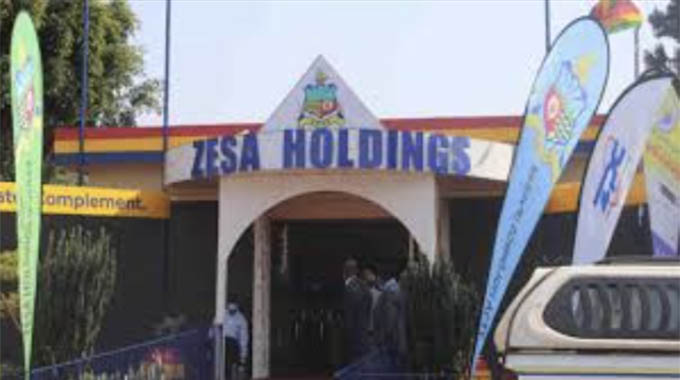
Speaking on the sidelines of the indaba, Zesa Holdings chief executive officer Engineer Cletus Nyachowe said the power utility remains a key enabler of the Second Republic’s Vision 2030, which seeks to transform Zimbabwe into an upper-middle-income economy.
“On average, we have been connecting between 30 000 and 40 000 customers per annum, but for us to achieve NDS2, we now have to target over 300 000 customers per annum,” he said.
“This means we must work 10 times faster and smarter, deploying new strategies and deepening private sector participation.
“Our customer service centre officials have indicated that this target is achievable, and we will provide the necessary resources to make it happen.”
The Government has, in recent years, rolled out a series of interventions to accelerate national electrification, including the National Energy Compact, the Zimbabwe National Electrification Programme, and the promotion of independent power producers (IPPs), net metering and captive power generation.
These initiatives are aimed at addressing both generation and distribution bottlenecks, while expanding access in so-called ‘dark cities’ — high-density urban and peri-urban areas that have remained without electricity years after settlement.
Energy and Power Development Minister July Moyo said front-line ZETDC staff play a critical role in translating policy into tangible benefits for communities.
“If we are going to drive NDS2 in terms of energy as an enabling environment, then we have to engage the people who are closest to our communities. As the President says, ‘no place and no one should be left behind.’ These are the people who will deliver our last-mile connections,” he said.
Minister Moyo said gains in electricity generation must be matched by strengthened distribution infrastructure.
“It is equally important that ZETDC modernises and expands its distribution network, improves fault response times, fully implements prepaid and smart metering across all customer groups, and embraces technology and automation to improve customer service,” he said.
The minister said Government policy mandates universal access to reliable, affordable and sustainable energy services by 2030, requiring the addition of 320 000 on-grid and 200 000 off-grid connections annually.
Minister Moyo also acknowledged progress already made, particularly in Bulawayo.
“We recognise the efforts ZETDC is making to accelerate connections in dark cities. Significant reticulation works have already commenced in Lobengula and Cowdray Park,” he said.
Minister Moyo added that the success of the Lobengula bank-funded electrification project had unlocked additional funding for similar initiatives in other urban centres.
“This trajectory is commendable and must now be complemented with innovative models, especially for Harare,” said Minister Moyo.