Online Reporter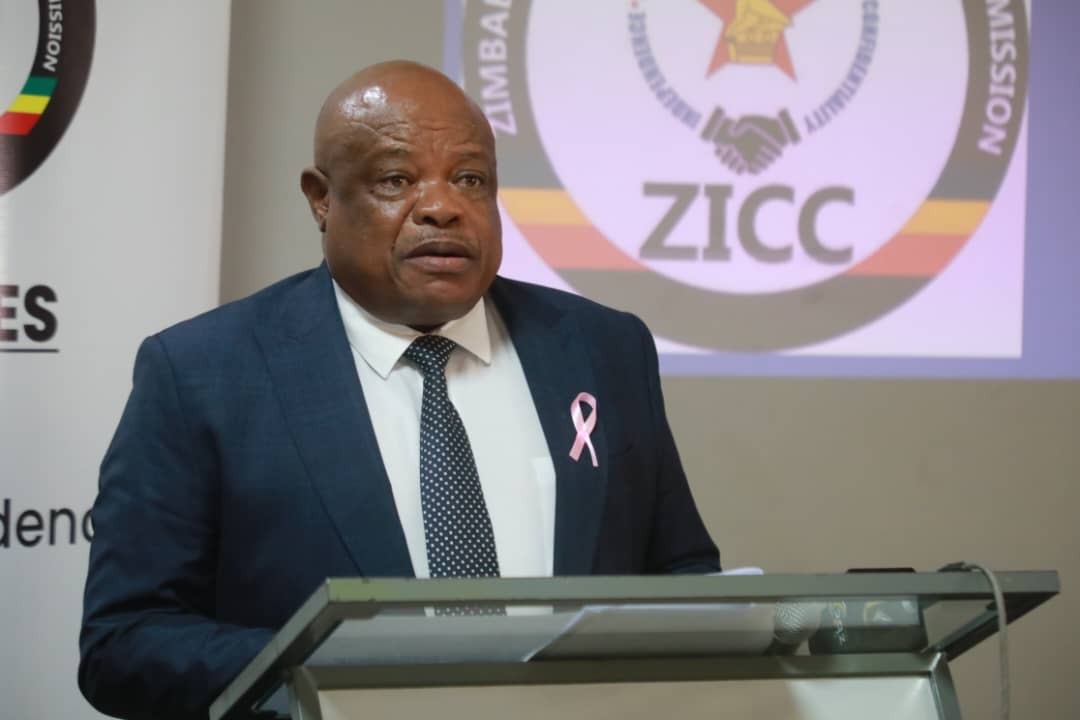
Zvikomborero Parafini
The Zimbabwe Independent Complaints Commission (ZICC) has signed a Memorandum of Understanding (MoU) with the Zimbabwe Open University (ZOU) for a framework for training police officers in sign language.
The partnership establishes a framework for the training of police officers in sign language communication and the effective handling of persons living with disabilities, promoting inclusivity and strengthening rights-based policing in Zimbabwe.
Speaking at the signing ceremony held in the capital on Monday, ZICC chairperson, Justice Webster Chinamora (Rtd), described the partnership as “a deliberate stride in the maturity of our public institutions” and a significant investment in building ethical and community-centred security services.
Justice Chinamora emphasised that the Constitution tasks ZICC with promoting integrity, accountability and respect for human dignity within the security services.
Strengthening professional training through academic collaboration, he said, is essential to ensuring that power is exercised lawfully and responsibly.
Quoting renowned legal scholars and jurists, he underscored that the rule of law requires all public officers to be accountable for their actions, noting that oversight is “not punitive, but protective of the public, of security institutions, and of the State itself.”
The partnership with ZOU, he argued, embeds academic rigour into continuous professional development and ensures that oversight and education work hand in hand.
Under the MoU, ZOU will offer structured training programmes, executive courses, research opportunities and specialised modules tailored to enhance professionalism in the police, military and other security services.
Justice Chinamora noted that global trends in security sector reform show that knowledge, critical thinking, and research-driven approaches are essential to modern policing.
One of the transformative elements of the agreement is the strengthening of sign language training for security officers.
He said the long-standing communication barriers faced by persons with disabilities when interacting with security agencies, stressing that inclusion “must never be decorative; it must be substantive.”
Addressing common misconceptions, Justice Chinamora said that oversight is often wrongly viewed as adversarial. Instead, he described it as a learned discipline rooted in law, ethics, psychology, behavioural science, and institutional culture.
He credited the collaboration with ZOU as a way of embedding values such as fairness, proportionality, legality, transparency and accountability within the security services.
“Ethical leadership must be deliberate, not accidental,” he said, adding that training in lawful use of force, ethical decision-making, and public engagement will be central to future programmes.
Justice Chinamora urged senior officers present to view the partnership not as a critique, but as an affirmation of their critical role in upholding national stability.
He said the MoU opens the door to a future where officers communicate confidently with citizens of all abilities, complaints are seen as opportunities for improvement, and academic research informs operational reforms.
“Oversight bodies and security agencies must be partners in progress,” he said, calling for a culture where public trust becomes a natural outcome of professional conduct.
Justice Chinamora expressed gratitude to ZOU for embracing the partnership and commended the Commission’s staff for their commitment to institutional excellence.
He said the MoU represents more than an agreement – it is a pledge to uphold the highest standards of professionalism and to continuously improve the country’s security sector.
ZICC’s executive secretary, Ms Netsai Chivake, reiterated that the partnership is timely and essential.
“Its core objective, to equip our security services with Sign Language skills, is a direct and powerful investment in public trust,” she said.
“True trust is not assumed; it is built through consistent, meaningful engagement. For members of our deaf community, engagement with the security sector, whether to report a crime, seek help in an emergency, or simply during a routine interaction, can be fraught with barriers.
“A communication barrier is, in that moment, a barrier to justice, to safety, and to dignity. It undermines the very trust upon which effective policing and public safety depend.
“Therefore, this MoU is a critical step in our national journey of leaving no one and no place behind, it moves us from policy to practice. By integrating professional
Sign Language training for the development of our security personnel, we are sending an unequivocal message: Every citizen deserves to be seen, heard, and understood.”
In attendance were ZICC commissioners Dr Andrew Mataruse, the deputy executive secretary Tafara Chirambira, service chiefs, ZOU’s Professor T Njaya and other esteemed guests.