dyton mupawaenda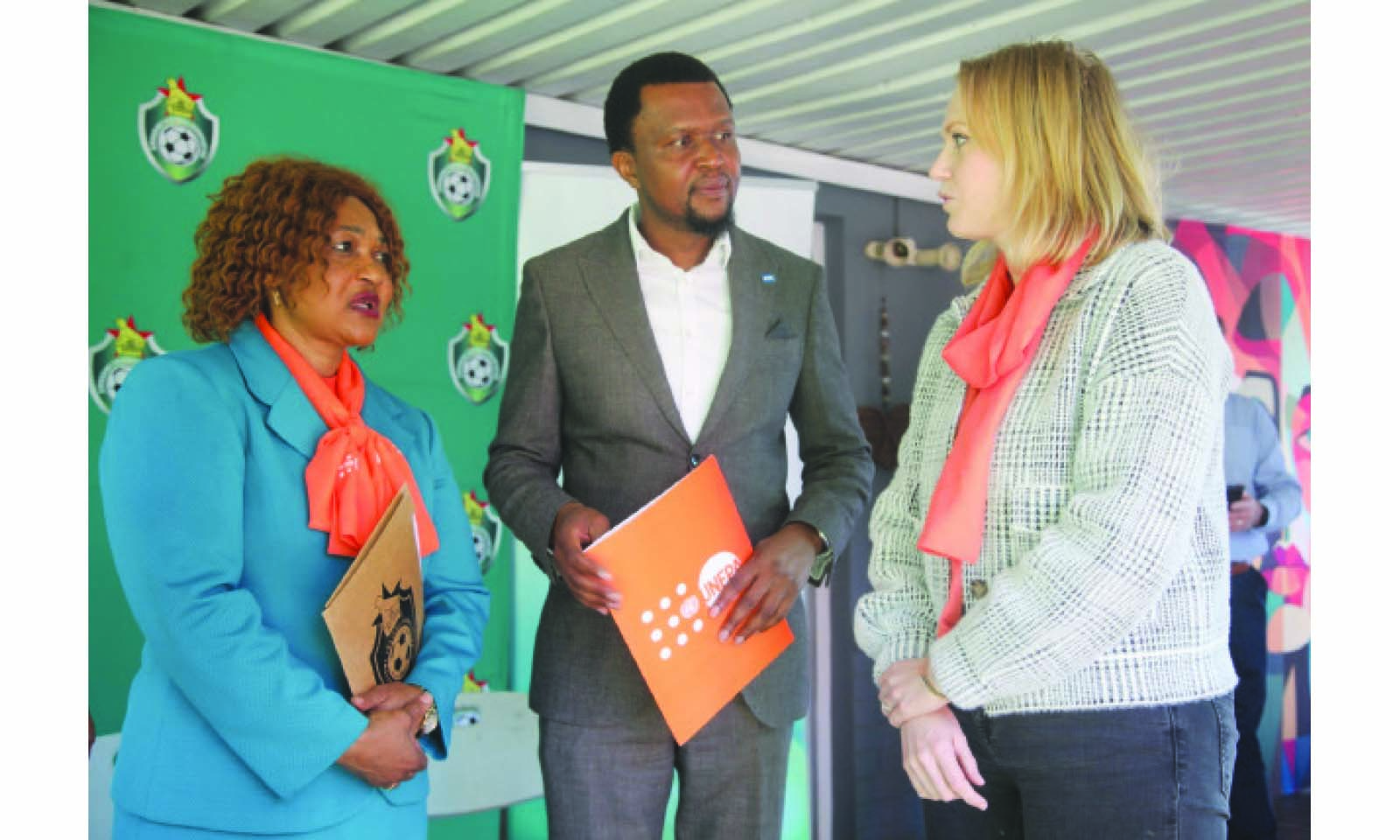
Tadious Manyepo-Zimpapers Sports Hub
ZIFA are alive to the powerful transformative role that football can play in society and galvanised that position by entering into an agreement with the United Nations Population Fund yesterday.
The collaboration will see poster players from the national teams and clubs across the various leagues leading advocacy efforts aimed at preventing maternal deaths, promote safe family planning methods, curb gender-based violence as well as eliminating new HIV infections.
On their part, ZIFA have already been scoring huge goals, including elevating 36 women into leadership roles across the fraternity over the past three months, and the coming in of the partnership will amplify their initiatives.
ZIFA president Nqobile Magwizi said football is a powerful tool that can be used to make the society a safe place for everyone.
He said the messages will be delivered everywhere across the country through the beautiful game.
“Football has the power to change lives, shape values and build stronger communities. This partnership with UNFPA allows us to harness that power to promote positive behaviours and challenge harmful norms that hinder development and equality,” said Magwizi.
“We are preparing our plan book which will unpack the technical strategies which we will use to put across the messages which we intend to attain.
“Obviously one of the ways which we will use is by using the players, who are the societal role models to deliver those messages. As ZIFA, we are committed to achieving what we have agreed here using this beautiful game.
“We know that stadiums are not very safe places for women and children especially with all forms of obscenities being strewn around.
“We have to deal with all that and make sure that football environment can be welcoming to everyone.
“As ZIFA, we have been trying to empower women and we have 36 of them holding leadership positions across the football terrain. We want to do more and this partnership has come at the right time for us to fully play our role as we use football to make society a better place to live.”
UNFPA representative Miranda Tabifor said football has some unifying power and can flawlessly work to better the lives of many.
“This partnership leverages football’s unifying power to amplify crucial messages about sexual and reproductive health, gender equality and the well-being of Zimbabwe’s young people and women,” she said.
“Together with ZIFA, we hope to raise awareness, inspire change, and protect the rights and well-being of all Zimbabweans, particularly young people and women.”
The partnership will focus on advocacy and awareness anchored on four pillars which include; Zero preventable maternal deaths, Zero unmet need for family planning, Zero gender-based violence (GBV) and harmful practices and Zero new HIV infections.
The Cooperation Agreement marks the beginning of a dynamic and socially impactful collaboration between sport and development sectors, underpinned by a shared commitment to a more equal, healthy, and inclusive Zimbabwe.
On a busy day for the ZIFA executive committee, they later headed to Gweru where they signed another MoU with the Midlands State University in a development that will see the training of football administrators getting on smoothly.
In a statement, ZIFA said: “The Zimbabwe Football Association (ZIFA) is pleased to announce the signing of a Memorandum of Understanding (MoU) with Midlands State University (MSU), marking the beginning of a strategic partnership aimed at enhancing the training and development of football administrators in Zimbabwe.
“The MoU, signed by ZIFA president Nqobile Magwizi and MSU Registrar Tinashe Zishiri, signifies a shared commitment to improving the standards of football management and governance across the country.
“Through this collaboration, ZIFA and MSU will work together to design and implement structured academic and professional training programmes tailored to the needs of football administrators at all levels.
“This partnership comes at a crucial time as Zimbabwean football intensifies efforts to build capacity and professionalise the sport’s administration in line with regional and international best practices.”



 Online Reporter