Online Reporter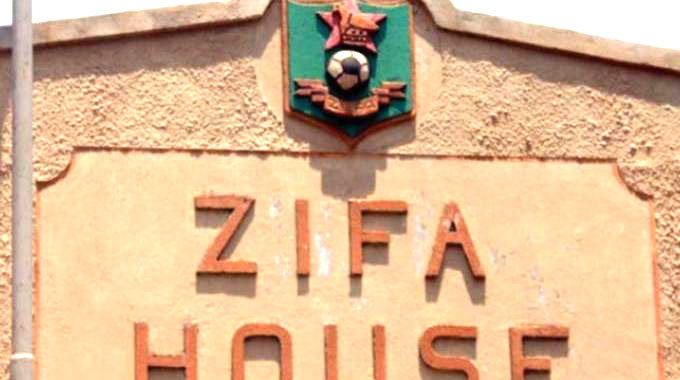
FOR decades, the Zimbabwe Football Association were the perennial problem child of local sport.
Boardroom infighting, governance disputes and administrative paralysis became so routine that they almost felt institutionalised.
Administrative battles often spilled into the public domain, eroding confidence among fans, sponsors and international partners alike.
Football, the country’s most followed sport, became synonymous not with excellence on the pitch but with dysfunction o ff it.
Even the Deputy Sherrif became a regulator visitor at ZIFA House to attach property over mounting debts and writs obtained by creditors.
At one point, the situation deteriorated to such an extent that the Sports and Recreation Commission (SRC) had to step in and dissolve the ZIFA Board in November 2021, an intervention that triggered an international ban by FIFA and plunged Zimbabwean football into one of its darkest chapters.
The consequences were far-reaching. Players lost competitive opportunities, sponsors walked away, and the nation’s football brand suffered reputational damage that will take years to fully repair.
That painful and yet necessary episode ultimately gave way to the appointment of a FIFA Normalisation Committee, whose task was to stabilise the association, restore basic governance structures and prepare the ground for fresh elections.
From that process emerged the current ZIFA Executive Committee, led by Nqobile Magwizi, carrying not only the mandate to run football but the burden of rebuilding trust.
Such was the gloomy scenario in the country’s flagship sport that we never imagined that we would one day be suggesting that other Zimbabwean sports associations can, and perhaps should, take a leaf out of ZIFA’s book on how to change the narrative.
To their credit, the new leadership made an early and deliberate decision to do things di fferently.
Central to that shift has been an unusual, but refreshing, commitment to openness.
Magwizi’s weekly column, Inside ZIFA, has provided a window into the thinking, priorities and internal workings of the association.
For an organisation long accused of secrecy and opacity, this was a bold departure from tradition.
Rather than waiting for crises to force explanations, ZIFA chose to speak consistently, proactively and in their own voice.
More importantly, the column has not remained a public relations exercise.
The vision shared in those early instalments governance reform, institutional rebuilding, commercial partnerships, grassroots development and administrative order has gradually begun to translate into visible action.
Processes have been clarified, stakeholder engagement has improved and decision-making has become more structured and predictable.
While ZIFA have not been spared controversy or pressure, they have largely stayed the course so far, mapping out a path that is now starting to take concrete shape and resemble a functioning institution rather than a perpetual battleground.
We believe this is where the lesson for other sports associations lies.
Across the sporting landscape, the SRC have has repeatedly found themselves calling associations to order for conduct that stretches, and in some cases breaches, compliance thresholds.
Poor governance, weak accountability, opaque nancial practices and internal power struggles are not unique to football.
They are systemic challenges that cut across disciplines — from team sports to individual federations — undermining development and limiting the potential of Zimbabwean sport.
Too often, SRC intervention is framed as punitive, intrusive or politically motivated. Yet the reality is that regulatory oversight becomes unavoidable when institutions fail to self-correct.
ZIFA’s recent experience suggests a di fferent approach is possible.
Transparency, when embraced voluntarily, can act as a pressure valve.
It reduces suspicion, disarms misinformation and forces leaders to align words with action.
If corrective action is inevitable and it increasingly is then transparency should not be treated as a punishment or a last resort.
It should be institutionalised as a governance standard.
Openness builds trust.
Communication reduces conflict. Visibility invites accountability not only from regulators, but from members, athletes, sponsors and the public.
There is also a deeper cultural lesson here.
For associations looking to emulate ZIFA’s path, reform cannot be limited to constitutions and compliance checklists alone.
The health of sport extends beyond governance structures; it is about reconnecting institutions with the communities they serve.
Fans, athletes and volunteers are not passive observers.
They are stakeholders whose loyalty sustains sport even in its most difficult moments. ZIFA’s willingness to speak directly to their constituency has helped reframe their relationship with the football public.
That same principle can apply across sport.
Associations that communicate clearly, explain decisions honestly and demonstrate progress however incremental create space for patience and partnership rather than perpetual confrontation.
This is where the call to action for the SRC and government policy becomes clear.
Regulation alone is not enough.
What is required is a deliberate policy framework that incentivises good governance, rewards transparency and supports institutional reform before crisis sets in.
SRC oversight should be complemented by structured capacity-building, governance audits, leadership training and clear benchmarks for compliance that are publicly understood.
Where associations demonstrate willingness to reform, that effort should be met with guidance, not just sanctions.
Government, too, has a role to play in signalling that sport administration matters not only as recreation, but as a vehicle for national pride, youth development and economic opportunity.
Policy consistency, predictable oversight and support for institutional strengthening can help ensure that the mistakes of the past are not endlessly repeated across di fferent codes.
ZIFA’s story is far from complete, and sustained progress will be the true test.
But for now, it o ffers a rare and valuable example: that even the most troubled association can begin to rebuild credibility when it chooses clarity over concealment, systems over personalities, and reform over resistance.
Zimbabwean sport would be better for it if others paid attention and acted.