Online Reporter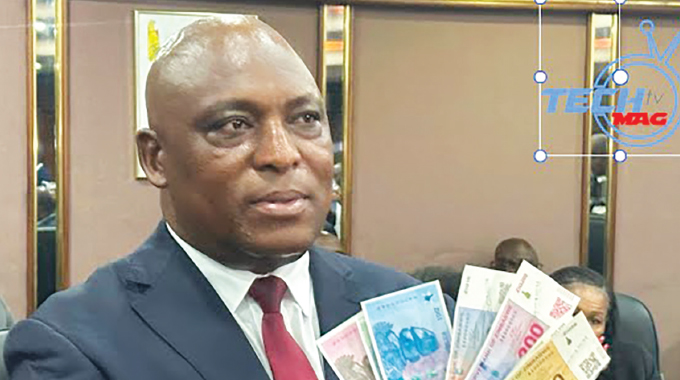
Obert Gutu
WHEN the Second Republic emerged in 2017 under President Mnangagwa, it carried with it a heavy cloud of expectation. Zimbabweans recognised that for the nation to break free from years of stagnation, difficult and often unpopular decisions would be unavoidable. The early years of the Second Republic were defined by confronting
longstanding political and economic obstacles head-on, beginning with the challenge of political sabotage.
For decades, sanctions had been weaponised for partisan gain, undermining national interests and weakening the State. They became a tool of political manoeuvring, eroding confidence in governance and leaving ordinary citizens to bear the brunt of economic hardship. The introduction of the Patriotic Act signalled a decisive end to that era, making it clear that national stability could no longer be compromised for political mileage. It was a bold declaration that Zimbabwe’s sovereignty and collective progress would take precedence over narrow political agendas.
Land reform presented another defining challenge. Redistribution was irreversible, but productivity on that land was essential for national recovery. The Second Republic responded with conditional title deeds, a bankable, legally recognised instrument designed to unlock financing, restore confidence, and ensure that land became productive again.
This reform was not merely administrative; it was structural and long overdue. By transforming land ownership into a catalyst for economic growth rather than a point of political contention, the Government sought to reframe the narrative. Farmers could now approach banks with confidence, secure loans, and invest in modern farming techniques. The conditional title deeds were a bridge between historical justice and future prosperity, ensuring that land reform became a foundation for growth rather than a lingering source of division.
By 2024, after careful analysis of the country’s development bottlenecks, the ruling party identified electoral disputes as the next major obstacle to national progress. Presidential election disputes had become the single biggest threat to stability, investment, and long-term planning. Short electoral cycles further drained national resources and repeatedly disrupted the country’s development agenda.
The answer was CAB3, a reform designed to eliminate presidential election disputes, extend electoral cycles, and create the political stability required for sustained economic transformation. CAB3 recognised that a president elected through Parliament still derives legitimacy from the people, who elect the MPs. It prioritised stability over endless political contestation, establishing a political foundation on which long-term development could finally take root.
CAB3 was not simply a technical adjustment to electoral law; it was a strategic recalibration of Zimbabwe’s political architecture. By reducing the frequency of presidential elections, the reform aimed to free national resources for development, attract investment, and reassure citizens that their country was on a predictable path. It was a recognition that democracy must be balanced with stability, and that endless disputes only serve to weaken the nation.
Now that CAB3 has been passed, Zimbabwe enters a new chapter. The political groundwork has been laid, and the focus shifts to strengthening stability and deepening genuine economic reform.
Politically, the country must move away from provincial names that carry tribal undertones, replacing them with neutral, modern, development-focused identities that reinforce national cohesion. This symbolic shift is more than cosmetic; it is about building a shared national identity that transcends divisions and unites citizens under a common vision of progress.
Economically, the next frontier is bold currency reform. The Government aims to make the ZiG the most visible and dominant currency within the multicurrency system, supported by modernised taxation, tighter controls, and the elimination of leakages.
The most strategic proposal is transformative: making the ZiG the only paper currency allowed to circulate locally, while all other currencies operate electronically as stores of value. This approach is designed to restore monetary sovereignty by ensuring that only Zimbabwean physical currency circulates, formalising foreign currency flows so they become traceable and taxable, and strengthening the ZiG’s visibility and usage as the anchor of the monetary system.
To strengthen the local currency, all Government transactions must henceforth be conducted in ZiG. This measure is intended to instil confidence, create demand for the currency, and ensure that the State itself leads by example in reinforcing monetary discipline.
Currency reform is not merely about economics; it is about national pride and sovereignty. By ensuring that Zimbabweans transact in their own currency, the Government seeks to reclaim control over monetary policy, reduce dependence on external currencies, and build resilience against external shocks. It is a bold step towards modernisation, discipline, and national confidence.
CAB3 has set the political foundation. Currency reforms will set the economic foundation. Together, they form a roadmap towards a stable, predictable, and prosperous Zimbabwe — a future defined by discipline, modernisation, and national confidence.
The Second Republic’s journey has been one of confronting hard truths and making difficult choices. From sanctions to land reform, from electoral disputes to currency sovereignty, each step has been about laying bricks for a stronger, more resilient nation. The reforms are not ends in themselves but means to an ultimate goal: a Zimbabwe that is stable, prosperous, and confident in its place in the world.
As the nation moves forward, the challenge will be to ensure that these reforms are implemented with consistency, transparency, and accountability. Citizens must feel the tangible benefits of stability and reform in their daily lives — whether through improved services, greater economic opportunities, or a stronger sense of national unity.
The Second Republic has declared its intentions. The task now is to translate them into lived realities. If discipline and modernisation remain the guiding principles, Zimbabwe can indeed rise to meet the expectations that accompanied the dawn of the Second Republic.