Business Reporter
CONSISTENT Zimbabwe Gold (ZiG) stability, seen across the formal and parallel markets, has bolstered a low inflation outlook, signalling firmer monetary management and growing confidence in the economy, the Confederation of Zimbabwe Industries (CZI) has said.
In its January 2026 Inflation and Currency Developments Report, CZI noted that between December 2025 and January 2026, ZiG recorded a marginal appreciation in both markets.
It said the parallel market premium has remained below 20 percent, from over 100 percent previously, a level significantly lower than that recorded during the same period in 2025.
A narrow and steady open premium in Zimbabwe is crucial in maintaining domestic currency price stability, given that prices in the dual currency monetary regime track exchange rate movements.
This stability, CZI said, reflects improved exchange rate management by the Reserve Bank of Zimbabwe and a departure from the volatility that previously fuelled inflationary pressures in local currency terms.
According to CZI, the narrowing gap between the official and alternative markets is easing pricing distortions and speculative activity.
The industrial lobby’s observations tally with the central bank’s assessment, which, in its recent macroeconomic snapshot, underscored that ZiG monthly inflation averaged 0,4 percent between February and December 2025, reflecting anchored inflation expectations.
The annual rate ended 2025 at 15 percent, far below the authorities’ projections of 25-30 percent, and dropped to a record 4,1 percent in January, the first single-digit domestic annual inflation rate in three decades.
At the height of rampant domestic currency price increases in Zimbabwe, inflation reached 208 percent in July 2008.
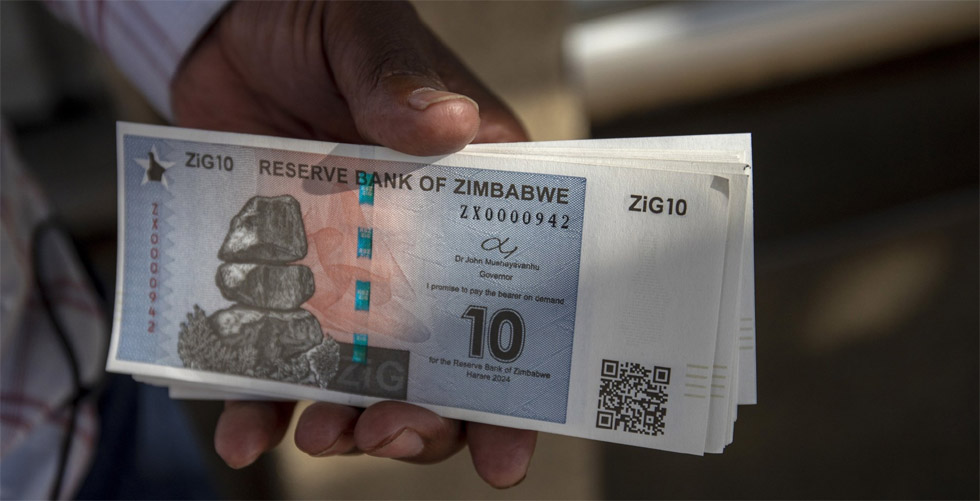
The stubborn trend has since been put under control following the launch of the gold- and foreign currency-backed ZiG in April 2024, which has pulled local currency inflation to record lows.
A combination of tight monetary policy and prudent fiscal policy management has delivered durable inflation and exchange rate stability.
“An analysis of currency dynamics between December 2025 and January 2026 reveals a marginal appreciation of ZiG across both official and parallel markets, with a parallel market premium still below 20 percent,” CZI said.
This, the industrial lobby said, is “significantly lower than the figures recorded during the same period in 2025”.
It said the emerging stability is critical for productive sectors, as it allows companies to plan with greater certainty.
“For businesses, this relative stability facilitates more accurate financial forecasting and reduces the risks associated with rapid currency devaluation,” CZI said.
The January developments point to a more predictable inflation environment ahead, providing a solid foundation for growth as Zimbabwe advances its economic stabilisation agenda.
According to the CZI, price stability under ZiG has extended into the new year, reinforcing confidence in ongoing economic stabilisation efforts.
“ZiG month-on-month inflation began in 2026 at a very low level of approximately 0,0 percent in January 2026,” CZI said, noting that this represented a further decline from the 0,2 percent recorded in December 2025.
The industry body emphasised that month-on-month inflation below one percent is widely regarded as supportive of economic activity.
“Such price stability helps preserve purchasing power, enhances price certainty and contributes to improved confidence in the use of the local currency, thereby fostering a more conducive environment for business and investment,” CZI said.
On an annual basis, inflation outcomes were even more striking.
“On a year-on-year basis, ZiG inflation declined sharply to 4,1 percent in January 2026, down from 15 percent in December 2025, representing a significant drop of 10,9 percentage points,” the report noted.
CZI said the return to single-digit inflation was a milestone that had not been achieved for an extended period, adding that historical data shows Zimbabwe last recorded an annual average single-digit inflation in 1988.
The industrial lobby said key indicators suggest the prevailing conditions are likely to hold, with the low inflation environment expected to continue into the second quarter of 2026.
Price pressures in United States dollar terms remain firmly contained at the start of 2026, reinforcing confidence in Zimbabwe’s improving macroeconomic environment and supporting business planning across the economy.
“Overall, the trend reinforces confidence that US dollar inflation pressures remain contained into 2026,” the report said.
Annual figures show an even greater improvement.
“The US dollar year-on-year inflation rate for January 2026 declined sharply to 1 percent, representing a reduction of 11,4 percentage points from the 12,4 percent recorded in December 2025,” CZI said, describing the outcome as a positive milestone in a multi-currency economy.
The confederation noted that such stability supports planning, investment decisions and cost management.
CZI highlighted the narrowing gap between domestic US dollar inflation and global benchmarks.
With US dollar inflation in America at 2,7 percent in December 2025, the report said achieving alignment with US inflation would represent a significant confidence-building development, signalling that distortions linked to previously fictitious US dollar creation have been effectively addressed.
CZI said, as the year started with low inflation, firms can focus on internal strategies, with stable conditions and prudent policies expected to be maintained.
Economist Mr Fanuel Chando said the CZI submissions clearly demonstrated the link between currency stability and inflation moderation.
“The contained parallel market premium is key in limiting inflation pass-through,” he said. “CZI’s position highlights that consistency in monetary policy is now yielding tangible results for industry and the broader economy.”
Mr Chando said sustaining the gains will require continued policy discipline.
“If stability is maintained, firms will increasingly transact in ZiG, supporting ongoing efforts to strengthen the local currency and deepen economic recovery,” he said.
Economist Ms Gladys Shumbambiri-Mutsopotsi said the latest figures reflect the impact of improved policy coordination.
“The sharp fall in inflation points to stronger monetary discipline and better alignment between fiscal and monetary policy,” she said.
“Low and stable month-on-month inflation is critical because it anchors expectations and prevents price shocks from building up.”
Ms Shumbambiri-Mutsopotsi said sustaining the gains will be key.
“If current discipline is maintained, the economy stands to benefit from improved confidence, higher investment appetite and greater acceptance of ZiG in everyday transactions,” she said.
The stability of ZiG is expected to protect household incomes, restore the purchasing power of citizens and rebuild trust in the local financial system.
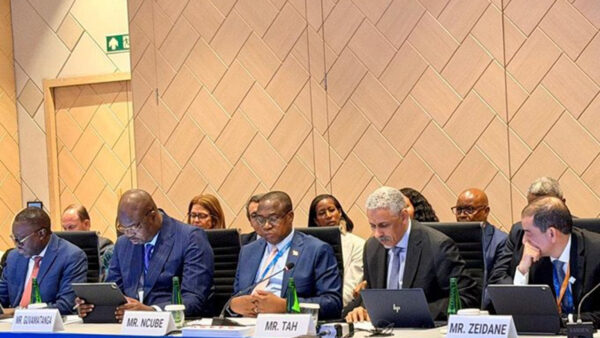
Finance, Economic Development and Investment Promotion Minister Professor Mthuli Ncube recently said stable single-digit inflation is crucial for long-term economic planning. He said the current stability provides businesses with the predictability needed for long-term planning, reducing operational uncertainty.
A stable currency, he said, is a foundation for attracting foreign direct investment and stimulating domestic savings, which are crucial for industrialisation and job creation.
Further, Prof Ncube said, macroeconomic stability would curb the parallel market premiums that previously distorted the macroeconomic environment.
The low-inflation environment aligns Zimbabwe with the Southern African Development Community macroeconomic convergence targets, which include inflation rates within a 3-7 percent range. The success in stabilising ZiG is presented as a necessary step in the Government’s plan to phase out the US dollar and establish a unified national currency by 2030, but only after key benchmarks.