Online Reporter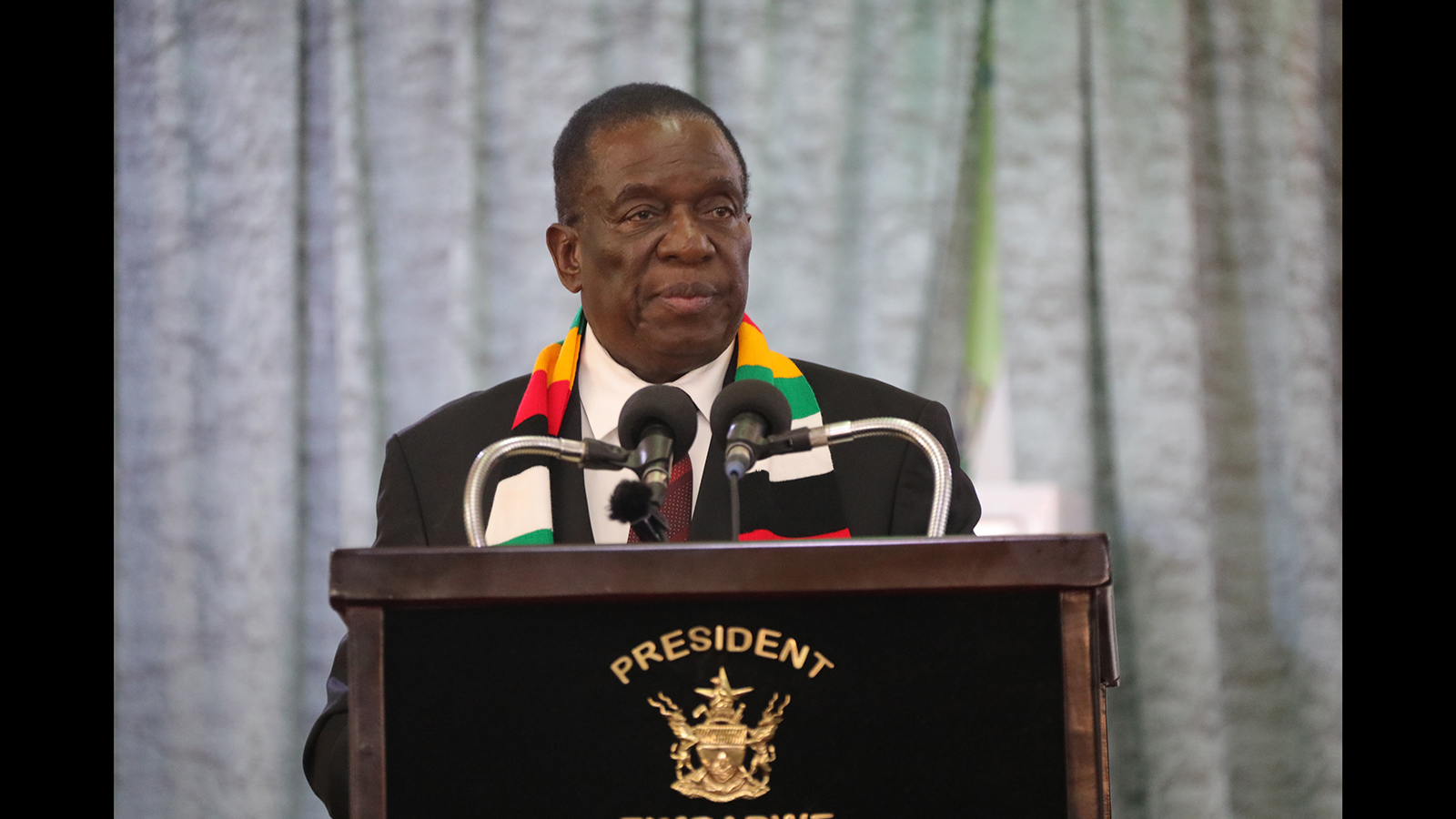
Richard Muponde-Zimpapers Politics Hub
WHEN world leaders converged in Belém, Brazil, for the COP30 Climate Summit, hopes were high that the promises made at COP29 in Azerbaijan would at last be turned into action to fight climate change, which has caused untold suffering to emerging and developing economies, mostly in the Third World.
Yet, as speeches filled the air and pledges trickled in, the hypocrisy of global powers once again took centre stage. The absence of major polluters and the reluctance of developed nations to finance green transitions exposed the deep rift between rhetoric and responsibility in global climate politics.
Empty promises from COP29 to COP30
At COP29 in Baku, world leaders committed to mobilising US$1.3 trillion annually by 2035 to help developing nations transition to green energy.
They also vowed to end the reckless subsidisation of fossil fuels, which still devours over US$1 trillion a year globally.
Yet, as UN Secretary-General Antonio Guterres lamented in his remarks during the opening of the Summit in Belém:
“Too many corporations are making record profits from climate devastation… Too many leaders remain captive to these entrenched interests.”
This hypocrisy was laid bare when the United Kingdom, once a champion of climate finance, walked away from Brazil’s flagship $125 billion Tropical Forest Forever Facility (TFFF), despite being one of its architects.
As Lord Zac Goldsmith fumed to the BBC: “It has caused real frustration… the Brazilian government behind the scenes is furious.”
Similarly, the United States, the world’s second-largest polluter, sent no delegation at all, choosing instead to strike new gas exploration deals with ExxonMobil in Greece.
US President Mr Donald Trump is infamous for declaring that climate change does not exist, equating it to “Global Fraud.”
China, India, and Russia, three of the other top five emitters, were also absent. In contrast, smaller nations like Norway, Portugal, and France made modest pledges, with Norway committing $3 billion over ten years and France pledging up to €500 million, conditional on further talks.
The World’s Major Polluters: Missing in Action
The United States, China, India, Russia, and the European union account for nearly 70 percent of global carbon emissions.
Yet, as the Belém summit unfolded, four of these five failed to send their heads of state, leaving smaller nations to carry the moral burden.
Colombia’s President Gustavo Petro minced no words; “Mr Trump is against humanity. His absence here demonstrates that.”
Chile’s President Gabriel Boric was equally blunt.
“That is a lie,” he said, referring to Mr Trump’s infamous claim that climate change is “the greatest con job ever perpetrated on the world.”
Even Irish Prime Minister Micheál Martin expressed dismay; “At a time when political leadership has never been more vital, there are fewer of us here in Belém, fewer leaders ready to tell it as it is.”
The absence of the very nations responsible for most of the pollution underscores a grim truth: those most culpable for the climate crisis are least willing to act.
Why the Big Powers Are Dragging Their Feet
The reluctance of industrialised nations to abandon fossil fuels stems from economic self-interest and political inertia.
Fossil fuels remain deeply embedded in the economic structures of the Global North, subsidised by governments, lobbied for by powerful corporations, and tied to millions of jobs.
As Mr Guterres warned: “Fossil fuels still command vast subsidies, taxpayers’ money. What’s still missing is political courage.”
For leaders like Mr Trump, climate denial serves as populist fuel.
By dismissing climate change as a “globalist scam,” he plays to domestic audiences while ignoring mounting evidence that global warming is accelerating.
Meanwhile, Britain’s Mr Keir Starmer admitted that political unity on climate action has “sadly gone,” signalling waning political will even among supposed champions of green policy.
A Ray of Hope: Brazil’s Tropical Forest Forever Facility
Amid the gloom, the launch of the TFFF provided a glimmer of progress.
Spearheaded by Brazilian President Luiz Inácio Lula da Silva, it marked a rare moment of genuine innovation.
As Lula declared: “The Tropical Forest Forever Facility we are launching today is an unprecedented initiative… For the first time in history, countries of the Global South will take a leading role in a forest agenda.”
The TFFF aims to mobilise $125 billion in public and private finance to pay nations for maintaining forest cover, directly rewarding conservation rather than exploitation.
With at least 20 percent of resources earmarked for Indigenous communities, it represents a step toward climate justice and equity.
As critics note, even this bold initiative is dwarfed by the scale of the crisis.
The UN Environment Programme estimates $66.7 billion annually is needed just for forest protection and restoration, let alone energy transition.
Zimbabwe and the Second Republic’s Climate Response
While global powers equivocate, developing nations like Zimbabwe are taking meaningful steps.
Under President Mnangagwa’s Second Republic, Zimbabwe has integrated climate action into its national development agenda, aligning with Vision 2030 and the National Development Strategy 1 (NDS1).
Speaking at the Africa Climate Summit in Nairobi (September 2023), President Mnangagwa said, “Zimbabwe, though least responsible for global emissions, is bearing the brunt of climate change.
“We are taking bold measures through reforestation, renewable energy, and sustainable agriculture to build resilience and safeguard livelihoods.”
The Government has launched initiatives such as the National Renewable Energy Policy, promotion of solar mini-grids in rural areas, and afforestation drives under the Presidential Tree Planting Programme.
President Mnangagwa reaffirmed at the 2024 COP29 Summit in Baku.
“For developing nations like ours, climate change is not about politics but survival. We cannot wait for pledges that never come; we act now, with what we have.”
These initiatives, though modest in scale compared to global commitments, demonstrate genuine political will—something glaringly absent among the major polluters.
The Consequences of Inaction for Emerging Economies
For developing nations, climate change is no abstract concept; it is a lived reality.
Droughts, cyclones, and floods are increasingly devastating crops, infrastructure, and livelihoods.
In Zimbabwe, recurring droughts linked to El Niño threaten food security, while Cyclone Idai (2019) remains a painful reminder of the climate crisis’s human toll.
Economists warn that if current trends continue, climate-related losses could erase decades of development gains in Africa.
The World Meteorological Organisation reports that 2025 is likely to be among the three warmest years on record, heightening risks of famine and displacement.
As UN Secretary General Mr Guterres cautioned in Belém: “Even a temporary overshoot beyond 1.5°C will have dramatic consequences.
“It could push ecosystems past irreversible tipping points and expose billions to unlivable conditions. This is moral failure, and deadly negligence.”
What Must Be Done
To salvage climate credibility, global powers must turn pledges into payments and words into work.
Developed countries must honour their $300 billion annual finance commitments by 2035 and dismantle the fossil-fuel subsidies that entrench inequality.
For developing nations, South-South cooperation, such as the Brazil-Zimbabwe partnership on climate-smart agriculture, offers a path forward.
A “coalition of the willing,” as Barbados Prime Minister Mia Mottley urged, could pioneer practical solutions even without full participation from the Global North.
“The world, my friends, has never been changed by spectators and naysayers,” she reminded the summit.
Choose to Lead or Be Led to Ruin
The Belém summit will be remembered as the moment when the moral bankruptcy of the global elite stood naked before the world.
Yet, it also offered a glimmer of hope in the resilience of the Global South and the leadership of nations like Brazil and Zimbabwe.
As Mr Guterres thundered: “No one can bargain with physics. But we can choose to lead, or be led to ruin.”
That choice now lies before humanity, between hypocrisy and hope, between delay and decisive action.
The time for promises has passed. What the planet demands now is implementation, implementation, and implementation.