Martin Kadzere
ZIMBABWE’S aggressive bid to join the rapidly expanding BRICS economic bloc and its financial wing, the New Development Bank (NDB), will unlock massive alternative markets, secure cheaper long-term infrastructure funding and shield its economy from the Western financial hegemony.
BRICS is a coalition of emerging economies and developing nations comprising Brazil, Russia, India, China, South Africa, Egypt, Ethiopia, Iran, Saudi Arabia, the United Arab Emirates (UAE) and Indonesia.
The coalition collaborates on global economic, political and diplomatic issues.
Initially known as BRIC, the trade coalition was collaboratively established by the governments of its founding nations — Brazil, Russia, India and China. In December 2020, South Africa was formally invited to join the bloc. It joined a year later, leading to the official change of the acronym BRIC to BRICS.
The bloc expanded in 2024 to include Egypt, Ethiopia, Iran and the UAE, with Indonesia joining as a full member in 2025.
It accounts for roughly 40 percent of the global economy when adjusted for purchasing power parity (PPP).
Collectively, these nations represent a market of approximately 3,3 billion people and over US$45 trillion in gross domestic product (GDP).
Analysts say joining this rapidly expanding alliance represents a structural “game-changer” for Zimbabwe. Primarily, joining BRICS and its NDB would offer the country a strategic alternative to Western-led financial systems, particularly by providing access to cheaper long-term funding without the strict political conditions often required by current multilateral lenders.
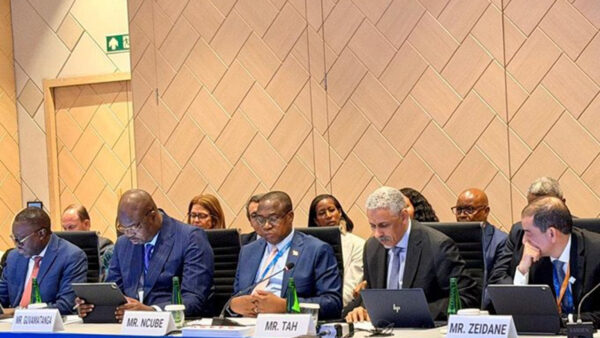
Finance, Economic Development and Investment Promotion Minister Professor Mthuli Ncube last week said the Government was finalising negotiations to initiate the next phases of its accession to NDB.
The admission process consists of three distinct phases. The Government is currently focused on stage one, which involves finalising negotiations on the terms of membership.
The second phase entails negotiations regarding Zimbabwe’s shareholding in the financial institution, including discussions on the country’s initial capital contribution.
Following these stages, the NDB board of directors is expected to officially endorse the agreement, confirming Zimbabwe’s status as a full member. The agreement will then be tabled before Parliament for ratification as part of the formal endorsement process.
Speaking on the strategic value of the bloc, economist Professor Gift Mugano highlighted that BRICS offers Zimbabwe direct access to a market comprising nearly half of the world’s population, roughly 40 percent of global GDP.
“Think of China with 1,4 billion people and India, Brazil and Russia — an almost four-billion-people market in total,” he said.
“BRICS creates a massive alternative market for Zimbabwe . . . aligning with South-South cooperation.”
Zimbabwe has historically struggled to secure concessional funding from international financial institutions such as the International Monetary Fund (IMF) and the World Bank due to Western-imposed sanctions as well as outstanding debts and arrears owed to these traditional lenders.
A core driver behind Zimbabwe’s application is the desire to escape what Prof Mugano described as the “exploitative” nature of Western trade.
He argued that the traditional Western economic model operates under a neo-liberal framework that acts as a tool for neo-colonialism.
“The structure of our trade (with the West) is exploitative,” Prof Mugano said.
“I see a continuation of the export of raw materials with no desire to invest in value addition. The whole agenda is to take raw materials from Zimbabwe and other African countries to drive the industrialisation of advanced economies.”
Prof Mugano noted that BRICS nations share a common historical understanding of the “residual effects of colonialism”, making them more amenable to fairer trade terms and sensitive to the development agendas of emerging economies.
Beyond direct trade, full integration into the BRICS architecture would grant Zimbabwe formal access to the Shanghai-headquartered NDB.
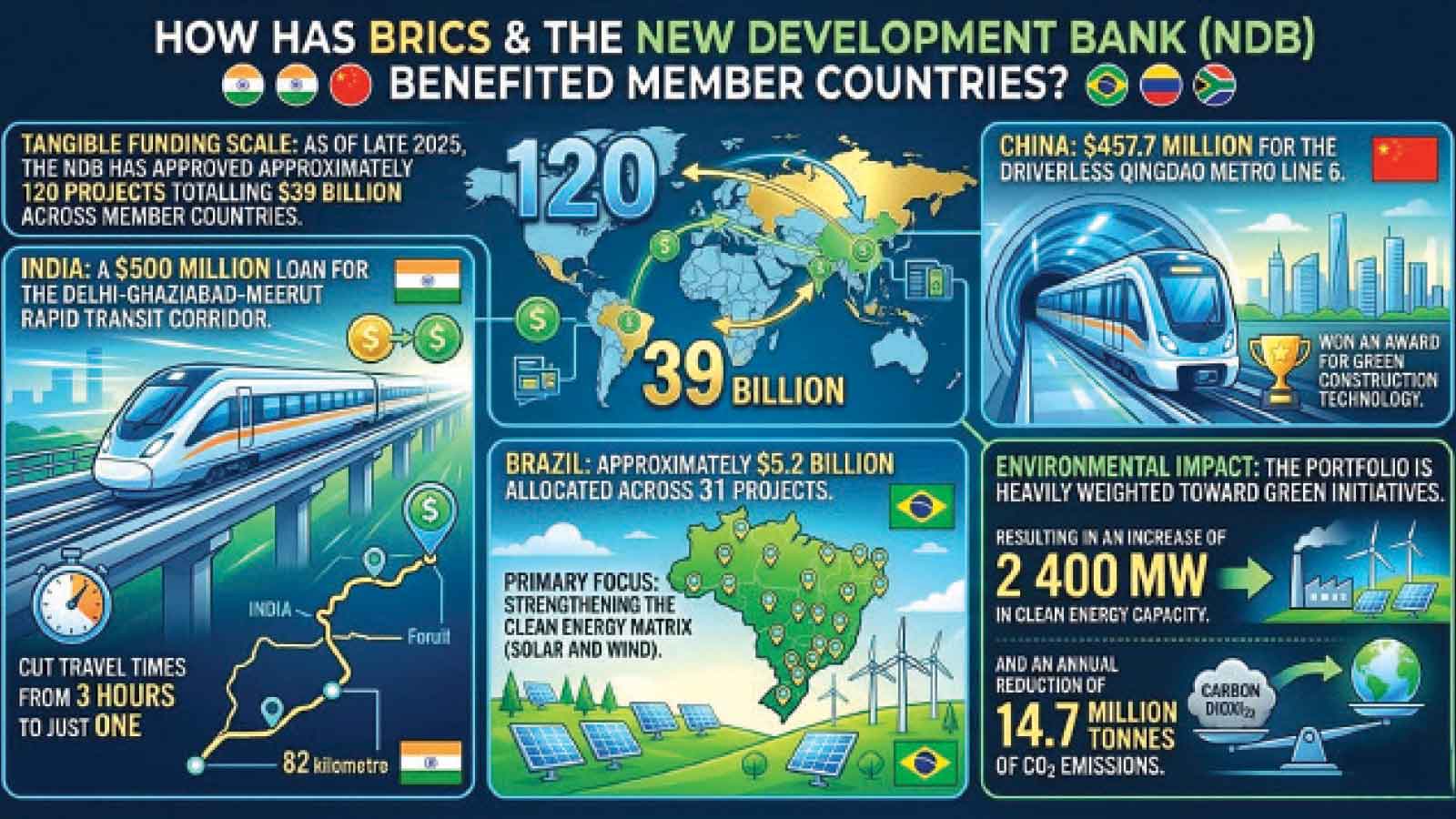
The NDB was established in 2015 with an authorised starting capital of US$100 billion. Its core mandate is to mobilise resources for infrastructure and sustainable development.
While Zimbabwe has previously relied on ad hoc bilateral funding from BRICS members, most notably major investments from China, formal entry into the NDB would allow Harare to secure long-term development financing through a stable, multilateral framework.
This comes at a time when traditional regional and Western-aligned financial institutions have limited their assistance to Zimbabwe.
Prof Mugano pointed out that the bloc offers an essential geopolitical safeguard against unilateral Western economic policies.
“We have seen that the world trading system has been unfair and uneven, where America would unilaterally make a decision to disrupt trade by raising tariffs,” Prof Mugano said.
“The BRICS gives us a shield where we can run to, safeguard our interests and push more exports into favourable markets.”
Economic analyst Mr Enoch Musara said Zimbabwe’s BRICS membership would solidify the country’s trade relations with booming global economies “on fairer terms, boosting critical technology transfers”.
Mr Musara added that the move reduces over-reliance on Western nations, which have traditionally used financial aid, loans and technology to exert political and economic influence. Another analyst, Mr Carlos Tadya, said integrating into the BRICS financial ecosystem provides Zimbabwe with a critical alternative for unlocking long-term, concessional development finance.
By leveraging the NDB, the country can fund capital-intensive national priorities, such as infrastructure, energy projects and mining upgrades, free from the geopolitical hurdles typically associated with traditional Western lenders.
Zimbabwe’s bid comes amid a rapid evolution of the alliance.
Having integrated Egypt, Ethiopia, Iran, Saudi Arabia, the United Arab Emirates and Indonesia, the following were accommodated as “Partner Countries”: Algeria, Belarus, Bolivia, Cuba, Kazakhstan, Malaysia, Nigeria, Thailand, Uganda, Uzbekistan and Vietnam.
Broader BRICS benefits
Zimbabwe shares BRICS’ goals of reducing dependence on the US dollar in international trade.
By trading using local currencies (like the Chinese yuan, Russian ruble or Indian rupee), Zimbabwe can bypass sanctions and stabilise its foreign exchange position, which strongly aligns with the nation’s efforts to back its local Zimbabwe Gold (ZiG) currency.
Deeper integration with BRICS nations can open up vast, alternative markets for Zimbabwe’s key exports, particularly in the agriculture and mining sectors. The exports include gold, platinum and agricultural commodities.
Membership could also facilitate knowledge exchange, resulting in advanced technologies in agriculture, renewable energy and industrialisation to help Zimbabwe achieve its Vision 2030 upper middle-income economy goals.
Aligning with the Global South provides Zimbabwe with geopolitical support, insulating the country from unilateral economic pressures and creating a more favourable environment for autonomous economic policymaking.
Economic powerhouse breakdown
The sheer size of the BRICS market is largely anchored by the industrial and technological power of its major players.
China is the undisputed economic anchor of the bloc, possessing the largest nominal and GDP (PPP), as well as the largest stock market capitalisation among member nations.
India is one of the fastest-growing major economies globally, with rapidly expanding stock exchanges and massive consumer markets.
The inclusion of major energy exporters like Saudi Arabia, the UAE and Iran significantly strengthens the bloc’s position in global commodity and energy markets.
Brazil, Russia and South Africa anchor their respective regions (Latin America, Eurasia and Africa) through agriculture, resource extraction and established financial markets.