admin
admin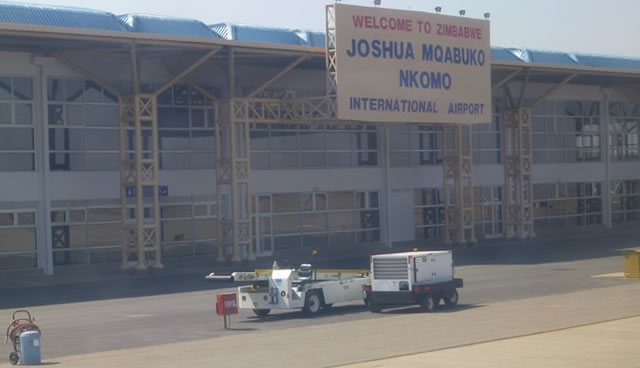

Gibson Mhaka
THERE is no doubt that calendars are replete with some events that we commemorate today, which happened many years ago and thousands of miles away, with little, if any, relevance to us.It is important to realise that some of these remote events take precedence over a number of local special days on our historical calendar such as December 22, 1987 when the Unity Accord was signed by President Mugabe of Zanu and the late Vice-President Joshua Nkomo of PF-Zapu. The two revolutionary parties represented the entirety of Zimbabweans.
Tomorrow, the nation marks the 26th year since the historic signing of the 1987 Unity Accord. The National Unity Day was set through Statutory Instrument 156 of 1997 to mark the signing of the Unity Accord. The day is celebrated every year. On that historic day, the two former liberation movements PF-Zapu and Zanu signed an agreement that led to the formation of a united revolutionary party, Zanu-PF.
This year’s celebrations which will be held in Bulawayo would be doubly special as President Mugabe leads the nation in honouring the late founding nationalist Dr Nkomo’s esteemed work by officially unveiling his statue, a project which people in Matabeleland and the country at large have been patiently waiting for for a long time.
The unveiling of VP Nkomo’s statue will coincide with the renaming of Main Street to Joshua Mqabuko Nkomo Street and the official opening of the Joshua Mqabuko Nkomo International Airport.
“This year’s Unity Day is a special one because President Mugabe will be commissioning the Joshua Mqabuko Nkomo International Airport and his statue in Bulawayo. The President will also take the opportunity to rename Main Street to Joshua Mqabuko Nkomo Street.
“The Unity Day celebrations also come on the backdrop of Zanu-PF’s resounding victory in the July 31 harmonised elections and at a time when the party had successfully held its provincial elections. It is also coming after we have hosted a successful National People’s Conference in Chinhoyi and essentially this has been a great year in the history of Zanu-PF,” said Zanu-PF national chairman Cde Simon Khaya Moyo.
He said the Unity Accord was irreversible as the two icons — President Mugabe and Dr Nkomo — were the only signatories to the agreement adding that it was alive and people should use it to reflect on achievements brought about by the agreement.
It should be boldly understood that the Unity Accord was not signed between the Shona-speaking and Ndebele-speaking people per se, as some ill-informed people might think. It was signed by the two revolutionary parties on behalf of the people of Zimbabwe regardless of race, region and colour.
Both liberation movements had members from both tribes and more, working in unison to liberate the country and develop it post independence. Therefore, the thinking about Shona and Ndebele is incompetent, insulting.
It is also pertinent that every year, on this day, the nation gathers in one accord to remember and pay tribute to the efforts and sacrifices made by President Mugabe and the late VP Nkomo who rose above personal interests to unite for the good of the nation.
It is fundamentally important to recognise that stability and rapid economic progress of a country cannot be achieved unless there is peace in the country hence the promotion of peace by President Mugabe and the late Dr Nkomo through the signing of the 1987 Unity Accord was of utmost importance to our nation.
It is the responsibility of all political parties, civil society, religious groups and churches, local authorities, the corporate sector, workers’ organisations and all other institutions, to work hard for peace and social cohesion of the nation brought by the signing of the Unity Accord.
As the nation commemorates this special day, it should celebrate with a mixture of pride and nostalgia, recognising our departed and living heroes whose enduring courage, blood and suffering enabled us to reclaim our cherished land, our national heritage, freedom, sovereignty and independence.
We have seen the Government rolling out several programmes to improve the lives of Zimbabweans, with the land reform programme and the indigenisation programme featuring prominently among those initiatives.
Sadly, some retrogressive forces in our midst, burdened by ideological bankruptcy and greed for small pieces of silver, choose to deliberately abuse the very democracy delivered to us by the comrades, courtesy of their sacrifice, labour, pain and chivalry. Through this immeasurable selflessness, Zimbabwe is free today.
Divisions are only there to destroy the good things marinated by these two great leaders so Zimbabweans should nurture a culture of unity. Secessionist campaigns by some political parties are Western-sponsored ideologies only to trash the principles of unity as personified by the Unity Accord.
These campaigns seek to have people identifying themselves as tribes rather than nationalities. This derives to some extent from a Rhodesian strategy of naming the country’s provinces along tribal lines.
The northeastern parts of the country were named Mashonaland, the land of the Shonas; the southwestern parts were dubbed Matabeleland, meaning the land of Matabele and the east, Manicaland, the land of the Manyika.
These labels should be discarded since they foster disunity among the people of Zimbabwe. As beneficiaries of the sacrifices made by living and departed sons and daughters of the soil, we need to take a moment to reflect on one of President Mugabe’s exhortations, “If ever we look to the past, let us do so for the lessons that past has taught us”.
It is our hope that the values that our liberators held so dearly that they were prepared to die for will continue to guide us as we seek to make Zimbabwe a better nation.
Tomorrow’s celebrations should not be a day’s remembrance only. They should be used to re-energise our resolve to look at our history and realise how losing sight of the value of our history could spell doom for our future.


 Online Reporter