Online Reporter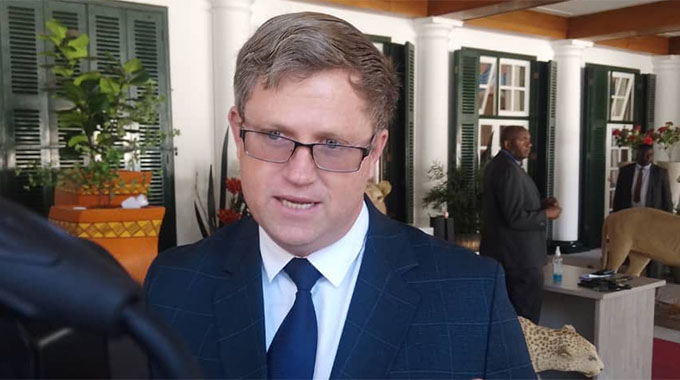
Freeman Razemba
Senior Reporter
ZIMBABWE is committed to regional cooperation in the railway sector as rail is three times more energy efficient than road and reduces transport costs for regional trade.
Recently, Zimbabwe participated at the Southern African Railways Association where Transport ministers from the region gathered to discuss regional cooperation online.
Deputy Minister of Transport and Infrastructural Development Joshua Sacco outlined the country’s priorities for reform and regional integration, infrastructure rehabilitation and the shift towards open access in the railway sector.
He stressed the importance of collaboration with neighbouring countries, the need to move freight from road to rail and legislative reforms to support private sector participation.
He also highlighted the proposed Lion’s Den-Kafue link, the US$6,5 billion Techobanine Corridor, and open access policies to drive efficiency.
Deputy Minister Sacco also noted border upgrades at Beitbridge, Forbes-Machipanda and Chirundu, and called for regional financing frameworks to support integration across SADC.
“Zimbabwe’s commitment to regional cooperation in advancing transport integration, in line with SADC’s Regional Infrastructure Development Master Plan (RIDMP) cannot be emphasised,” he said.
Deputy Minister Sacco emphasised Zimbabwe’s central geographic position in Southern Africa, noting its role as a land-linked country connecting South Africa to the north, Mozambique to the east, Botswana and Namibia to the west, and the Democratic Republic of Congo (DRC) and Zambia to the north.
He acknowledged that Zimbabwe’s railway infrastructure requires both rehabilitation and upgrading in order to support the African Continental Free Trade Area and the SADC Regional Infrastructure Development Plan.
“Zimbabwe’s geographical centrality on the North-South Corridor, linking South Africa, Botswana, Zambia, Malawi, Mozambique and the DRC calls for deliberate proactive policy to eliminate infrastructure bottlenecks for fluid mobility.
“Railway revitalisation is both a national priority and a regional necessity to ensure cost-effective, efficient and sustainable trade flows for the land linked continental Africa,” Deputy Minister Sacco said.
He identified the proposed link between Lion’s Den, north of Harare and Kafue in Zambia as a game-changing project to shift freight from road to rail.
He also highlighted the proposed 1 700km Techobanine Corridor, connecting Zimbabwe and Botswana to a deep-water port in Mozambique.
Valued at approximately US$6,5 billion, the project is under discussion with the African Development Bank for feasibility studies.
In the meantime, Zimbabwe is working with Mozambique and Botswana on repairing existing infrastructure.
Deputy Minister Sacco said Zimbabwe is moving towards an open access framework, separating infrastructure ownership from train operations. He pointed to the Beitbridge-Bulawayo Railway (BBR) as a success story and noted existing partnerships with mining companies.
The Deputy Minister explained that increased open access would promote competition and efficiency, while Government regulation would ensure fair and effective implementation.