Online Reporter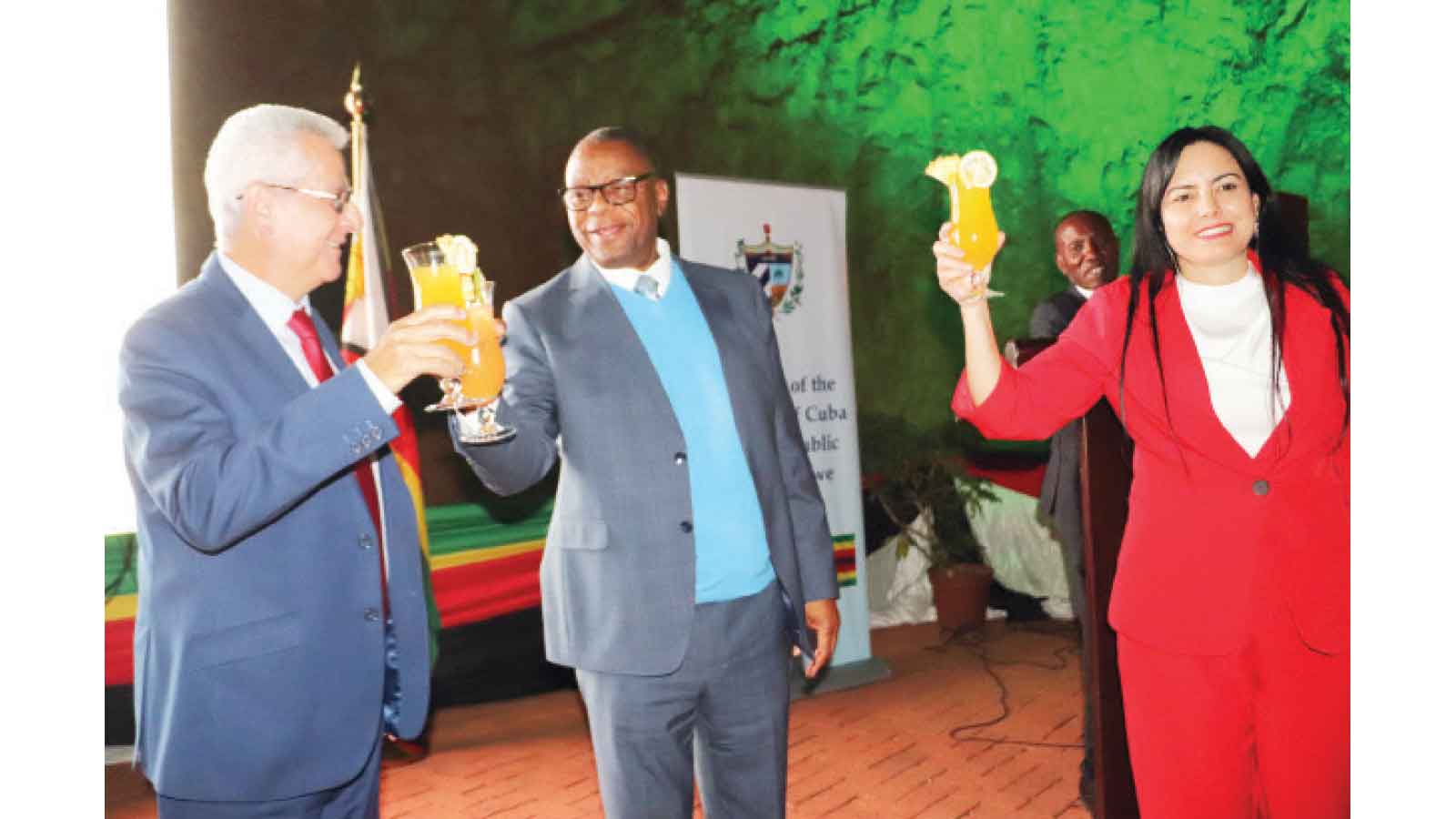
Trust Freddy-Herald Correspondent
ZIMBABWE and Cuba have committed to deepening bilateral ties by expanding their 40-year health co-operation agreement into strategic medical industrialisation, biotechnology and advanced pharmaceutical manufacturing.
The development comes as the two countries marked the 40th anniversary of the Zimbabwe–Cuba Bilateral Agreement on Health Co-operation at a colourful ceremony held at the Museum of African Liberation in Harare yesterday.
Speaking at the commemoration, Health and Child Care Minister Dr Douglas Mombeshora said the upgraded partnership will target critical structural gaps within Zimbabwe’s biomedical framework.
The anniversary marks a shift towards localised medical industrialisation and advanced medical training between the two nations.
“Zimbabwe remains committed to deepening co-operation with Cuba in strategic areas such as specialist and postgraduate medical training, health workforce development, biotechnology, manufacturing, pharmaceutical research, advanced diagnostics, public health preparedness and emerging health technologies,” Dr Mombeshora said.
He said the specialised training programmes currently being rolled out—particularly in critical disciplines such as pathology—are designed to close existing domestic skills gaps and build a more resilient healthcare workforce.
“We are particularly encouraged by ongoing collaborations in specialist training, including pathology and other critical disciplines, which are helping to address skills gaps within our health sector and strengthen our capacity for the future.
“These priorities align fully with the vision of the Second Republic under the leadership of His Excellency, President Dr Emmerson Dambudzo Mnangagwa, whose philosophy of ‘leaving no one and no place behind’ continues to guide our national development agenda,” he said.
Minister Mombeshora also said the four-decade partnership has delivered significant results in the health sector.
“…nearly ten million patient consultations have been conducted by Cuban medical personnel over the past 40 years,” he said.
“More than 1 000 Zimbabweans have received training in Cuban institutions and now serve throughout our health system.
“Cuban electromedical technicians have repaired and restored thousands of pieces of medical equipment, helping to ensure that critical diagnostic and treatment services remain available to our people,” he said.
Minister Mombeshora said the co-operation is rooted in historical solidarity dating back to Cuba’s support during Zimbabwe’s liberation struggle, before formal agreements were signed in 1984.
“The story of Zimbabwe-Cuba co-operation did not begin with a document signed in 1984,” he said.
“Its roots run deeper, anchored in the solidarity that Cuba extended to Zimbabwe during our liberation struggle. That solidarity evolved into a development partnership after Independence, driven by a common vision of human dignity, social justice and equitable access to essential services.”
Cuba’s Deputy Minister of Foreign Affairs, Mr Elio Rodríguez Perdomo, paid tribute to Cuban medical personnel who have served in Zimbabwe, describing them as symbols of international solidarity.
“They are a testament to the humanist vocation of the Cuban Revolution and its unwavering commitment to stand with those most in need,” he said.
He said Cuban doctors serving in Zimbabwe have undertaken multiple international missions, contributing significantly to healthcare delivery.
“Their track record includes thousands of lives saved, but above all, the certainty of having been useful to their homeland and to other human beings, without distinction of race, ideology or religion,” he said.
Deputy Minister Perdomo also called for a united global front of sovereign states to resist foreign interference and safeguard national autonomy.
“The time has come for a broad international coalition, reaching beyond political differences, ideological approaches and historical disputes, to set limits to and prevent the excesses that threaten and harm the national interests, the peoples and the sovereign prerogatives of all states,” the Deputy Minister said.
Cuban Ambassador Susellys Pérez Mesa said the alliance remains a strong example of solidarity between developing nations.
“This act demonstrates a profound, real and sincere history of brotherhood between Cuba and Zimbabwe, embodied in white coats and with a vocation for healing body and soul,” Ambassador Mesa said.
“Cuba and Zimbabwe are an example of that shared and sustained will, throughout the years, to demonstrate that a better world is possible.”