admin
admin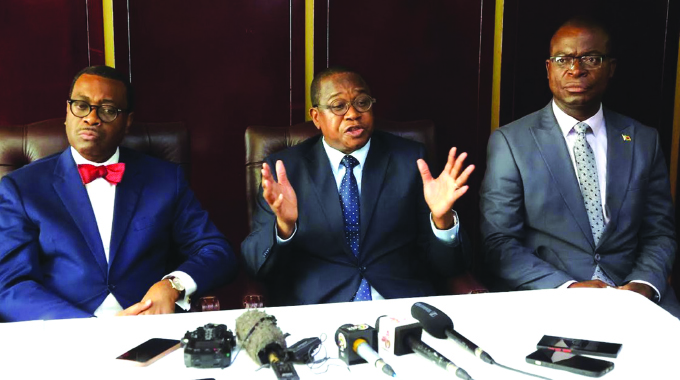
Nelson Gahadza
Senior Business Reporter
The African Development Bank (AfDB) says the Zimbabwe arrears clearance and debt resolution process now has a clear path that will start with an International Monetary Fund (IMF) led staff-monitored programme (SMP) next year.
To anchor the implementation of further economic reforms under the arrears clearance and debt resolution process, the government is currently negotiating an SMP with the IMF.
SMPs are informal arrangements between national authorities and IMF staff to monitor the authorities’ economic programmes that can help a country establish a track record of policy implementation.
A successful SMP can pave the way for an IMF financial arrangement or for the resumption of a financial arrangement that could have been suspended.
Although Zimbabwe expunged its outstanding debt to the IMF, it is still not able to secure fresh lines of credit due to the pari passu rule, which requires that a borrower be treated the same by every other multilateral lender to whom the debt is in arrears.
The IMF is part of the creditors and development partners involved in discussions to find a debt resolution and arrears clearance roadmap for Zimbabwe’s sovereign debt.
AfDB president Dr Akinwumi Adesina, speaking during a press briefing on the sidelines of the 6th High-level Structured Dialogue platform forum in Harare yesterday, said the AfDB would also arrange financial assistance to help Zimbabwe clear its debts.
Dr Adesina is the champion of Zimbabwe’s arrears clearance and debt resolution process while former Mozambique president Joachim Chissano is a high-level facilitator.
“Now we have a clear path ahead of us that will start next year. Zimbabwe’s Minister of Finance, Economic Development, and Investment Promotion will be working closely with the IMF for the development and implementation of the IMF staff-monitored programme, and that is a key thing for this platform,” he said.
He added that the SMP will come with a series of reforms that Zimbabwe will negotiate with the IMF, and in that regard, development partners will allow Zimbabwe, after negotiating with the IMF, to do the reforms.
Dr Adesina said AfDB has an African Development Fund, which has been used to pay arrears for other countries, which should also assist Zimbabwe.
“Now that we have the reforms, we are going to make a request during the AfDB spring meetings to allow for resources for the arrears’ clearance for Zimbabwe. We have engaged. We are going to kick-start next year with that,” he said.
He said the diplomatic community had been very supportive, and the debt resolution plan is not a Zimbabwe issue alone, and it cannot handle it alone; hence, AfDB will continue to support the country.
Implementation of the debt reforms is being spearheaded by the sector working groups (SWG), made up of representatives of Zimbabwe creditors, tasked with focusing discussions on the government’s implementation of reforms under the three key strategic pillars.
These include economic growth and stability reforms, governance reforms and land tenure reforms, compensation for former farm owners (FFOs), and the resolution of Bilateral Investment Protection and Promotion Agreements (BIPPAs).
Minister Ncube said at the same event that the Government was targeting to have completed the SMP programme next year before the end of National Development Strategy 1 (NDS 1).
“Next year, there are three important dates to take note of. In January we will put the SMP programme in motion, in July we will review the progress, and in September we will take stock again and make adjustments.
“The aim is to complete the SMP programme before the end of the NDS 1 period so that when we start with NDS 2, we have no issues. I want to be free from debt,” he said.
Minister Ncube said Africa and Zimbabwe in particular need concessionary and long-term funding to achieve inclusive growth.
Zimbabwe will engage a sponsor from one of the creditors next year so that when it starts its NDS 2 programme, the country will be free from debt and be able to access concessionary and long-term funding.
NDS 2 (2026-2030) is a successor to NDS 1 (2021-2025), which comes to an end next year and has its main objectives of transforming the country into a middle-income economy by 2030.
According to Dr Adesina, the last six structured meetings were meant to make sure there is consensus among all parties involved in the debt clearance roadmap.
“We have to make sure that there was consensus between AfDB, the IMF, and the World Bank on the trajectory towards that area,” he said.
He added that apart from supporting the debt plan, AfDB had provided more than US$55 million in lines of credit to the country’s private sector.
Zimbabwe’s total public debt is estimated at US$21 billion as of June 2024, with external debt at US$12,3 billion, while domestic debt amounts to US$8,7 billion.
External debt is owed to bilateral and multilateral creditors, with the latter accounting for US$3,1 billion.
Out of this multilateral debt, US$681 million is owed to the African Development Bank, US$1,5 billion to the World Bank, and US$427 million to the European Investment Bank.


 Online Reporter