Livit Mugejo
Lifting a country out of political isolation and back into the international community requires someone who can carefully plan the steps needed.
A pariah state has little say in what goes on in the world.
For decades, Zimbabwe has been regarded as a pariah state, an outcast in the international community.
It was isolated. It was sanctioned. Its commerce was restricted.
As a result, its economy had been in decline and its people were suffering. In other words, Zimbabwe’s performance, both domestically and internationally, had deteriorated to an alarming extent under the First Republic.
This posed serious long-term risks to the security, stability and survival of our beloved country, Zimbabwe.
This was obviously untenable and required strategic vision to ensure a turnaround.
The Second Republic’s dynamic and strategically minded leadership, however, was equal to the task of transforming Zimbabwe into a responsible and formidable partner in the international community.
The country clearly needed visionary leadership to drive it out of isolation.
Foreign policy is often described as the country’s domestic policy abroad.
President Mnangagwa’s extraordinary foreign policy accomplishments stem from his shrewd leadership and have culminated in Zimbabwe’s rapid ascent as a dependable partner in the international community.
From an international relations perspective, his brick-by-brick mantra is widely understood as concentric cycles of our foreign policy.
It simply means that our foreign policy strategy starts with our neighbours, moves to our regional peers, then engages our continental brothers and sisters and finally reaches the larger global stage.
The engagement and re-engagement policy has been instrumental in mending relations with Zimbabwe’s neighbours.
That was the first brick the President laid as the foundation for the country’s entry into the international arena.
Regional leadership
This was necessary before Zimbabwe could lay claim to meaningful participation in regional, political and economic decision-making within the Southern African Development Community (SADC) and even the Common Market for Eastern and Southern Africa (COMESA).
A peaceful and stable Zimbabwe was critical for its leadership in SADC.
Its chairmanship of SADC from 2024 to 2025 was not accidental but a well-thought-out strategic plan. As a result, during its tenure leading the bloc, Zimbabwe focused on regional integration, industrialisation, economic cooperation and peace-building.
Even after its chairmanship, it continues to host major regional gatherings.
Just last week, the Joint Meeting of SADC Ministers of Finance and Health, which critically focused on regional health security and resource mobilisation, convened in Harare from July 2 to 3. Zimbabwe will also soon be assuming the chairmanship of COMESA for the 2026-2027 term, a role that is sure to elevate it to a bigger stage and continental space.
After the regional brick was firmly in place, on the continental stage, President Mnangagwa readily embraced the New Partnership for Africa’s Development (NEPAD), an economic flagship programme and strategic framework of the African Union.
The political landscape NEPAD inherited was one of a marginalised Africa that was regarded as a basket case incapable of progressive, independent thinking. There was, therefore, an urgent need for the liberation of the mind.
This is one of the principles of NEPAD, through which Africa is able to demonstrate its enormous progress on issues of democracy and governance because of its African Peer Review Mechanism (APRM).
The late Prime Minister of Ethiopia, Meles Zenawi, once observed that the APRM’s unique process is based on two principles that fundamentally differ from the neoliberal agenda — namely, that every country has the right to determine its own course of political development and that Africa should develop based on voluntary peer learning, not on attacks and threats.
It is on this basis that the Second Republic, under President Mnangagwa, joined the APRM so that Zimbabwe can be peer-reviewed by others and freely learn from each other’s experience without being threatened, forced or cajoled.
Zimbabwe first underwent its official targeted review of economic governance and management during the APRM Forum of Heads of State and Government’s 35th Ordinary Session on February 13 this year.
After President Mnangagwa presented the country’s report at the summit, Zimbabwe was praised for its macroeconomic policy improvements and major infrastructure development initiatives.
By and large, the forum praised Zimbabwe for its transformative leadership, which is driving the country towards prosperity.
The other critical milestone was reached when the country successfully convened a National Programme of Action (NPoA) workshop in April 2026, which concluded with stakeholders producing a validated, costed NPoA and developed an aligned matrix that links APRM recommendations directly to the country’s National Development Strategy 2 (NDS2) priorities. This forms the basis for the formal launch of the Targeted Revised Report, together with the NPoA, this month.
The strategic vision of joining the APRM was the major determining factor on how Africa quickly embraced Zimbabwe. Through the APRM, one can notice an unquenched desire by African countries to learn from Zimbabwe’s transformative leadership story.
Africa’s endorsement was a clear signal that Zimbabwe was ready for the world.
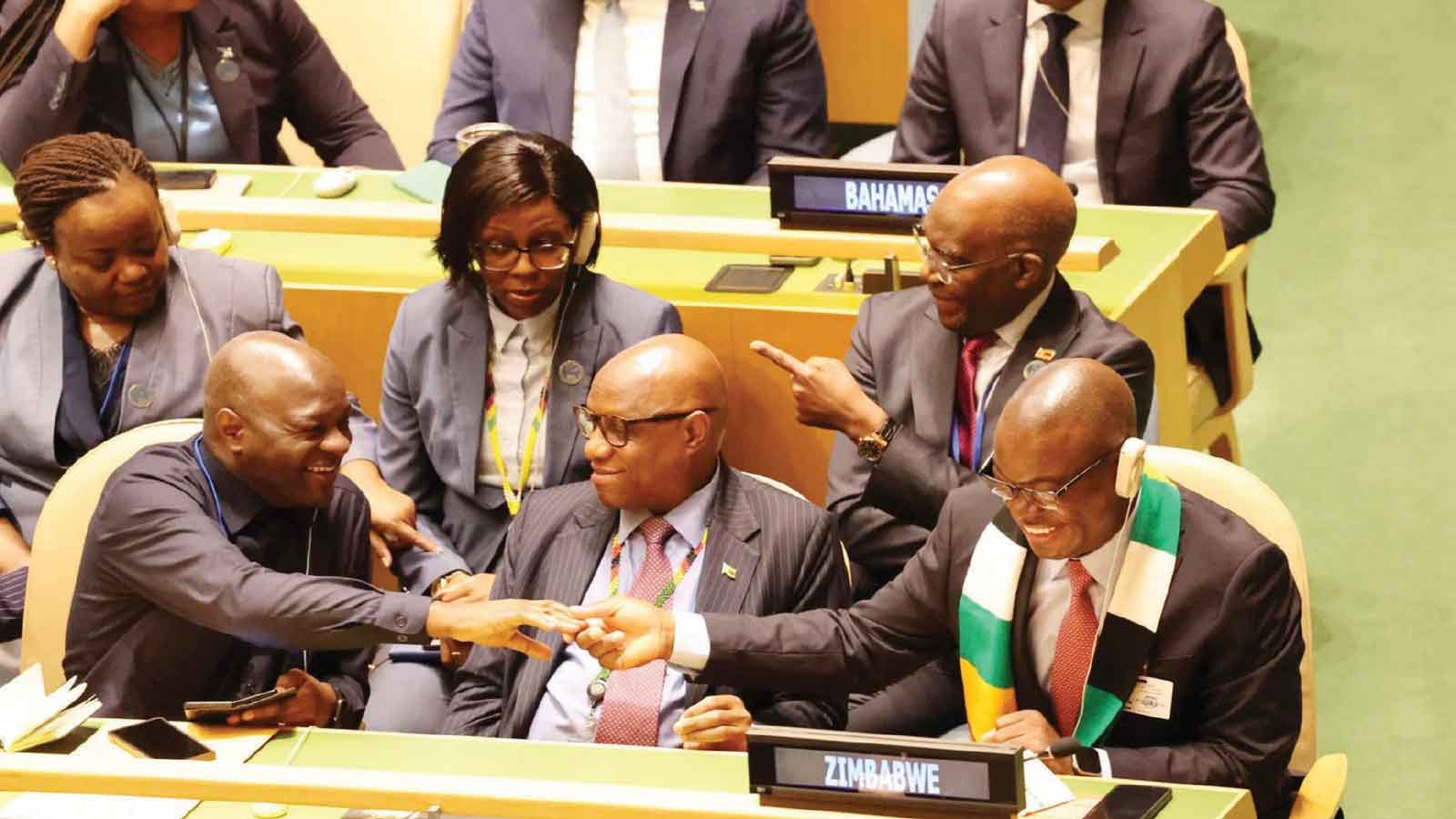
Securing a non-permanent seat on the United Nations Security Council for the 2027-2028 term by an overwhelming majority on June 3 cemented the country’s role in the world. Further, securing the votes of 182 of the 191 countries can only be achieved through a well-thought-out strategic vision.
In a nutshell, Zimbabwe’s journey from isolation to global leadership under the Second Republic offers the world an interesting glimpse into the country’s visionary leadership.
A well-grounded country among its peers has no limits to its global outreach.
While Zimbabwe has been vilified for more than two decades under the First Republic, the Second Republic has made the country a force impossible to ignore on the global stage.
The future for Zimbabwe is now full of promise. It is up to us to use our current position to re-engage with the international community and continue playing a constructive role in advancing our national interest on the global stage.
Livit Mugejo writes in his personal capacity.