

 Online Reporter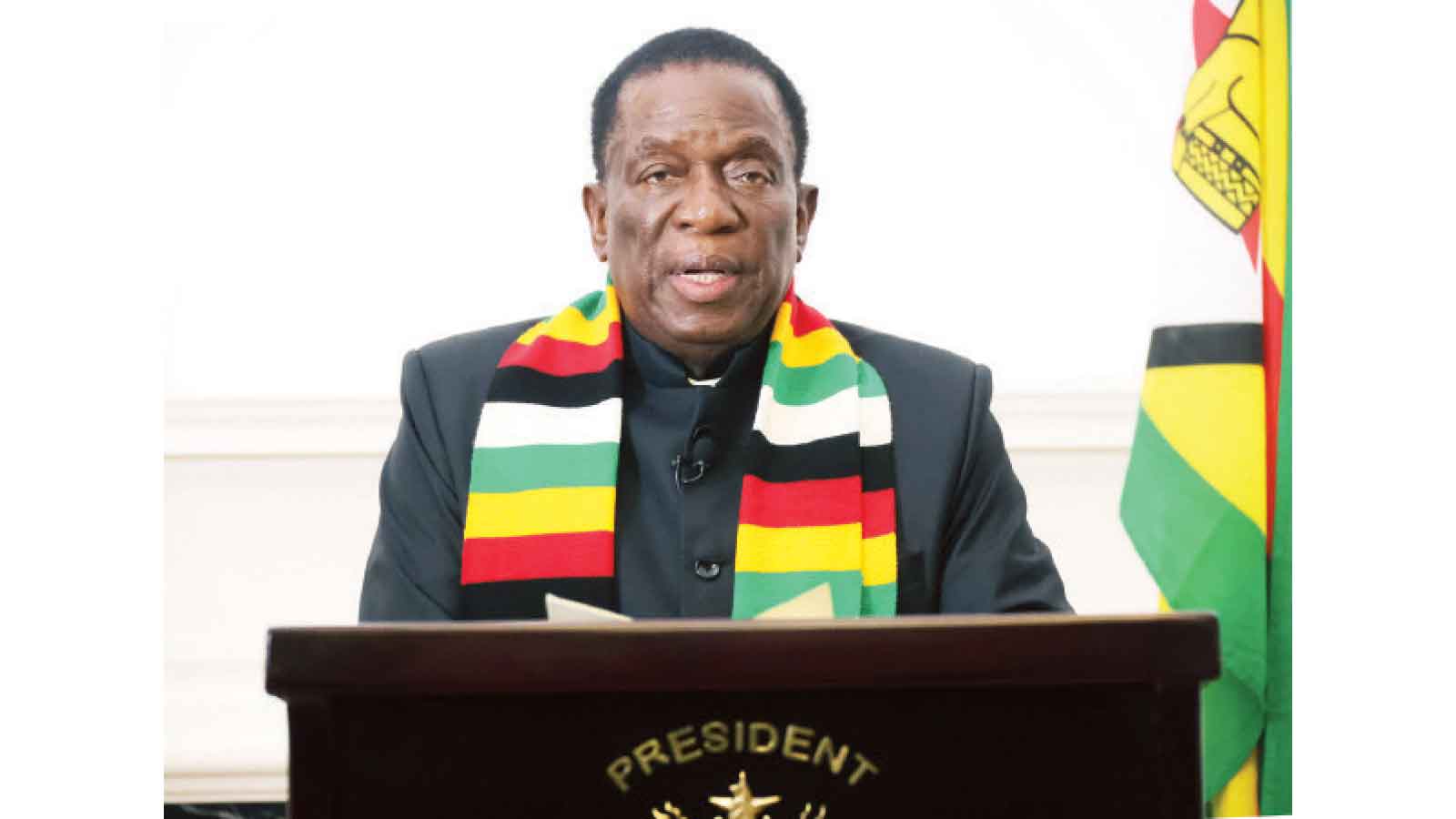
Forward Nyanyiwa in CARLOW, Ireland
THE Zimbabwean moral fabric is sacred. This has been in existence since time immemorial and has manifested through the peace and tranquillity that has existed on the land mass between the Zambezi and Limpopo rivers.
Zimbabweans are a grateful people, something that has defined their ubuntu/hunhu and they really appreciate and acknowledge all the assistance, in all its forms, that has been accorded to the nation since the war of liberation, through Zimbabwe’s formative years to this day.
Gratefulness is embedded in Zimbabwean culture; it is a cardinal norm of the people’s values, a feature that defines us as a people. It is no surprise that one of His Excellency Cde Mnangagwa’s catch phrases is: “We are a friend to all and enemy to none”.
However, we are alive to the fact that we are a sovereign people, a kind of sovereignty that did not come on a silver platter, no. Life and limb was lost to get it and as such, it is this dominion we jealously guard at all costs.
This is something we treasure most — sovereignty.
This week one health story dominated the media landscape and rightly so. President Mnangagwa directed Government to discontinue negotiations with the United States over a proposed health support agreement, describing the deal as lop-sided and could undermine Zimbabwe’s sovereignty.
In a letter dated December 23, 2025, the Secretary for Foreign Affairs said International Trade Ambassador AR Chimbindi advised the Secretary for Finance, Economic Development and Investment Promotion Mr George Guvamatanga and the Secretary for Health and Child Care Dr Maunganidze that the President had ordered an end to discussions on the proposed Memorandum of Understanding (MoU) between Zimbabwe and the United States — under the America First Global Health Strategy (AFGHS).
Under AFGHS, America was promoting the agreement as the future framework through which Washington would render health support to Harare under certain conditions.
Zimbabwe’s rebuttal might have come as a thunderclap to the US, appearing to portray Zimbabwe as an ungrateful nation, given America’s health interventions to the country since the turn of the millennium.
Background is key
Zimbabwe remains grateful to America over the latter’s assistance to the country’s health sector, notably through its President’s Emergency Plan for Aids Relief (Pepfar), which was launched in 2003.
Since its inception, Pepfar, which provides funding and technical support for HIV and Aids prevention, treatment and care, has managed to thwart the dangers of the once-deadly virus with alarming figures.
Of the 1,3 million Zimbabweans living with HIV, more than 1,2 million are on Anti-retroviral drugs (ART) and amazingly, 97 percent of those have managed to achieve viral suppression, meaning that they can no longer infect.
The American government invested over US$1,7 billion in Zimbabwe since 2006 to strengthen health systems. In 2023 alone, Pepfar invested 200 million dollars towards HIV/Aids programmes while also contributing US$90 million annually to support salaries and incentives for healthcare workers in the southern African country.
For this all and other assistance coming from USAid, the US Centres for Disease Control (CDC), the Global Fund and other health development partners such as UNAids, Unicef and the World Health Organisation (WHO), Zimbabwe has remained grateful to this day and the dangers of the HIV pandemic which nearly wiped out a generation can never be forgotten.
However, recent policy discord under the Trump government which included a 90-day pause on US Foreign aid raised alarm. On January 20, 2025, the US issued an executive order stating that the US Foreign aid system and its bureaucracy were not aligned with America’s interests and, in many cases, conflicted with America’s values.
The suspension was deemed necessary for reassessment. The subsequent suspension of the USA aid meant that a lot of gains that had been achieved were going to be reversed with prospects of new HIV infections on the horizon.
Before the ink on the executive order to cut aid had dried up, USAID implementing partner in the country, the Zimbabwe Health Interventions (ZHI) had its US$53 195 423 grant which was meant to reduce new infections in adolescent girls and young women and scheduled to run until October 2026 was subsequently frozen.
Most clinics closed shop, health care workers lost their jobs and the impact of the freeze on international aid is palpable. Unconfirmed reports suggest that some patients are skipping doses or taking half doses and rationing their medications in order to extend their supplies.
The Trump administration had an ace on their sleeve and when they meant that the suspension was open for reassessment, little did anyone guessed that it would come with strings attached – with conditions.
After the suspension of the aid, the Zimbabwean Government, like its African counterparts, was left to find home-grown solutions to salvage a situation that was degenerating into a crisis. Continuing on the path of dependency would cost the nation dearly in the event the support was terminated again in the future.
Once burnt, twice shy
For the first time in as many years, Zimbabwe in its last budget announcement, met the 2009 Abuja Declaration guidelines which called on governments to allocate 15 percent of their national budget towards the health sector.
Poisoned chalice
In an indirect acceptance of the negative impact on its executive order to halt international aid, America approached Zimbabwe with a US$350 million health kitty on condition that the US gets unlimited access to Zimbabwe’s health data and direct access to the country’s vast mineral resources as part of the broader agreement.
This offer comes on the background that the country is facing challenges in the health sector due the infamous economic sanctions imposed by the same American government which is now proffering help.
The offer which comes again at a time people living with HIV/Aids are piling pressure over the uncertainty of HIV/Aids programme can be viewed as the trigger to have this constituency turn against their government for turning down aid.
One cannot miss the political undercurrent which is at play. Why would America push for a bilateral health treaty with Zimbabwe after the US withdrew from WHO? Does Washington want Harare to legitimise their exit from global health order?
The fundamental principles of foreign aid ethics entails that humanitarian action is rooted in humanity that is addressing the suffering, impartiality, neutrality and independence (autonomy from political and economic considerations).
Did the US, on her reassessment of foreign aid, realise that it could reap natural resources from mineral-rich Zimbabwe?
Was America looking for ways of laying hands on Zimbabwe’s resources all this while? Can one be judged wrongly for saying that the Trump administration was eyeing for collateral before helping out?
It is possible the Government of Zimbabwe had foresight of possible long-term American objectives, no matter how covert.
If the US had the temerity to cut foreign aid on the basis that “the funding system was not aligned to America’s interests and conflicted with American values”, surely can Zimbabwe be crucified for the realisation that this aid can undermine our sovereignty and conflict our values also?
Harare is also obviously aware of its position in as far as global geopolitics is concerned and may not be prepared into turning against its traditional friends because a carrot has been dangled before it.
Zimbabwe is also aware of what has been happening around the world where Trump appeared to have interests. Cases in point are Ukraine and Venezuela where US presence was forced by the super power’s desire to land those country’s resources — rare earth minerals in the former as well as oil in the latter.
As a sovereign nation Zimbabwe would want to shape its own destiny since is it responsible for charting the country’s political trajectory in the first place.



All these attempts to arm twist African countries is a result of poor leadership on the African continent. Why would rich Africa still survive on aid from the same people who have a history of abusing and manipulating Africa in 2026?
Why should Zimbabwe, in 2026, still rely on aid for her critical sectors like health? The USA cannot be blamed for attempting to sneak into our privy through the backdoor because the door is open. Someone out there owes his or her survival to the aid funded drugs while the government buys and dishes out vehicles to healthy people who don’t need the vehicles in any case. How many millions of dollars have been spent on buying vehicles for people? How many lives could be saved with that kind of money? Our foreign policy should read “an enemy to none”. Leave the “friend to all bit” because it is difficult to apply in a globalised world. It is possible not to be an enemy to anyone without necessarily being a friend. Zimbabwe is not an enemy to Israel but it doesn’t mean we are friendly to the Zionist state. It’s practically impossible for one to be a friend to all and an enemy to none. Such ambiguity gives states like the USA a chance to try and manipulate situations.