

 Online Reporter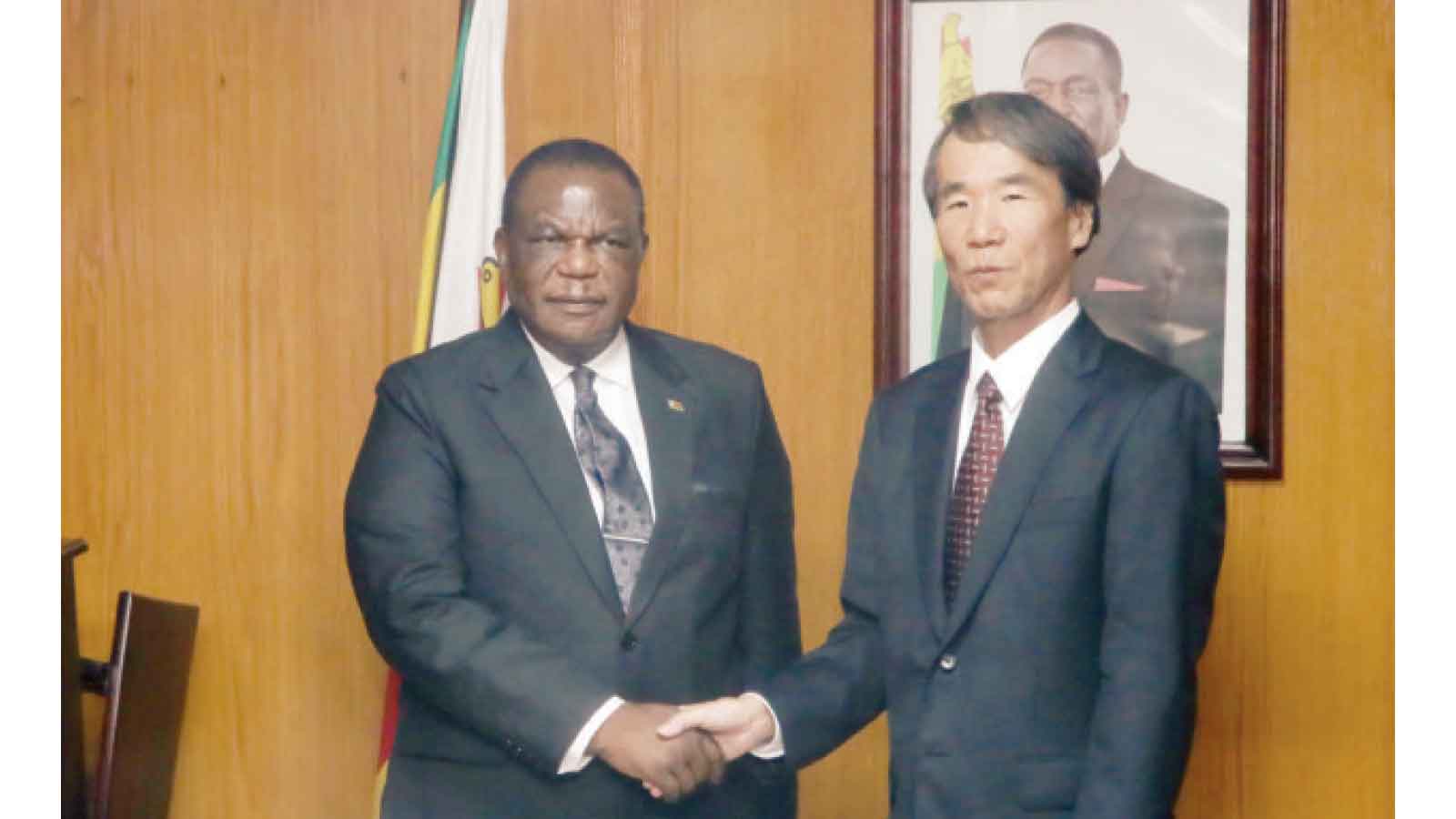
Mukudzei Chingwere
Senior Reporter
JAPAN sees “a lot of potential” in Zimbabwe and is keen to strengthen relations across several economic sectors.
This was said by Japan’s Ambassador to Zimbabwe, Mr Maekawa Nobutaka, after paying a courtesy call on Vice President Dr Constantino Chiwenga at his offices in Harare yesterday.
Under the Second Republic, Zimbabwe has pursued a policy of economic diplomacy aimed at boosting the economy, creating jobs and improving people’s livelihoods.
The country’s strategy has emphasised re‑engagement and engagement with both traditional and new partners, promotion of export‑oriented industries, and the attraction of foreign direct investment into priority sectors such as agriculture, mining, manufacturing and tourism.
“Today (yesterday) we had a very productive discussion with the Vice President,” said Ambassador Nobutaka.
“We agreed to place greater emphasis on business exchanges and make corporate partnerships more tangible for our business communities.
“We recognise that much remains to be done. We see great potential in Zimbabwe across many sectors, for example agriculture and mining.”
Ambassador Nobutaka said they also discussed agricultural products, human resources development, as well as cooperation in artificial intelligence and education.
The meeting signalled a shared interest in moving from high‑level commitments towards practical initiatives that can be implemented by businesses and institutions in both countries.
Agriculture, long regarded as the backbone of Zimbabwe’s economy, emerged as a priority area. The two sides explored ways to boost production, improve post‑harvest handling, and develop value‑chain opportunities that could expand exports and increase farmer incomes.
Mining, another key pillar of the economy, was also highlighted for its potential to unlock mineral wealth while ensuring community participation and beneficiation.
The Japanese Ambassador further underscored the importance of human resources development, noting that skills training, vocational programmes and academic exchanges could help equip Zimbabweans for emerging industries.
He also pointed to co‑operation in artificial intelligence and education as areas where Japanese expertise could support the modernisation of services and improve learning outcomes.



